
 Interactive history tool · 1773–1950
Who ruled British India in any year?
The complete Governor-General of India list in one tool. Enter a year and see who was Governor-General or Viceroy at the time, plus what happened in that year and the exam facts worth knowing.
Find a year →Every Governor-General and Viceroy on one line
Each bar is one tenure. Tap any bar to jump to that ruler in the finder.
Viceroy & Governor-General Finder
Enter a year from 1773 to 1950, or search for a name or event (like “Sati” or “Partition”). You’ll see who was in charge, along with the key events and exam facts from their tenure.
Full list: all Governors-General & Viceroys (1773–1950)
East India Company (1773–1858)
- Warren HastingsOct 1773 – Feb 1785Governor-General of Fort William (Bengal)
First Governor-General of Bengal under the Regulating Act, 1773. Later impeached in Britain (acquitted 1795).
- 1774 Supreme Court set up at Calcutta (Fort William)
- 1774 Rohilla War
- 1775 First Anglo-Maratha War begins (1775–82)
- 1780 Second Anglo-Mysore War begins (1780–84)
- 1781 Calcutta Madrasa founded
- 1782 Treaty of Salbai ends First Anglo-Maratha War
- 1784 Pitt's India Act; Treaty of Mangalore with Tipu Sultan
- 1784 Asiatic Society of Bengal founded by William Jones
Hidden fact: The first Governor-General shot a rival in a duel
- Sir John MacphersonActingFeb 1785 – Sep 1786Governor-General of Fort William (Bengal)
Acting Governor-General between Warren Hastings and Lord Cornwallis.
- Lord CornwallisSep 1786 – Oct 1793Governor-General of Fort William (Bengal)
Called the 'Father of Civil Services in India'. Introduced the Permanent Settlement.
- 1790 Third Anglo-Mysore War begins (1790–92)
- 1792 Treaty of Seringapatam: Tipu Sultan cedes half his territory
- 1793 Permanent Settlement of Bengal (Zamindari system)
- 1793 Cornwallis Code separates revenue and judicial administration
- 1793 Charter Act of 1793
Hidden fact: India was run by the general who lost America
Still shaping India: The Permanent Settlement (1793)
- Sir John ShoreOct 1793 – Mar 1798Governor-General of Fort William (Bengal)
Known for his policy of non-intervention in the affairs of Indian states.
- 1795 Battle of Kharda: Marathas defeat the Nizam; British stay neutral
- Sir Alured ClarkeActingMar 1798 – May 1798Governor-General of Fort William (Bengal)
Acting Governor-General before Lord Wellesley arrived.
- Lord WellesleyMay 1798 – Jul 1805Governor-General of Fort William (Bengal)
Introduced the Subsidiary Alliance system; Hyderabad was the first state to sign it (1798).
- 1798 Subsidiary Alliance with the Nizam of Hyderabad
- 1799 Fourth Anglo-Mysore War; Tipu Sultan killed at Srirangapatna
- 1800 Fort William College founded at Calcutta
- 1802 Treaty of Bassein with Peshwa Baji Rao II
- 1803 Second Anglo-Maratha War begins (1803–05)
- Lord Cornwallis (2nd term)Jul 1805 – Oct 1805Governor-General of Fort William (Bengal)
Returned for a second term but died at Ghazipur within months.
- 1805 Dies at Ghazipur (October 1805)
- Sir George BarlowActingOct 1805 – Jul 1807Governor-General of Fort William (Bengal)
Acting Governor-General; the Vellore Mutiny happened during his tenure.
- 1806 Vellore Mutiny (July 1806)
- Lord Minto IJul 1807 – Oct 1813Governor-General of Fort William (Bengal)
Signed the Treaty of Amritsar (1809) with Maharaja Ranjit Singh.
- 1809 Treaty of Amritsar with Ranjit Singh; Sutlej fixed as boundary
- 1813 Charter Act of 1813 ends Company trade monopoly in India (except tea); ₹1 lakh for education
- Lord HastingsOct 1813 – Jan 1823Governor-General of Fort William (Bengal)
Ended the Peshwaship and fought the Anglo-Nepal and Third Anglo-Maratha Wars.
- 1814 Anglo-Nepal (Gorkha) War begins (1814–16)
- 1816 Treaty of Sugauli with Nepal
- 1817 Pindari War and Third Anglo-Maratha War (1817–18)
- 1818 Peshwaship abolished; Baji Rao II pensioned off to Bithoor
- John AdamActingJan 1823 – Aug 1823Governor-General of Fort William (Bengal)
Acting Governor-General; known for strict press regulations (1823).
- 1823 Licensing Regulation restricts the press
- Lord AmherstAug 1823 – Mar 1828Governor-General of Fort William (Bengal)
Fought the First Anglo-Burmese War.
- 1824 First Anglo-Burmese War begins (1824–26)
- 1824 Barrackpore mutiny
- 1826 Treaty of Yandabo: Assam, Arakan and Tenasserim ceded
- William Butterworth BayleyActingMar 1828 – Jul 1828Governor-General of Fort William (Bengal)
Acting Governor-General before Lord William Bentinck.
- Lord William BentinckJul 1828 – Mar 1835Governor-General of Fort William (Bengal)
Abolished Sati (1829). Became the FIRST Governor-General of India under the Charter Act of 1833.
- 1829 Sati abolished (Bengal Regulation XVII)
- 1830 Campaign to suppress Thuggee (with William Sleeman)
- 1831 Mysore placed under British administration
- 1833 Charter Act of 1833: title becomes Governor-General of India
- 1834 Coorg annexed
- 1835 English Education Act after Macaulay's Minute
Hidden fact: The man who abolished Sati had once been sacked
- Sir Charles MetcalfeActingMar 1835 – Mar 1836Governor-General of India
Called the 'Liberator of the Indian Press' for removing press restrictions.
- 1835 Press Act of 1835 frees the press
- Lord AucklandMar 1836 – Feb 1842Governor-General of India
His Afghan policy led to the disastrous First Anglo-Afghan War.
- 1838 Tripartite Treaty with Ranjit Singh and Shah Shuja
- 1839 First Anglo-Afghan War begins (1839–42)
- Lord EllenboroughFeb 1842 – Jun 1844Governor-General of India
Sindh was annexed during his tenure.
- 1842 First Anglo-Afghan War ends
- 1843 Sindh annexed by Charles Napier
- 1843 Slavery abolished in India (Act V of 1843)
Hidden fact: "Peccavi – I have Sindh" was never sent
- William Wilberforce BirdActingJun 1844 – Jul 1844Governor-General of India
Acting Governor-General before Lord Hardinge.
- Lord Hardinge IJul 1844 – Jan 1848Governor-General of India
Fought the First Anglo-Sikh War.
- 1845 First Anglo-Sikh War begins (1845–46)
- 1846 Treaty of Lahore with the Sikhs
- 1846 Treaty of Amritsar: Kashmir sold to Gulab Singh
- Lord DalhousieJan 1848 – Feb 1856Governor-General of India
Known for the Doctrine of Lapse; called the 'Father of Indian Railways'.
- 1848 Satara annexed under Doctrine of Lapse; Second Anglo-Sikh War begins
- 1849 Punjab annexed
- 1852 Second Anglo-Burmese War; Lower Burma annexed
- 1853 First passenger train: Bombay to Thane (16 April)
- 1853 Jhansi annexed under Doctrine of Lapse
- 1854 Nagpur annexed; Post Office Act; Wood's Despatch on education
- 1856 Awadh annexed on grounds of misgovernance
- Lord CanningFeb 1856 – Mar 1862Governor-General of India
LAST Governor-General under the Company and FIRST Viceroy of India (from 1 November 1858).
- 1856 Hindu Widows' Remarriage Act
- 1857 Revolt of 1857
- 1857 Universities of Calcutta, Bombay and Madras founded
- 1858 Government of India Act 1858; Queen Victoria's Proclamation; Crown takes over
- 1859 Indigo Revolt in Bengal (1859–60)
- 1860 Indian Penal Code enacted
- 1861 Indian Councils Act 1861; Indian High Courts Act
Still shaping India: The Indian Penal Code (1860)
Still shaping India: The Police Act (1861)
British Crown (1858–1947)
- Lord Elgin IMar 1862 – Nov 1863Viceroy & Governor-General of India
Died in office at Dharamsala in 1863.
- 1863 Ambela campaign against Wahabi rebels; dies at Dharamsala
Hidden fact: A Viceroy lies buried in McLeod Ganj
- Sir Robert Napier & Sir William DenisonActingNov 1863 – Jan 1864Viceroy & Governor-General of India
Acting Viceroys after Lord Elgin's death.
- Sir John LawrenceJan 1864 – Jan 1869Viceroy & Governor-General of India
Followed a policy of 'Masterly Inactivity' towards Afghanistan.
- 1865 Bhutan (Duar) War ends with Treaty of Sinchula
- 1866 Orissa famine
- 1868 Punjab Tenancy Act
- Lord MayoJan 1869 – Feb 1872Viceroy & Governor-General of India
The only Viceroy assassinated in office (Port Blair, 1872). Started financial decentralisation.
- 1870 Financial decentralisation begins
- 1871 Department of Agriculture and Commerce
- 1872 First (non-synchronous) census
- 1872 Assassinated at Port Blair by Sher Ali Afridi (8 February)
Hidden fact: Lord Mayo was killed after watching a sunset
- Sir John Strachey & Lord NapierActingFeb 1872 – May 1872Viceroy & Governor-General of India
Acting Viceroys after Lord Mayo's assassination.
- Lord NorthbrookMay 1872 – Apr 1876Viceroy & Governor-General of India
Handled the Bihar famine (1873–74) and the Baroda affair.
- 1873 Bihar famine relief (1873–74)
- 1875 Gaekwad Malhar Rao of Baroda deposed
- 1875 Prince of Wales (later Edward VII) visits India (1875–76)
- Lord LyttonApr 1876 – Jun 1880Viceroy & Governor-General of India
Passed the Vernacular Press Act (1878) and held the Delhi Durbar of 1877.
- 1876 Great Famine begins (1876–78)
- 1877 Delhi Durbar: Queen Victoria proclaimed Kaisar-i-Hind
- 1878 Vernacular Press Act; Arms Act
- 1878 Second Anglo-Afghan War begins (1878–80)
- 1878 Maximum age for ICS exam cut to 19
Hidden fact: A grand feast during a famine, and a family link to New Delhi
- Lord RiponJun 1880 – Dec 1884Viceroy & Governor-General of India
Called the 'Father of Local Self-Government in India'.
- 1881 First synchronous census; First Factory Act
- 1882 Vernacular Press Act repealed
- 1882 Resolution on Local Self-Government; Hunter Education Commission
- 1883 Ilbert Bill controversy
Hidden fact: Parliament debated whether a Catholic could rule India
- Lord DufferinDec 1884 – Dec 1888Viceroy & Governor-General of India
The Indian National Congress was founded during his tenure (1885).
- 1885 Indian National Congress founded (December, Bombay)
- 1885 Bengal Tenancy Act; Third Anglo-Burmese War
- 1886 Upper Burma annexed
Hidden fact: A Vicereine's fund built hospitals that still exist
Still shaping India: The Indian Telegraph Act (1885)
- Lord LansdowneDec 1888 – Jan 1894Viceroy & Governor-General of India
The Durand Line with Afghanistan was drawn during his tenure.
- 1891 Factory Act 1891; Age of Consent Act
- 1892 Indian Councils Act 1892
- 1893 Durand Line agreed with Afghanistan
Still shaping India: The Durand Line (1893)
- Lord Elgin IIJan 1894 – Jan 1899Viceroy & Governor-General of India
Faced severe famine and bubonic plague.
- 1896 Bubonic plague breaks out in Bombay
- 1896 Famine (1896–97); Lyall Commission
- 1897 Chapekar brothers assassinate plague officer W.C. Rand
Still shaping India: The Land Acquisition Act (1894)
Still shaping India: The Epidemic Diseases Act (1897)
- Lord CurzonJan 1899 – Nov 1905Viceroy & Governor-General of India
Partitioned Bengal (1905), which triggered the Swadeshi Movement.
- 1901 North-West Frontier Province created
- 1902 Police Commission; Universities Commission
- 1903 Delhi Durbar
- 1903 Younghusband expedition to Tibet (1903–04)
- 1904 Indian Universities Act; Ancient Monuments Preservation Act
- 1905 Partition of Bengal (16 October)
- Lord AmpthillActingApr 1904 – Dec 1904Viceroy & Governor-General of India
Acting Viceroy while Lord Curzon was on leave.
- Lord Minto IINov 1905 – Nov 1910Viceroy & Governor-General of India
Morley-Minto Reforms (1909) introduced separate electorates for Muslims.
- 1906 All-India Muslim League founded at Dhaka
- 1907 Surat Split of the Congress
- 1908 Alipore Bomb Case; Tilak sentenced to Mandalay
- 1909 Indian Councils Act 1909 (Morley-Minto Reforms)
Still shaping India: Indian Standard Time (1906)
- Lord Hardinge IINov 1910 – Apr 1916Viceroy & Governor-General of India
Capital shifted from Calcutta to Delhi; Partition of Bengal annulled.
- 1911 Delhi Durbar of George V; Partition of Bengal annulled; capital shift to Delhi announced
- 1912 Bomb thrown at Hardinge in Delhi (Delhi Conspiracy Case)
- 1913 Ghadar Party founded
- 1914 World War I begins; Komagata Maru incident
- 1915 Gandhi returns to India (January)
Hidden fact: Two bombs, two Viceroys, the same date
Still shaping India: The McMahon Line (1914)
- Lord ChelmsfordApr 1916 – Apr 1921Viceroy & Governor-General of India
The Jallianwala Bagh massacre (1919) happened during his tenure.
- 1916 Home Rule Leagues; Lucknow Pact
- 1917 Champaran Satyagraha; August Declaration
- 1918 Kheda Satyagraha; Ahmedabad mill strike
- 1919 Rowlatt Act; Jallianwala Bagh massacre (13 April)
- 1919 Government of India Act 1919 (Montagu-Chelmsford Reforms)
- 1920 Non-Cooperation and Khilafat Movements launched
- Lord ReadingApr 1921 – Apr 1926Viceroy & Governor-General of India
Non-Cooperation Movement was withdrawn after Chauri Chaura (1922).
- 1921 Moplah Rebellion; Prince of Wales visits India
- 1922 Chauri Chaura incident; Rowlatt Act repealed
- 1923 Swaraj Party formed
- 1925 Kakori train action; RSS founded; CPI's Kanpur conference
- Lord IrwinApr 1926 – Apr 1931Viceroy & Governor-General of India
Signed the Gandhi–Irwin Pact (1931).
- 1927 Simon Commission appointed
- 1928 Simon Commission boycotted; Nehru Report; Lala Lajpat Rai dies
- 1929 Central Assembly bombing; Purna Swaraj resolution at Lahore
- 1930 Dandi March; First Round Table Conference
- 1931 Gandhi–Irwin Pact; Bhagat Singh, Sukhdev and Rajguru executed (23 March)
Hidden fact: Two bombs, two Viceroys, the same date
Still shaping India: The last full caste census (1931)
- Lord WillingdonApr 1931 – Apr 1936Viceroy & Governor-General of India
Communal Award, Poona Pact and Government of India Act 1935 came during his tenure.
- 1931 Second Round Table Conference
- 1932 Communal Award; Poona Pact; Third Round Table Conference
- 1935 Government of India Act 1935; Reserve Bank of India established
Still shaping India: The Government of India Act (1935)
- Lord LinlithgowApr 1936 – Oct 1943Viceroy & Governor-General of India
Longest-serving Viceroy of India (about 7.5 years).
- 1937 Provincial elections; Congress ministries formed
- 1939 World War II; Congress ministries resign
- 1940 Lahore Resolution; August Offer; Individual Satyagraha
- 1942 Cripps Mission; Quit India Movement (8 August)
- 1943 Bengal Famine
- Lord WavellOct 1943 – Mar 1947Viceroy & Governor-General of India
Called the Simla Conference (1945); Cabinet Mission came during his tenure.
- 1945 Wavell Plan and Simla Conference; INA trials at Red Fort
- 1946 Royal Indian Navy mutiny; Cabinet Mission
- 1946 Direct Action Day (16 August); Interim Government formed
- 1946 Constituent Assembly first meets (9 December)
- 1947 Attlee announces British exit by June 1948
- Lord MountbattenMar 1947 – Aug 1947Viceroy & Governor-General of India
LAST Viceroy of India.
- 1947 3 June Plan (Mountbatten Plan); Indian Independence Act
- 1947 India becomes independent (15 August)
Still shaping India: Partition and the Radcliffe Line (1947)
Independent India (1947–1950)
- Lord MountbattenAug 1947 – Jun 1948Governor-General of the Dominion of India
FIRST Governor-General of independent India.
- 1947 Radcliffe Line announced; Partition
- 1947 Jammu & Kashmir accedes to India (October)
- 1948 Mahatma Gandhi assassinated (30 January)
- C. RajagopalachariJun 1948 – Jan 1950Governor-General of the Dominion of India
FIRST and LAST Indian Governor-General of India. The post was abolished when India became a Republic.
- 1948 Operation Polo: Hyderabad integrated (September)
- 1949 Constitution adopted (26 November)
- 1950 India becomes a Republic; post abolished (26 January)
Hidden fact: Rajaji governed India seven months before his "first" day
Acting holders are shown with a dashed outline. Dates are dates of taking or leaving office. Source: standard histories of British India. Tool by HypeHive.
How the office of Governor-General of India rose and fell
Scroll through 177 years. The year, the era and the scene change as you read.
A trading company starts to govern
Parliament's Regulating Act puts Bengal, Bombay and Madras under one man. Warren Hastings becomes the first Governor-General of Bengal while the East India Company is still, on paper, a business.
Open Warren Hastings →A land deal that never expired
Lord Cornwallis fixes Bengal's land revenue permanently and turns zamindars into owners. Economists still find lower farm productivity in these districts more than two hundred years later.
See the living legacy →One ruler for all of India
After abolishing Sati in 1829, Lord William Bentinck becomes the first Governor-General of India under the Charter Act of 1833. The title now covers every Company territory.
Exam cheat sheet →The Company is shut down
The Revolt of 1857 ends Company rule. On 1 November 1858 Queen Victoria's Proclamation transfers power to the Crown, and Lord Canning becomes the first Viceroy of India.
Open Lord Canning →A grand feast during a famine
Lord Lytton proclaims Victoria Empress of India at a Delhi Durbar of about 68,000 guests, while the Great Famine of 1876–78 kills millions across southern India.
Read the hidden history →Bengal is split in two
Lord Curzon partitions Bengal. The Swadeshi movement that follows forces the British to reverse it in 1911, the same year they move the capital from Calcutta to Delhi.
Open Lord Curzon →A new capital, a new bargain
Lord Irwin inaugurates New Delhi and signs the Gandhi–Irwin Pact. Less than two years earlier, revolutionaries had bombed his train on the way to the new Viceroy's House.
The two bombs →The office disappears
Lord Mountbatten oversees independence and Partition in 1947. C. Rajagopalachari, the only Indian to hold the post, is the last Governor-General of India until the Republic abolishes it on 26 January 1950.
Read the FAQ →How the top job changed over 177 years
The title kept changing as power moved from a trading company to the British Crown, and then to independent India. Knowing which era a year falls in tells you what kind of ruler was in charge.
Governor-General of Bengal
Under the Regulating Act of 1773, the East India Company's Governor of Bengal also gained authority over Bombay and Madras. Warren Hastings was the first to hold the post.
Governor-General of India
The Charter Act of 1833 created the post of Governor-General of India, with authority over all Company territory. Lord William Bentinck was the first to hold it.
Viceroy & Governor-General
After the Revolt of 1857, the Crown took control of India. The same person was now the Crown's Viceroy as well as Governor-General. Lord Canning was the first.
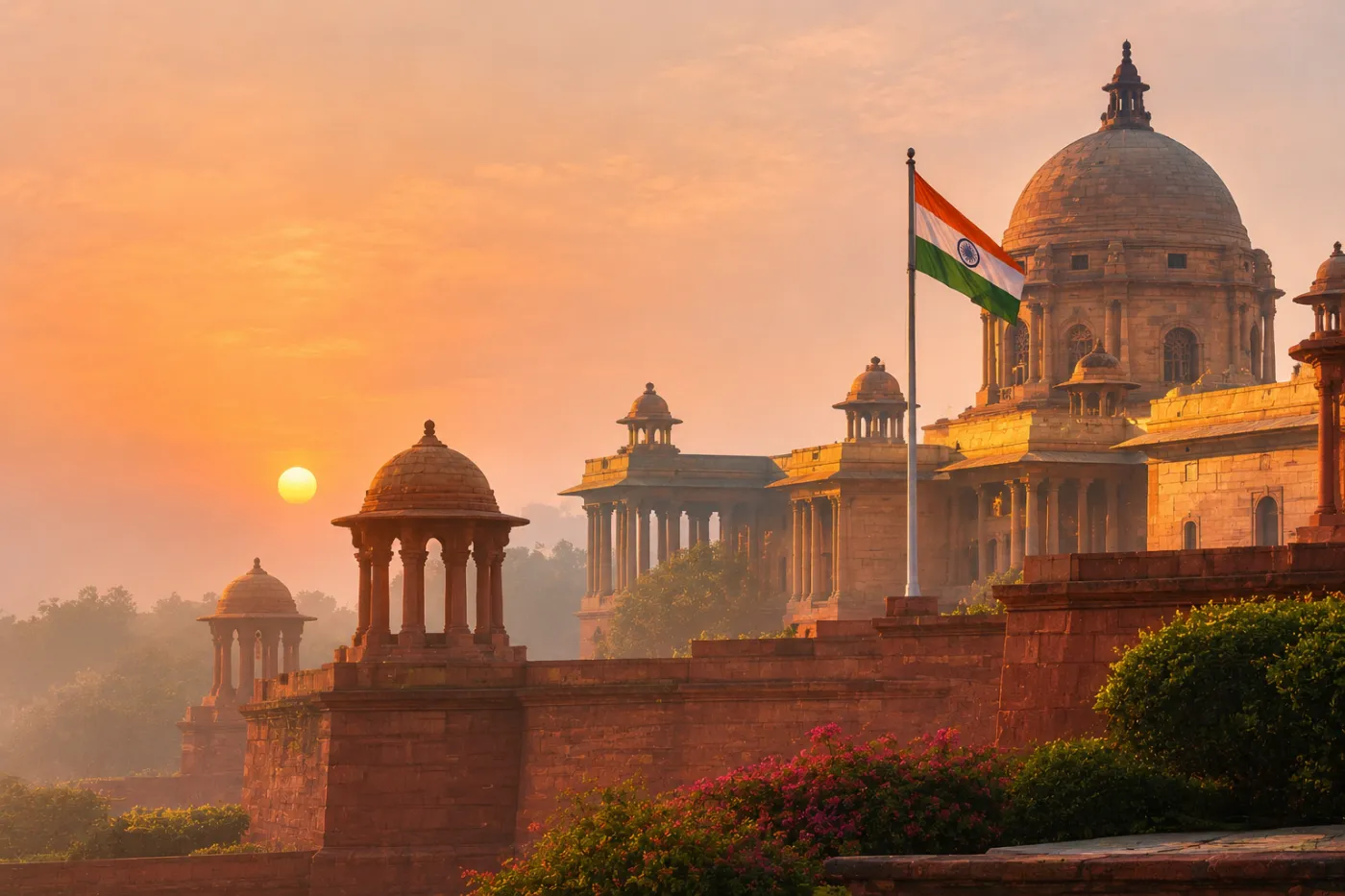
Governor-General of the Dominion
After independence the post became largely ceremonial. It was abolished when the Constitution came into force on 26 January 1950.
Firsts, lasts and records
These facts come up again and again in UPSC, state PSC and SSC papers. They are worth memorising.
Laws, borders and even clocks set by these Governors-General and Viceroys still affect your life in 2026. Each card shows the original decision, what it does today, and sources from courts, peer-reviewed research and government records.
The Permanent Settlement
Then: Gave zamindars permanent ownership of land in Bengal, Bihar and Odisha in return for a fixed revenue payment.
Still today: Economists at MIT and Harvard compared districts across India. Areas once placed under landlords still show lower farm investment and productivity, and lower spending on health and schools. In non-landlord districts, wheat yields average 23% higher and infant mortality is 40% lower.
Sources: American Economic Review, 2005 (Banerjee and Iyer) · Full paper (PDF)
The Indian Penal Code
Then: Enacted Macaulay's draft criminal code, written in the 1830s.
Still today: It defined crimes in India for 164 years. It was replaced only on 1 July 2024 by the Bharatiya Nyaya Sanhita, which still keeps much of the IPC's structure.
Sources: Vikaspedia (Government of India portal) · Bharatiya Nyaya Sanhita
The Police Act
Then: Created a police force after the 1857 revolt, built to control the population for the colonial state.
Still today: The Act is still in force, amended, in several states. In 2006 the Supreme Court ordered seven structural reforms in the Prakash Singh case, and many states have still only partly carried them out.
Sources: Supreme Court judgment (Indian Kanoon) · Common Cause: W.P.(C) 310/1996
The Indian Telegraph Act
Then: Gave the government the exclusive right to run telegraphs, along with the power to intercept messages.
Still today: It governed India's phone and internet licensing for 138 years until the Telecommunications Act 2023 took effect in June 2024. Part III of the 1885 Act still applies when power companies lay transmission lines.
Sources: Verdictum: notification, June 2024 · AZB and Partners
The Durand Line
Then: Drew the border between British India and Afghanistan, splitting the Pashtun homeland in two.
Still today: It is still the Afghanistan–Pakistan border, and no Afghan government has formally recognised it. Its eastern end is why India's official map still shows a short land border with Afghanistan, in Pakistan-administered Gilgit-Baltistan.
Sources: National Geographic Education · Durand Line
The Land Acquisition Act
Then: Let the state take private land for a "public purpose", with little say for the owners.
Still today: Most dams, highways and industrial projects in independent India used it to acquire land until 1 January 2014, when the Right to Fair Compensation Act replaced it. Pakistan and Myanmar still use the 1894 law.
Sources: Business Standard, 1 Jan 2014 · RFCTLARR Act, 2013
The Epidemic Diseases Act
Then: A two-page law passed in a hurry to fight bubonic plague in Bombay.
Still today: On 11 March 2020 the Centre asked every state to invoke it against COVID-19. A 123-year-old plague law became the legal basis for India's pandemic rules. Parliament amended it in September 2020 to protect health workers, and the 1897 Act is still in force.
Sources: The Wire · Epidemic Diseases Act, 1897
Indian Standard Time
Then: Set a single time zone for India, UTC+5:30, measured from a meridian near Allahabad (Prayagraj).
Still today: It is still India's only time zone, which is why the sun rises about two hours earlier in Arunachal than in Gujarat. Calcutta refused to switch until 1948 and Bombay until 1955.
Sources: Indian Standard Time · LiveHistory India: the battle of the clocks
The McMahon Line
Then: British and Tibetan negotiators drew the border at the Simla Convention. China's delegate refused to sign.
Still today: It is the basis of India's border in Arunachal Pradesh and of the eastern sector of the LAC. China rejects it as "imperialist", yet in 1960 China accepted a very similar alignment in its border settlement with Myanmar.
Sources: SSOAR (Leibniz Institute): Jash, 2022 · McMahon Line
The last full caste census
Then: The 1931 Census, run under Census Commissioner J.H. Hutton, was the last to count every caste.
Still today: For 95 years, reservation debates, including the Mandal Commission's estimates, relied on 1931 numbers. On 30 April 2025 the Union government decided to bring caste back in Census 2027 for the first time since then.
Sources: The Tribune · Outlook
The Government of India Act
Then: Britain's longest-ever law for India, with three lists of powers, governors, a federal court and emergency powers.
Still today: It became the framework of the Constitution. President's Rule (Article 356) comes from its Section 93, and the Seventh Schedule's Union, State and Concurrent lists come from its three lists. Ambedkar told the Constituent Assembly he made no apologies for the borrowing.
Sources: Constitution of India (CLPR) · StudyIQ
Partition and the Radcliffe Line
Then: The new border made 162 pockets of land, left over from old princely land deals, into islands of one country inside another.
Still today: About 51,000 people lived in these enclaves for 68 years with no real citizenship. One was the world's only third-order enclave, an Indian plot inside Bangladesh inside India inside Bangladesh. The enclaves were swapped at midnight on 31 July 2015 under the 100th Constitutional Amendment.
Sources: The Tribune, Aug 2015 · Al Jazeera, June 2015
Governor-General vs Viceroy: what's the difference?
Governor-General
The head of the British administration in India. He governed British-ruled territory through the Executive Council and answered to the authorities in London.
Viceroy
The British monarch's personal representative in India. The title was added in 1858 and mainly governed relations with the princely states. From 1858 to 1947, one person held both titles.
Frequently asked questions
Who was the first Governor-General of India?
Lord William Bentinck became the first Governor-General of India in 1833 under the Charter Act of 1833. Before that, Warren Hastings had been the first Governor-General of Bengal, appointed in 1773 under the Regulating Act.
Who was the first Viceroy of India?
Lord Canning became the first Viceroy of India on 1 November 1858, when the British Crown took control of India from the East India Company after the Revolt of 1857.
Who was the last Viceroy of India?
Lord Mountbatten was the last Viceroy of India. He served from March to 15 August 1947 and then became the first Governor-General of independent India, staying until June 1948.
Who was the first Indian Governor-General of India?
C. Rajagopalachari (Rajaji) was the first and only Indian Governor-General of India, from June 1948 to 26 January 1950. He was also the last, because the post was abolished when India became a Republic.
Who was the Governor-General during the Revolt of 1857?
Lord Canning was Governor-General during the Revolt of 1857. After the revolt, the Government of India Act 1858 transferred power to the Crown, and Canning became the first Viceroy.
Which Viceroy of India was assassinated?
Lord Mayo is the only Viceroy of India to have been assassinated in office. Sher Ali Afridi, a convict, killed him at Port Blair in the Andaman Islands on 8 February 1872.
Who was the longest-serving Viceroy of India?
Lord Linlithgow was the longest-serving Viceroy, from April 1936 to October 1943, about seven and a half years. His tenure included World War II, the Quit India Movement and the Bengal Famine.
What is the difference between a Governor-General and a Viceroy?
The Governor-General headed the British administration of India. The Viceroy was the British monarch's representative, mainly in dealings with the princely states. From 1858 to 1947, the same person held both titles.
History doesn't stay in the past
Many of today's headlines, from border disputes to protests, began in decisions made by the people in this list. HypeHive traces today's news back to where it started.
Explore more stories on HypeHive →More free history tools
Every HypeHive tool is free, needs no sign-up and works on your phone.