
There are names in history that survive because their lives were extensively documented. Then there are names that survive almost as footnotes.
Khadija Zaman Begum belongs to the second category.
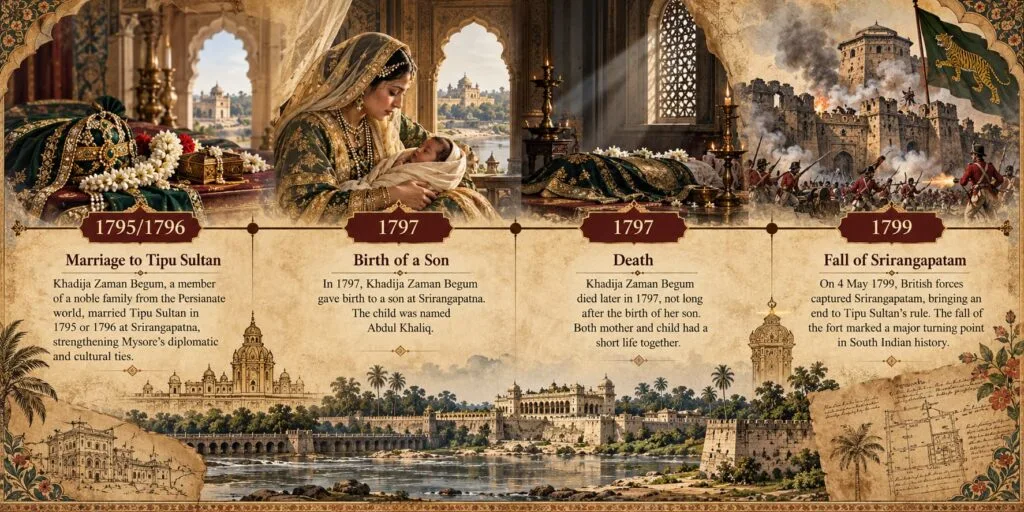
She is identified in modern accounts as a wife of Tipu Sultan, the ruler of Mysore who died defending Srirangapatna in 1799. Khadija was the daughter of Mir Sayyid Moinuddin Khan, also known as Sayyid Sahib, and sources place her marriage to Tipu in either 1795 or 1796. She died in 1797, with accounts describing her death as occurring in childbirth.
A genealogical record adds another fragment: a son was born to Khadija at Seringapatam in 1797 and died shortly afterward.
And then, remarkably, her trail becomes difficult to follow.
That makes the history of Khadija Zaman Begum less a conventional royal biography and more an exercise in reconstructing a life from scattered evidence.
Who was Khadija Zaman Begum?
Khadija Zaman Begum, also rendered in genealogical sources as Khadija uz-Zamani Begum, was one of Tipu Sultan’s wives during the final years of his reign.
The commonly cited modern account gives her father as Mir Sayyid Moinuddin Khan, known as Sayyid Sahib, and places the marriage in 1796. It also records that Khadija died in childbirth the following year.
A separate genealogical tradition gives a slightly different chronology, placing the marriage in 1795 and identifying her more fully as Khadija uz-Zamani Begum Sahiba, daughter of Mir Muin ud-din Khan, described there as the Killadar of Gurumkonda. That source likewise places her death at Seringapatam in 1797.
So even at the starting point, there is a small but important discrepancy:
1795 or 1796?
Rather than silently choosing one, it is better to preserve the uncertainty.
What is reasonably secure?
- Khadija was a wife of Tipu Sultan.
- Her father was Mir Moin/Moin-ud-din Khan, also known as Sayyid Sahib.
- Her marriage occurred during the final years of Tipu’s reign.
- She died in 1797.
- Sources describe her death as occurring in childbirth.
Beyond those points, the record becomes much thinner.
Khadija's father was more than a name in a family tree
One of the most interesting clues comes from Khadija’s father.
Historical material identifies Mír Moinuddín, or Syud Sáhib, as an important military commander under Tipu Sultan. A historical account of Tipu’s reign describes Mír Moinuddín, also called Syud Sáhib, commanding one of four divisions of Tipu’s army.
And a separate historical account of the final siege of Seringapatam identifies Sayyid Sahib as Tipu Sultan’s father-in-law and says that he had been entrusted with the defence of the part of the fort under his command during the final British assault.
That gives us a striking connection.
Khadija’s father was not merely remembered because his daughter married the Sultan. He was also part of the military establishment surrounding Tipu.
But there is an important limit here.
The surviving evidence does not establish why Tipu married Khadija.
It would be tempting to describe the marriage as a political alliance because her father was an important official. That would go beyond the evidence currently available.
What we can say is simpler:
Khadija came from a family closely connected to Tipu’s court, and her father later appears in accounts of the defence of Seringapatam.
A marriage in the final years of Tipu's reign
The chronology makes Khadija’s story particularly poignant.
Tipu Sultan ruled Mysore from 1782 until his death in 1799. The British campaign that eventually ended his rule culminated in the storming of Seringapatam on 4 May 1799.
Khadija’s marriage came only a few years before that final crisis.
If the 1795 date is followed, she entered Tipu’s household roughly four years before the fall of Seringapatam.
If the 1796 date is followed, it was roughly three years.
Either way, her entire known married life falls within the last phase of Tipu’s reign.
And it was extremely short.
The child born in 1797
One of the least frequently mentioned details about Khadija appears in genealogical material.
Royal genealogical records state that:
a son was born to Khadija uz-Zamani Begum at Seringapatam in 1797, and that he died shortly after birth.
This is an important detail because many general accounts of Tipu Sultan’s family simply mention Khadija as a wife who died in childbirth.
The genealogical record gives us another possible sequence:
Marriage → pregnancy → birth of a son → death of the infant → death of Khadija.
However, we should be careful about turning that sequence into a detailed personal narrative.
The accessible evidence does not give us a detailed account of the pregnancy, the circumstances of the birth, the child’s name, or Khadija’s final hours.
Those details should remain unknown rather than being filled in with assumptions.
How did Khadija Zaman Begum die?
Most modern summaries say that Khadija died in childbirth in 1797.
The genealogical tradition likewise gives her death at Seringapatam in 1797 and explicitly describes it as occurring in childbirth.
But there is an important distinction between:
“Sources report that she died in childbirth”
and:
“We possess a surviving contemporary medical or court record describing her death.”
The research assembled for this article has established the former, not the latter.
We therefore shouldn’t invent an exact date or medical explanation.
The most defensible formulation is:
Khadija Zaman Begum died at Seringapatam in 1797, and surviving genealogical and biographical accounts describe her death as occurring in childbirth.
The strange problem of Tipu Sultan's women
To understand why Khadija is so difficult to reconstruct, it helps to look at the larger world she inhabited.
The women of Tipu Sultan’s court were not a tiny group.
Research by historian Jennifer Howes, published in the Journal of the Royal Asiatic Society, examined the women who remained in Tipu’s palace after the fall of Srirangapatam. Howes found that the East India Company took charge of 601 women who had permanently resided inside the palace. They were moved, along with Tipu’s sons, to Vellore.
This is one of the most revealing pieces of modern scholarship about Tipu’s female entourage.
The surviving colonial records include reports about these women, their living arrangements, disputes and interactions with the East India Company. Howes argues that they should not simply be treated as voiceless victims: the records show them exercising forms of domestic authority and negotiating their treatment under Company rule.
The archives therefore contain a surprisingly detailed picture of Tipu’s female establishment after 1799.
But there is a problem when we try to use those records to tell Khadija’s story.
Khadija was already gone when Seringapatam fell
This may be the most important fact for understanding why her biography is so fragmentary.
Khadija died in 1797.
The East India Company’s detailed documentation of Tipu’s surviving female entourage belongs largely to the period after the fall of Seringapatam.
Jennifer Howes notes that in 1800 the Company placed the 601 women who had permanently lived in Tipu’s palace under its control and that colonial records concerning them survive in collections including the British Library’s India Office Collections and the Wellington Archives.
So Khadija sits on the wrong side of this documentary divide.
She died before the historical event that generated much of the surviving documentation about Tipu’s palace women.
That doesn’t prove that she was forgotten because of her death.
But it helps explain why researchers today can find considerably more archival material about some women of Tipu’s household after 1799 than about Khadija herself.
Then came the fall of Srirangapatam
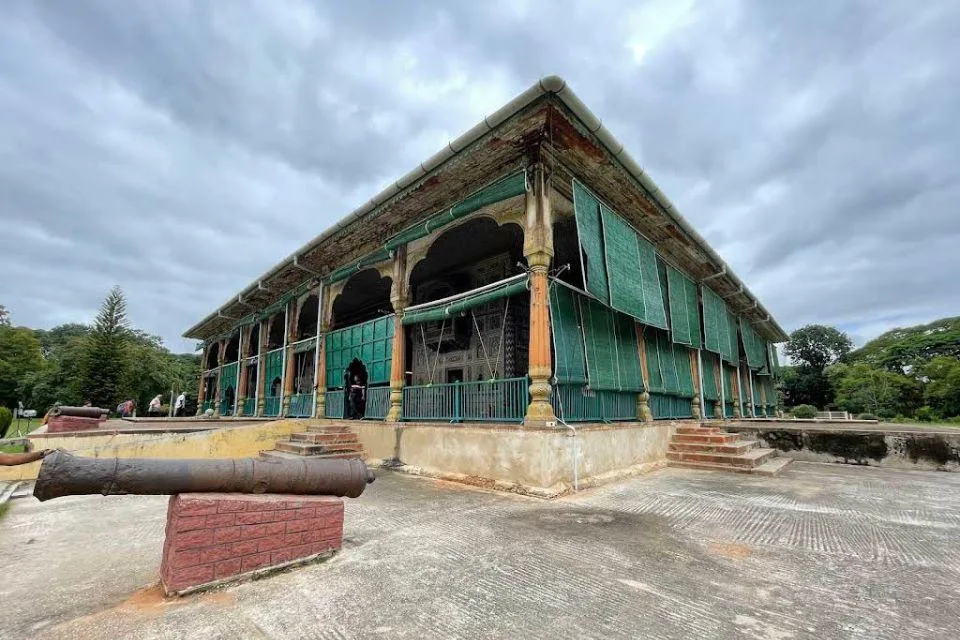
On 4 May 1799, British-led forces stormed Srirangapatam.
The Royal Collection Trust records that the campaign culminated in the storming of Seringapatam on that date and that Tipu Sultan was killed during the fighting. His treasury, library and personal possessions were subsequently plundered or seized by British forces.
Historical accounts of the final assault also place Sayyid Sahib — Khadija’s father — among the commanders defending the fort.
The contrast is striking.
Khadija was no longer alive when her father’s final battle was fought.
Her father was present at the defence of the capital in 1799; she had died there roughly two years earlier.
That chronology is one of the few ways we can connect her brief life to the better-documented final chapter of Tipu’s rule.
What about the famous descriptions of Tipu's wives?
This is where historical caution becomes especially important.
There are modern online accounts that attach descriptions of a young and attractive woman in Tipu’s household to Khadija.
But an anonymous description of a woman in a historical source does not automatically establish her identity.
We therefore shouldn’t present such a description as a portrait of Khadija unless the underlying source securely identifies the woman.
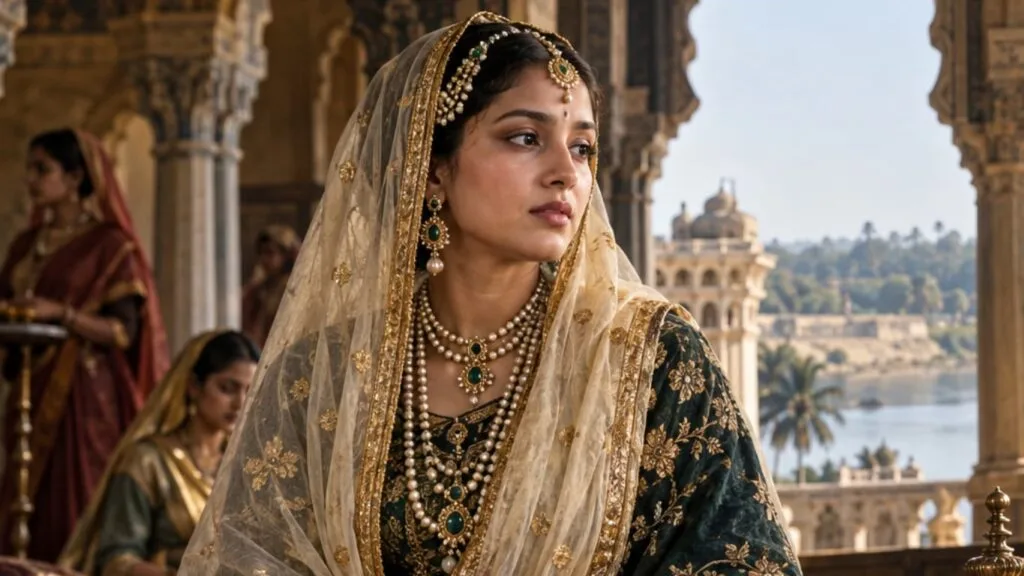
This matters because there is no authenticated portrait of Khadija Zaman Begum established by the evidence examined for this article.
So when an illustration shows Khadija, it should be understood as an artistic reconstruction, not a historical portrait.
What we know — and what we don't
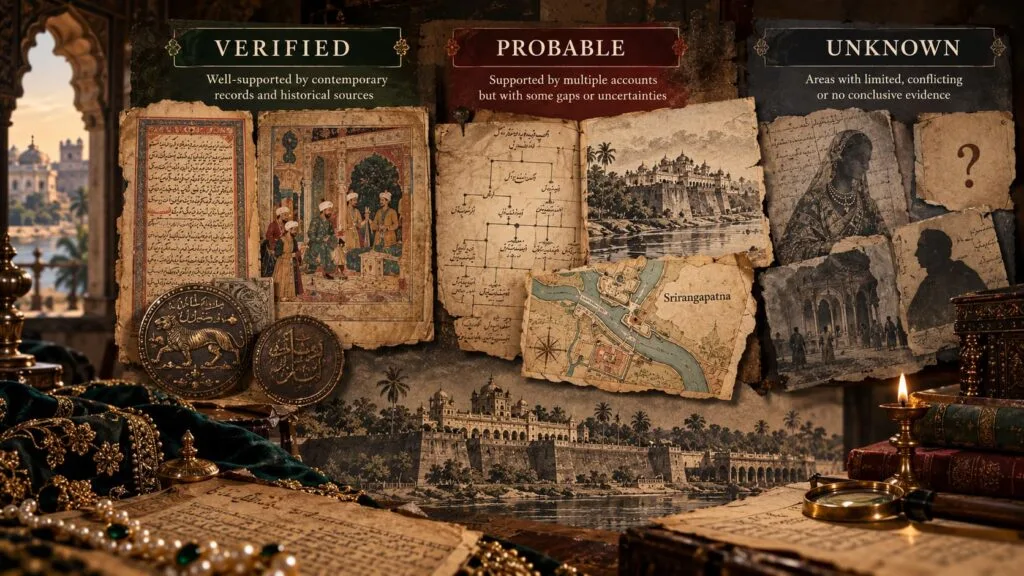
Perhaps the fairest way to approach Khadija’s history is to separate the evidence.
What the surviving evidence supports
She was Tipu Sultan’s wife.
Modern biographical material identifies her as one of Tipu’s wives.
She was the daughter of Mir Moin/Moin-ud-din Khan, known as Sayyid Sahib.
This relationship appears in the genealogical and biographical material.
Her marriage occurred around 1795–1796.
Different sources give different years.
She had a son in 1797 who died shortly after birth.
This detail is preserved in genealogical material.
She died in 1797.
The available accounts place her death at Seringapatam.
Her death is described as occurring in childbirth.
That is repeated in the available genealogical and biographical accounts.
What remains uncertain
We don’t currently have enough evidence to establish:
- her exact birth date
- her age when she married
- her appearance
- her education
- her personality
- her relationship with Tipu
- her political influence
- the exact circumstances of her marriage
- the exact date of her death
- the name of the son recorded as dying shortly after birth
- her burial place
- an authenticated portrait
And that distinction is important.
A short historical record is not an invitation to invent the missing chapters.
Why Khadija Zaman Begum still matters
It would be easy to dismiss Khadija’s story because so little is known about her.
But that would miss something important about how history survives.
The history of Tipu Sultan is filled with military campaigns, diplomacy, fortifications, weapons, treaties and the dramatic fall of Srirangapatam.
The women around him are often much harder to see.
Jennifer Howes’ research demonstrates that the women of Tipu’s court could become visible in colonial records precisely when the British began managing their lives after the fall of the Mysorean state.
Khadija’s case is different.
She died before that transition.
What survives instead is a narrow trail:
a name → a father → a marriage → a child → a death.
That may be all we can responsibly reconstruct.
But even those fragments place her inside one of the most consequential moments in the history of late-eighteenth-century Mysore.
Khadija Zaman Begum: A life measured in fragments
Khadija Zaman Begum does not leave behind the kind of biography that allows historians to narrate every stage of her life.
There is no reliable contemporary diary available to us here.
There is no authenticated portrait that lets us reconstruct her appearance.
There is no detailed record explaining what she thought about the political crisis surrounding her husband’s kingdom.
Instead, there are fragments.
She was the daughter of Sayyid Sahib, a figure connected to Tipu’s military establishment. She married Tipu Sultan during the final years of his reign. She had a son in 1797 who died shortly after birth, according to genealogical records. She herself died at Seringapatam that same year.
Two years later, Srirangapatam fell.
The British took control of the palace and documented hundreds of women who had lived within it.
Khadija wasn’t among the women whose post-war lives they recorded.
She was already gone.
And that may be the central reason her story has survived as a footnote rather than a biography.
Khadija Zaman Begum was not erased from history entirely. Her name survived. What disappeared was the ordinary human detail that would have allowed us to know her as a person.
Frequently Asked Questions
Who was Khadija Zaman Begum?
Khadija Zaman Begum was a wife of Tipu Sultan and the daughter of Mir Sayyid Moinuddin Khan, also known as Sayyid Sahib. Sources place her marriage to Tipu around 1795–1796.
Who was Khadija Zaman Begum’s father?
Her father was Mir Moin/Moin-ud-din Khan, known as Sayyid Sahib. Historical accounts also identify Sayyid Sahib as Tipu Sultan’s father-in-law and a commander involved in the defence of Seringapatam in 1799.
When did Khadija Zaman Begum marry Tipu Sultan?
Sources differ slightly. One modern account gives 1796, while genealogical material gives 1795.
Did Khadija Zaman Begum have a child?
A genealogical record states that a son was born to Khadija at Seringapatam in 1797 and died shortly afterward.
When did Khadija Zaman Begum die?
She died in 1797, at Seringapatam. Available biographical and genealogical accounts describe her death as occurring in childbirth.
Was Khadija Zaman Begum alive when Srirangapatam fell?
No. The available sources place her death in 1797, while the British stormed Srirangapatam and Tipu Sultan died on 4 May 1799.
Is there a confirmed portrait of Khadija Zaman Begum?
No authenticated portrait was established in the evidence examined for this article. Any modern depiction should therefore be treated as an artistic reconstruction rather than a verified portrait.