
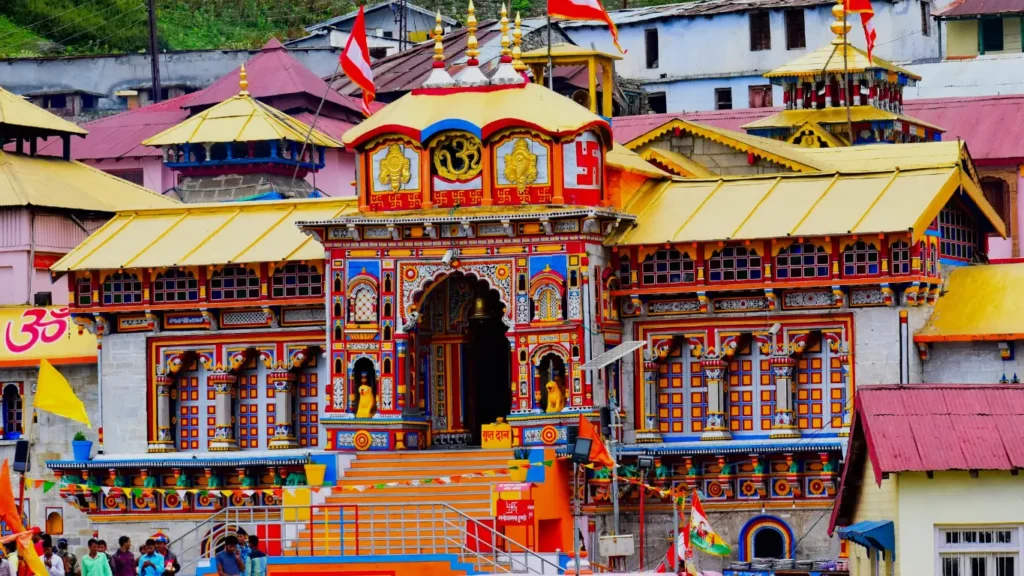
Introduction to Badrinath Temple
The sacred Hindu shrine of Badrinath stands proudly in Uttarakhand’s Chamoli district, surrounded by the mighty Nar and Narayana mountain ranges. Known as one of the holiest pilgrimage sites in India, its spiritual energy draws millions of visitors each year. The Badrinath Temple history is layered with mythology, cultural evolution, and architectural brilliance, making it a profound symbol of devotion and heritage.
From ancient legends describing divine meditation to centuries of reconstruction shaped by natural disasters, the temple’s story is both enchanting and inspiring. As one of the essential “Char Dham” sites, it holds immense religious importance for Hindus worldwide.

The Ancient Origins of Badrinath Temple
Geological Age and Natural Formation
Long before the temple structure existed, the region itself was formed by intense Himalayan geological activity. The area is rich in geothermal springs and rugged terrain, which ancient sages believed to be manifestations of divine presence.
Early Mentions in Vedic Texts
The temple site is referenced in early Vedic scriptures, including the Vishnu Purana and Skanda Purana. These texts highlight Badrinath as the sacred abode of Lord Vishnu and emphasize the spiritual potency of the place.
Legends and Myths Associated with Badrinath
Lord Vishnu’s Meditation Story
According to legend, Lord Vishnu undertook deep penance at this location. To protect him from harsh weather, Goddess Lakshmi transformed herself into a Badri tree—hence the name Badrinath. This myth remains central to the temple’s cultural identity.
Narada’s Divine Influence
Another famous tale describes sage Narada performing penance near this site, contributing to the sacred energy of the region. Stories like these enhance the temple’s mythological richness and timeless allure.
Architectural Evolution Through the Ages
Early Wood Construction
Historians believe the original temple structure was made of wood. It endured harsh weather, invasions, and environmental shifts, before gradually evolving through various rebuilds.
Influence of Various Dynasties
The temple has been rebuilt by multiple rulers, including the Garhwal kings. Each renovation brought new artistic and architectural styles, reflecting India’s diverse heritage.
Renovations and Reconstructions
Earthquake Damages and British-Era Repairs
The Himalayas are prone to seismic activity, and several earthquakes caused significant damage to the shrine. British-era administrators and local kings worked together to restore the temple during the 19th century.
Modern Enhancements for Pilgrims
Recent decades have seen improvements in roads, safety measures, and accommodation facilities. These efforts ensure a smoother journey for pilgrims while preserving the sanctity of the temple.
Cultural and Religious Significance
Role in Char Dham and Chota Char Dham Yatra
Badrinath is one of the four major pilgrimage sites established by Adi Shankaracharya. Its inclusion in the sacred Char Dham circuit makes it a must-visit destination for spiritual seekers.
Rituals and Festivals Unique to Badrinath
Daily rituals like Maha Abhishek and evening aarti draw thousands of visitors. The temple hosts vibrant festivals such as Badri Kedar Utsav and Mata Murti Ka Mela, which celebrate divine stories and community devotion.
Badrinath in Modern Tourism
Accessibility and Visitor Facilities
Thanks to government initiatives, modern transportation and lodging facilities make the journey more accessible than ever. Helicopter services and digital booking systems have improved pilgrimage convenience.
Environmental Challenges and Preservation
As tourism grows, so do ecological concerns. Authorities and NGOs collaborate to promote sustainable tourism, ensuring the area remains pristine for future generations.
For more details on conservation efforts, visit: https://uttarakhandtourism.gov.in/
Frequently Asked Questions
1. Who built the original Badrinath Temple?
Adi Shankaracharya is credited with establishing the modern structure in the 8th century, though the site itself is far older.
2. Why is Badrinath considered so sacred?
It is believed to be the meditation site of Lord Vishnu and holds deep spiritual significance in Hindu scriptures.
3. When does the Badrinath Temple open and close each year?
It typically opens in April–May and closes in October–November due to harsh winter conditions.
4. What festivals are celebrated at Badrinath?
Major festivals include Mata Murti Ka Mela and Badri Kedar Utsav.
5. Is visiting Badrinath safe for elderly pilgrims?
Yes, with modern facilities and transportation services, the temple is safer and more accessible than before.
6. What is the significance of the Tapt Kund near the temple?
Pilgrims bathe in this natural hot spring before entering the temple as a purification ritual.
Conclusion
The Badrinath Temple history is a rich tapestry woven with mythology, devotion, and centuries of architectural transformation. Its spiritual aura, breathtaking location, and cultural depth make it one of the most revered pilgrimage destinations in India. Whether you’re a traveler, historian, or spiritual seeker, Badrinath stands as a powerful symbol of faith and resilience.