
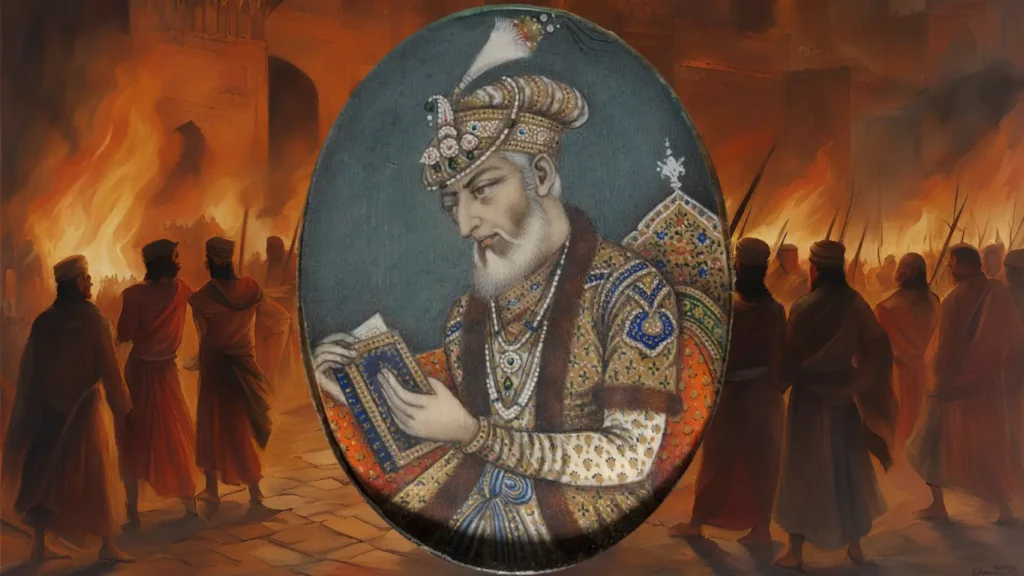
Aurangzeb, the sixth Mughal emperor, ruled India for nearly fifty years and shaped the political, military, and religious direction of the subcontinent. Known for his strict governance, vast territorial expansion, and prolonged Deccan campaigns, his death on 3 March 1707 marked a major turning point in Indian history.
So, how did Aurangzeb die, and what circumstances surrounded his final days? This article presents a historically grounded account of his death, final years, and lasting impact on the Mughal Empire.
It explores the details of his passing, the challenges he faced in his later life, and how his death influenced the future of India, offering a comprehensive look at the end of an era.
Aurangzeb’s Life and Reign (1618–1707)
Born on 3 November 1618, Aurangzeb’s full name was Abu’l Muzaffar Muhi-ud-Din Muhammad Aurangzeb Alamgir. He ascended the Mughal throne in 1658 after defeating his brothers in a brutal war of succession.
His reign was characterized by:
Expansion into the Deccan
Long wars with the Marathas
Administrative centralization
Religious conservatism
Reimposition of jizya tax
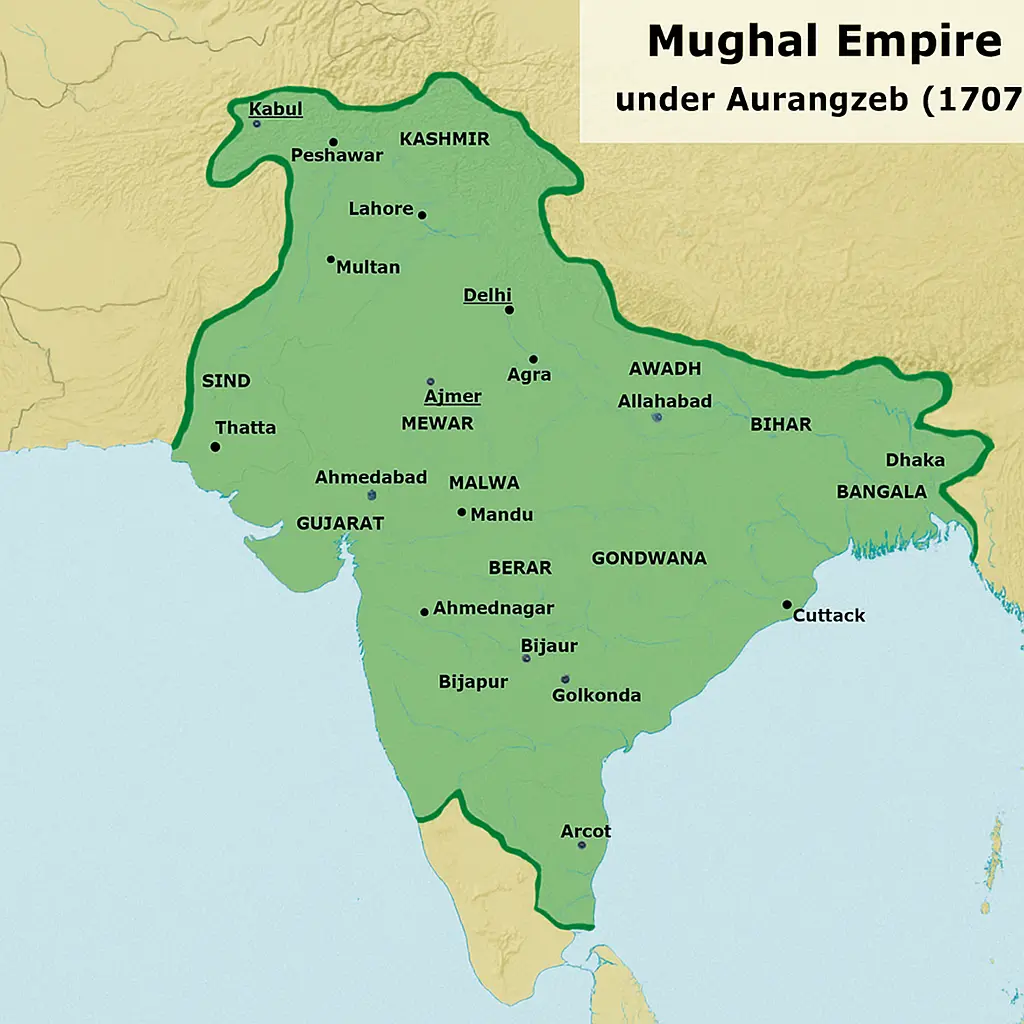
Although he expanded the empire to its greatest territorial extent, these policies placed enormous strain on imperial finances and stability.
Key Facts About Aurangzeb
| Fact | Details |
|---|---|
| Full Name | Abu’l Muzaffar Muhi-ud-Din Muhammad Aurangzeb Alamgir |
| Born | 3 November 1618 |
| Reign | 1658–1707 |
| Died | 3 March 1707 |
| Age | 88 years |
| Cause of Death | Natural causes (old age, prolonged illness, exhaustion) |
| Place of Death | Ahmednagar, Maharashtra |
| Burial Place | Khuldabad, Maharashtra |
| Burial Cost | 14 rupees and 12 annas |
| Successor | Bahadur Shah I |
| Historical Impact | Beginning of Mughal decline |
What Was the Cause of Aurangzeb’s Death?
How Did Aurangzeb Die?
Historical sources such as Maasir-i-Alamgiri and royal correspondence indicate that Aurangzeb died of natural causes, mainly:
Extreme old age
Chronic weakness
Prolonged illness
Physical exhaustion from campaigns
By his late 80s, he suffered from recurring fever, fatigue, and declining mobility. After spending decades on military expeditions, especially in the Deccan, his health had severely deteriorated.
Unlike many Mughal rulers who were assassinated or died violently, Aurangzeb’s death was peaceful and gradual.
Aurangzeb’s Final Years in the Deccan
From 1681 until his death, Aurangzeb spent most of his time in the Deccan fighting the Marathas. These wars against leaders such as Chhatrapati Sambhaji Maharaj drained Mughal resources.
By 1705:
The treasury was exhausted
The army was overstretched
Provincial governors grew independent
Rebellions increased
Physically weak and politically isolated, Aurangzeb retreated to Ahmednagar, where he spent his final years in reflection.
Aurangzeb’s Last Letters and Reflections
In his final years, Aurangzeb wrote emotional letters to his sons expressing regret and uncertainty. One famous passage reads:
“I came alone and I go as a stranger. I do not know who I am, nor what I have done.”
These letters reveal:
Awareness of imperial decline
Regret over harsh policies
Fear of succession conflicts
Spiritual anxiety
They show a ruler confronting mortality and the consequences of his long reign.
How Did Aurangzeb Die in His Final Moments?
Aurangzeb died on 3 March 1707 in Ahmednagar.
According to court records:
He had been bedridden for weeks
He suffered from weakness and fever
He gradually lost strength
No medical intervention was available
There is no evidence of poisoning, conspiracy, or violence. His death was slow, natural, and medically consistent with extreme old age.
The Burial of Aurangzeb: A Simple End
After his death, Aurangzeb was buried at Khuldabad, near Aurangabad.
Unlike emperors such as Akbar and Shah Jahan, he requested a simple grave without a mausoleum.
Unique Burial Facts
No grand tomb
No royal treasury used
Paid from personal earnings
Earned by stitching prayer caps
His burial reportedly cost only 14 rupees and 12 annas, reflecting his late-life austerity.
Today, his tomb remains one of the simplest among Mughal rulers.
Succession Crisis After Aurangzeb’s Death
Aurangzeb’s death immediately triggered a civil war among his sons:
Azam Shah
Muazzam (Bahadur Shah I)
Kam Bakhsh
This succession conflict weakened the empire irreversibly.
Meanwhile:
Marathas expanded in western India
Sikhs rose in Punjab
Nawabs became independent
The British East India Company expanded in Bengal
Within 50 years, the Mughal emperor became largely symbolic.
Impact of Aurangzeb’s Death on Indian History
Aurangzeb’s death marked:
✅ End of centralized Mughal authority
✅ Rise of regional powers
✅ Political fragmentation
✅ Opening for colonial expansion
✅ Decline of imperial revenues
Although decline had started earlier, his absence exposed the empire’s internal weaknesses.
Aurangzeb’s Legacy: A Controversial Emperor
Aurangzeb remains one of India’s most debated rulers.
Supporters See Him As:
A disciplined administrator
A devout Muslim ruler
A strong military leader
Critics View Him As:
Intolerant
Over-militaristic
Politically rigid
His simple grave at Khuldabad reflects this duality: powerful yet austere, victorious yet burdened.
Frequently Asked Questions (FAQ)
1. What was the main cause of Aurangzeb’s death?
Aurangzeb died due to old age, prolonged illness, and physical exhaustion.
2. Where did Aurangzeb die?
He died in Ahmednagar, Maharashtra.
3. When did Aurangzeb die?
He died on 3 March 1707.
4. Was Aurangzeb assassinated?
No, there is no evidence of assassination.
5. Did Aurangzeb die in battle?
No, he died peacefully after illness.
6. How old was Aurangzeb when he died?
He was 88 years old.
7. Where is Aurangzeb buried?
He is buried in Khuldabad, Maharashtra.
8. Why is his tomb so simple?
He requested a modest burial in accordance with Islamic principles.
9. Did his death weaken the Mughal Empire?
Yes, it led to succession wars and rapid decline.
10. What were Aurangzeb’s last words?
No reliable record of exact last words exists.
Conclusion
How did Aurangzeb die?
Aurangzeb passed away on 3 March 1707 in Ahmednagar at the age of 88 due to natural causes. After decades of warfare, political struggle, and personal sacrifice, his body finally succumbed to age and illness.
His death marked the end of Mughal supremacy and opened the door to regional and colonial powers. From his reflective letters to his modest grave, Aurangzeb’s final chapter reflects the complex legacy of one of India’s most powerful emperors.
Pingback: Takshashila University History: The Glorious Legacy Lives On
Pingback: A Lion’s Tears: How Did Shivaji Maharaj Died in Silence?
Pingback: Waqf Board and Taj Mahal: A Legacy of Ownership Battles
Hello there, just became alert to your blog through Google, and found that it’s really informative.
I am going to watch out for brussels. I’ll be grateful if
you continue this in future. Numerous people will be benefited from
your writing. Cheers!