
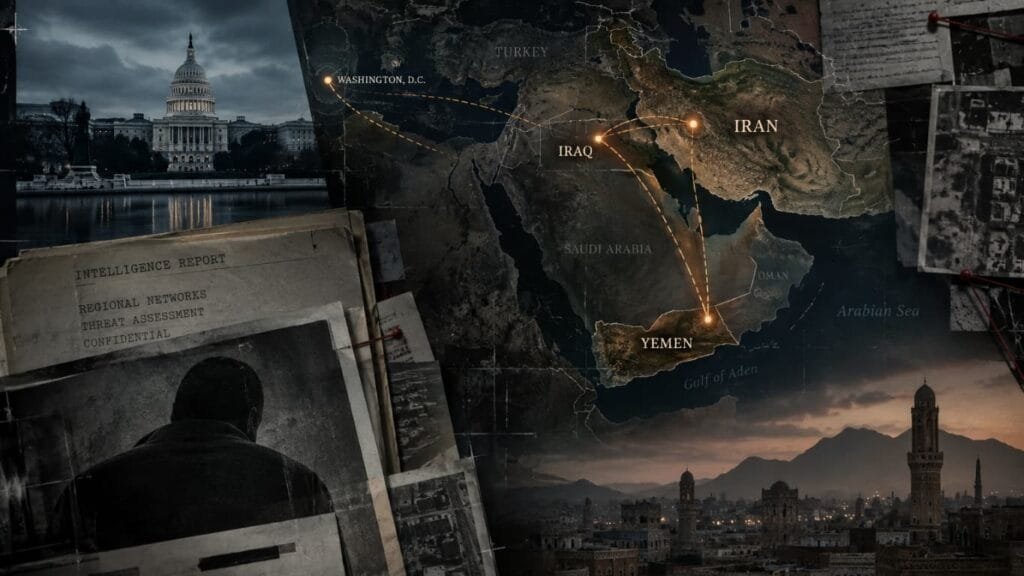
On January 3, 2020, the United States killed one of Iran’s most famous military commanders, Qasem Soleimani, in a drone strike in Baghdad.
But thousands of kilometres away, another Iranian commander was reportedly being hunted on the same night.
His name was Abdul Reza Shahlai.
Unlike Soleimani, Shahlai was barely known outside intelligence and national-security circles. Yet his name had already appeared in American records connected to a deadly operation in Iraq, an alleged assassination plot in Washington and Iran’s growing military relationship with Yemen.
According to four U.S. officials cited by The Washington Post, the United States launched a separate operation against Shahlai in Yemen on the same night Soleimani was killed. The operation failed to kill him. The Pentagon did not publicly confirm the mission.
That episode raises a bigger question than simply who is Abdul Reza Shahlai?
Why did this relatively obscure Iranian commander keep appearing at different points in America’s confrontation with Iran?
To answer that, it is necessary to follow the trail backwards.
Who Is Abdul Reza Shahlai?
U.S. authorities identify Abdul Reza Shahlai as a senior commander of Iran’s Islamic Revolutionary Guard Corps-Qods Force, commonly known as the IRGC-QF.
The U.S. Rewards for Justice programme currently describes him as a high-ranking IRGC-QF commander based in Sana’a, Yemen. It also lists several aliases, including Yusuf Abu al-Karkh and Hajji Yusef, and offers a reward of up to $15 million for information concerning his financial activities, networks and associates.
The American government has attributed a long series of operations to Shahlai.
Those allegations stretch from Iraq in the 2000s to Yemen today.
But there is an important distinction throughout this story.
Some facts are established events.
Some are U.S. government designations or intelligence assessments.
Others are claims made by anonymous sources.
They should not all be treated as the same kind of evidence.
That distinction becomes particularly important when Shahlai’s story reaches Washington.
2007: The Karbala Operation
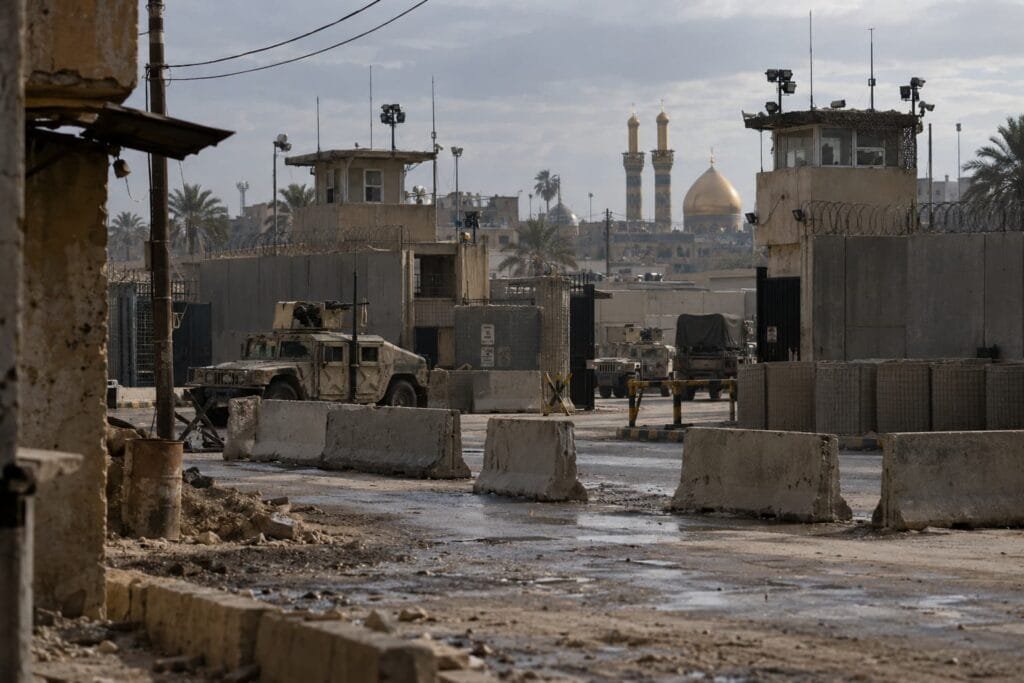
One of the earliest major episodes associated with Shahlai occurred in Iraq.
On January 20, 2007, gunmen posing as American security personnel entered the Provincial Joint Coordination Center in Karbala.
The attackers captured U.S. soldiers before killing five of them. Three others were wounded.
In a 2008 designation, the U.S. Treasury Department identified Shahlai as a deputy commander in the IRGC-Qods Force and attributed the planning of the Karbala attack to him. Treasury also said he provided weapons and logistical support to Shi’a militant groups and helped coordinate training.
The distinction matters: the attack itself is an established historical event. Shahlai’s specific role comes from the U.S. government’s attribution.
That is how the evidence should be presented.
It is also the first major clue to the kind of figure Shahlai was alleged to be.
He was not being described primarily as a battlefield commander standing at the front of an army.
He was being described as someone involved in coordinating people, weapons, training and operations across borders.
That pattern would become more significant several years later.
2011: The Plot That Reached Washington
Four years later, Shahlai’s name appeared in a very different setting.
This time, the location was Washington, D.C.
In October 2011, U.S. authorities announced the arrest of Manssor Arbabsiar, a naturalized U.S. citizen with Iranian and American passports, and charged him alongside Gholam Shakuri, an Iran-based Qods Force member.
The alleged target was Saudi Arabia’s ambassador to the United States, Adel al-Jubeir.
The criminal complaint described a plot involving an undercover DEA source who was presented to Arbabsiar as someone connected to a Mexican drug cartel. According to the complaint, Arbabsiar discussed paying $1.5 million to have the ambassador killed.
The case becomes particularly relevant to Shahlai because Arbabsiar described the person who had initially approached him as his cousin.
According to the complaint, Arbabsiar said this cousin was a senior Iranian military figure who focused on matters outside Iran and had been involved in actions connected to a bombing in Iraq.
The original criminal complaint did not publicly name that cousin as Shahlai.
That identification came through the U.S. Treasury Department.
On the same day the criminal charges were announced, Treasury identified Abdul Reza Shahlai as an IRGC-QF official who, according to Treasury, coordinated the assassination plot. Treasury also identified Gholam Shakuri as Shahlai’s deputy and said Shahlai approved financial allocations connected to the operation.
This is an important distinction.
Shahlai was not one of the two men charged in the U.S. criminal complaint.
Arbabsiar was.
And Arbabsiar later pleaded guilty.
What the Court Case Actually Established
In October 2012, Arbabsiar pleaded guilty to charges connected with the assassination plot.
The Justice Department said he admitted conspiring with Iranian military officials to assassinate the Saudi ambassador and acknowledged arranging payments and discussing a plan to carry out the killing in Washington.
In May 2013, he was sentenced to 25 years in federal prison.
This establishes something important:
The assassination plot was not simply a newspaper allegation. Arbabsiar was prosecuted, pleaded guilty and was sentenced.
But the evidence does not allow us to make a stronger claim than the record supports.
A U.S. court convicted Arbabsiar.
It did not convict Shahlai.
Shahlai’s role comes from the U.S. government’s identification of him as a senior Quds Force official who coordinated the operation.
That difference may seem technical.
It isn’t.
It is the difference between reporting what the evidence establishes and turning a government attribution into a judicial finding.
From Iraq to Washington to Yemen
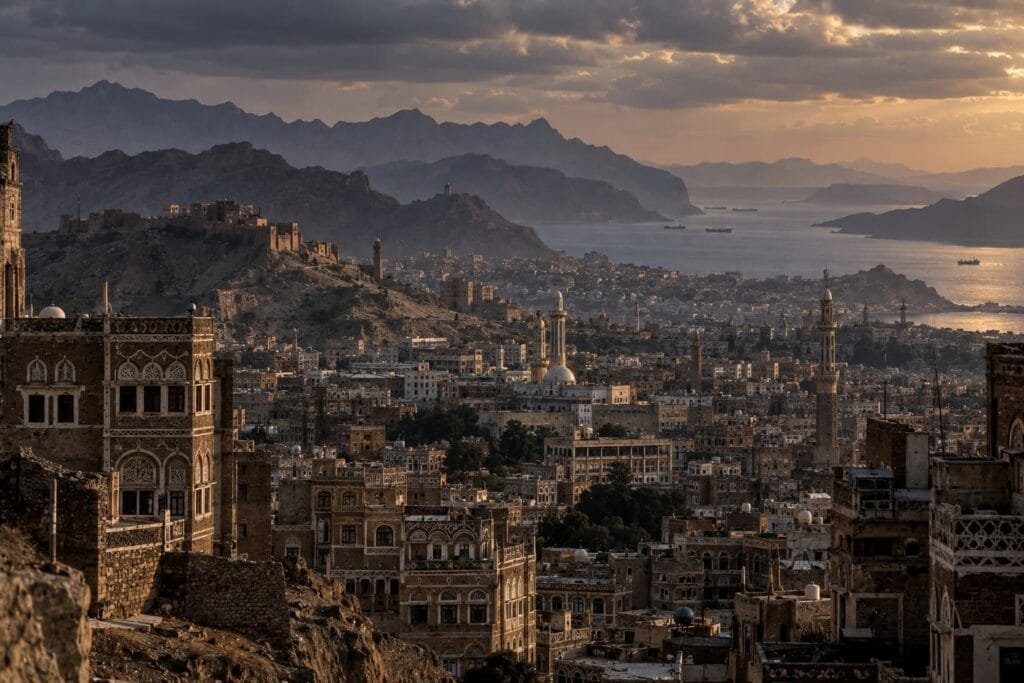
By the end of the 2010s, Shahlai’s story had moved south.
Yemen had become one of the most important theatres in Iran’s regional relationship with armed groups.
The U.S. State Department describes the Qods Force as the IRGC’s mechanism for providing guidance, training, funding and weapons to partners and proxy groups across the Middle East, including the Houthis in Yemen.
The geography matters.
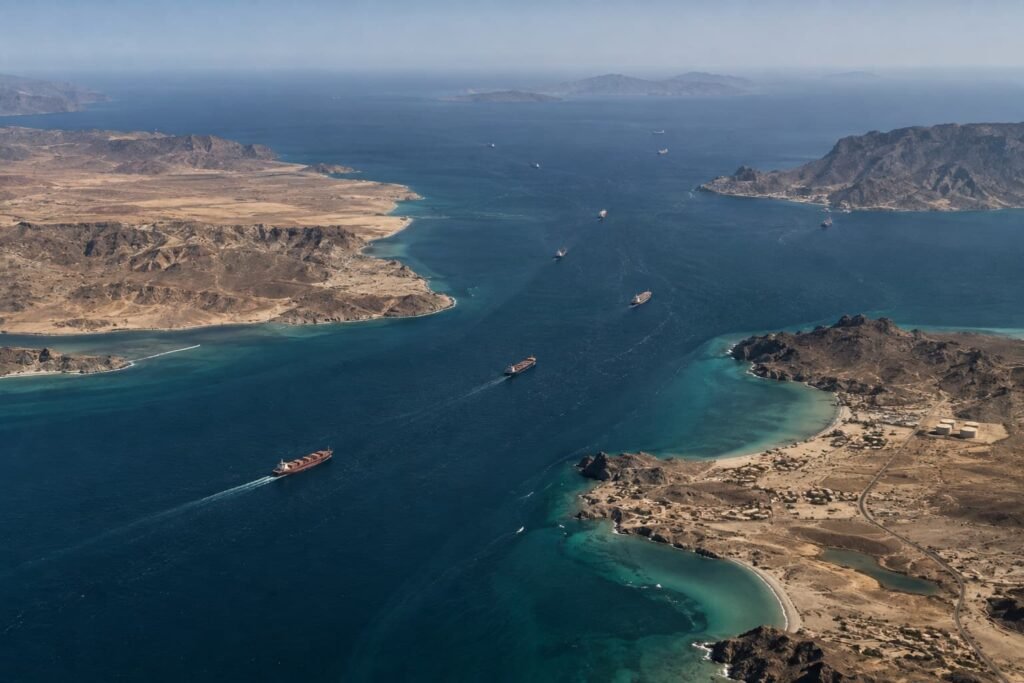
Yemen sits beside one of the world’s most important maritime chokepoints: the Bab el-Mandeb Strait.
The U.S. Energy Information Administration describes Bab el-Mandeb as the route connecting the Red Sea with the Gulf of Aden and Arabian Sea. Before the disruption of Red Sea shipping in recent years, substantial volumes of petroleum and LNG moved through the wider Red Sea corridor.
That geography gives Yemen significance far beyond the country’s borders.
HypeHive has previously explored the other major chokepoint at the opposite end of the region in its article on the Strait of Hormuz and global energy security.
Together, the two waterways form part of a much larger strategic geography connecting the Persian Gulf, Arabian Sea, Red Sea, Suez Canal and European markets.
2019: Washington Put a Price on His Network
In December 2019, the U.S. government publicly offered up to $15 million for information about Shahlai.
The Rewards for Justice programme described him as a high-ranking Qods Force commander based in Sana’a and associated him with Iranian support for the Houthis.
The programme’s current profile says Shahlai had a long history of targeting Americans and U.S. allies and attributes the Karbala attack and the 2011 Washington plot to him.
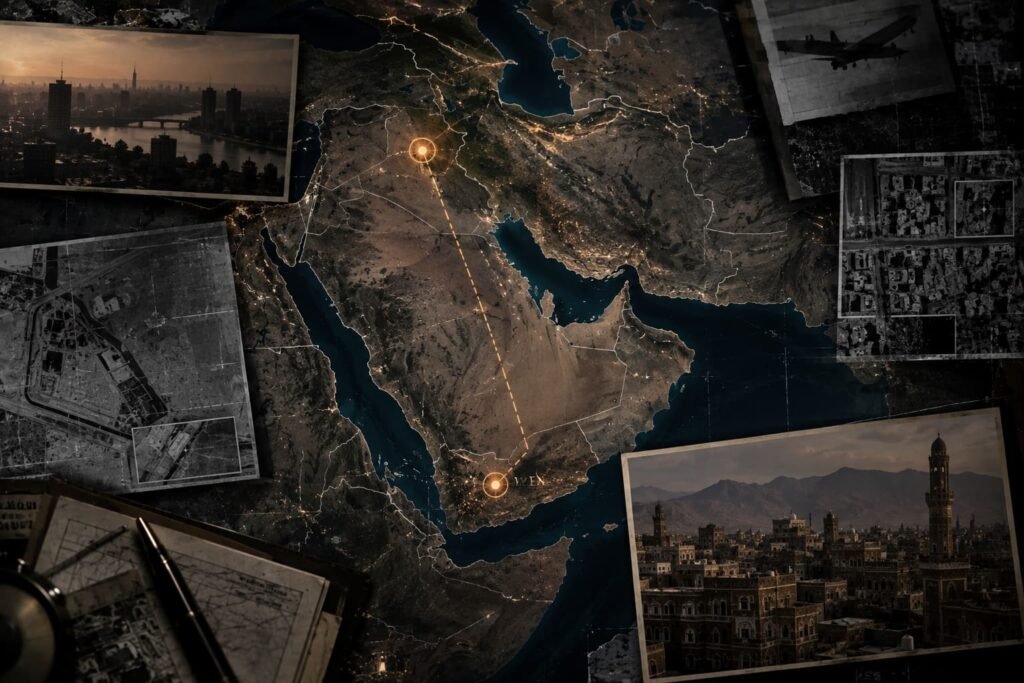
By this point, the American description of Shahlai had effectively connected three geographical theatres:
Iraq → Washington → Yemen
But the most remarkable chapter was still to come.
January 3, 2020: The Night America Hunted Two Commanders
The killing of Qasem Soleimani dominated the news in January 2020.
Soleimani was internationally recognizable.
Shahlai was not.
Yet according to four U.S. officials who spoke to The Washington Post, American forces were simultaneously conducting another operation in Yemen against Shahlai.
The operation failed to kill him.
The significance of that failed operation is difficult to understand without the preceding history.
Shahlai had already been connected by U.S. authorities to operations in Iraq.
His name had surfaced in connection with the 2011 Washington assassination plot.
By 2019, the U.S. government publicly described him as a senior Qods Force figure in Yemen.
Then, on the same night Soleimani was killed, another U.S. operation reportedly went after him.
The Pentagon did not publicly confirm the operation.
That leaves an important evidentiary boundary around the story.
The operation is strongly reported through U.S. officials cited by The Washington Post, but it should not be described as a publicly acknowledged Pentagon operation.
Why Did Shahlai Matter?
This is where the story becomes bigger than one man.
The Qods Force was built to operate beyond Iran’s borders.
The U.S. State Department describes the force as providing guidance, training, funding and weapons to armed partners and proxy groups in the region.
That means its influence does not necessarily depend on conventional military occupation.
A commander can matter because of the network around him.
Weapons can move.
Money can move.
Training can move.
People can move.
Information can move.
And local armed groups can remain locally organized while receiving external assistance.
Shahlai’s documented history, at least as presented by U.S. authorities, repeatedly places him somewhere inside that architecture.
That is what makes his trail more interesting than a conventional military biography.
The question isn’t simply whether he was “the man behind” every operation attributed to him.
The more useful question is what his repeated appearance tells us about the kind of organization he belonged to.
2026: Why Has His Name Returned?
The latest chapter brings us back to Yemen.
In September 2026, Houthi forces made major advances along Yemen’s Red Sea coast, while fighting threatened access to strategically important territory around the Bab el-Mandeb region. Reuters has reported that the escalation has increased concerns about regional security, shipping and energy routes.
That has once again pushed the Iran–Houthi relationship into international attention.
And Shahlai’s name has resurfaced.
Recent reporting has attributed a role in the latest Houthi offensive to Shahlai, but the evidence is not equivalent to the older U.S. government records.
Reuters has reported claims from Yemeni military sources linking him to the operation, while other accounts have disputed or declined to confirm the extent of direct Iranian operational control.
That means this part of the story remains reported rather than established.
We should resist the temptation to turn the current allegation into a definitive conclusion.
There is a significant difference between:
“Shahlai directed the 2026 offensive.”
and:
“Current reporting has attributed a role in the offensive to Shahlai, although the extent of his direct operational control remains contested.”
The second statement is less dramatic.
It is also much more defensible.
The Strange 19-Year Trail
Put the evidence together and a remarkable chronology emerges.
2007 — Iraq
U.S. authorities attribute the Karbala attack to Shahlai.
2008 — Washington’s official record
Treasury designates him and describes his role in Iraq.
2011 — Washington
U.S. authorities identify him as the Qods Force figure who allegedly coordinated the plot against the Saudi ambassador.
2012–2013 — Court proceedings
Manssor Arbabsiar pleads guilty and is sentenced to 25 years for his role in the assassination conspiracy.
2019 — Yemen
The U.S. government publicly offers up to $15 million for information about Shahlai and his networks.
January 2020 — Yemen
U.S. officials tell The Washington Post that Shahlai was targeted in a separate operation on the night Soleimani was killed. The operation reportedly failed.
2026 — Yemen
His name appears again in reporting surrounding a new Houthi offensive.
The individual episodes are separated by years and thousands of kilometres.
But the name keeps returning.
What We Know — And What We Don't
The public record is surprisingly uneven.
We know that Shahlai has been identified by the U.S. government as a senior IRGC-QF figure.
We know U.S. authorities attributed a role to him in the 2007 Karbala attack.
We know Treasury identified him in connection with the 2011 assassination plot.
We know Arbabsiar pleaded guilty and was sentenced for his role in that plot.
We know the U.S. government publicly offered a $15 million reward concerning Shahlai.
And we have strong reporting from U.S. officials that he was targeted in Yemen in January 2020.
But there are also things we do not know with comparable certainty.
The public record does not establish every operational decision attributed to him.
It does not provide a complete biography of his activities between major documented episodes.
And current claims about his direct role in the 2026 Houthi offensive remain subject to competing accounts.
That uncertainty isn’t a weakness in the story.
It is part of the story.
The Man Behind the Name
There is a natural temptation to turn Abdul Reza Shahlai into a cinematic “shadow commander.”
But that can obscure what is actually interesting.
His significance comes partly from the fact that he is not a household name.
The public remembers commanders such as Qasem Soleimani because their deaths, speeches and appearances became major news events.
Shahlai’s reported career looks different.
His name appears in documents, sanctions records, court proceedings, intelligence reporting and accounts of operations carried out far from Iran.
He is therefore useful as a window into something larger: the way Iran’s external military networks have operated across different countries and different periods.
And Yemen gives the story a particularly important geographical dimension.
At one end of the wider region lies the Strait of Hormuz.
At the other lies Bab el-Mandeb.
One connects the Persian Gulf with the Gulf of Oman and Arabian Sea.
The other connects the Red Sea with the Gulf of Aden.
Both are narrow maritime gateways through which enormous volumes of global commerce have historically moved.
A conflict that affects either one can therefore become an international economic problem rather than remaining a local military confrontation.
That is why the Shahlai story matters beyond the biography of one Iranian commander.
The Question That Remains

Almost two decades after his name first appeared prominently in U.S. records, Abdul Reza Shahlai remains a figure surrounded by incomplete information.
The strongest evidence tells us that American authorities have considered him an important Qods Force operative for years.
The historical record connects his name to Iraq.
The 2011 case connected him, through U.S. government attribution, to an alleged assassination plot in Washington.
The U.S. government later identified him as a senior figure in Yemen.
And in January 2020, American officials said he was targeted in a failed operation on the same night that Qasem Soleimani was killed.
Now, in 2026, his name has surfaced again as Yemen’s war once more threatens one of the world’s major maritime corridors.
Whether every current allegation about his role proves accurate is still an open question.
But the longer historical trail is already remarkable.
A man most people have never heard of has repeatedly appeared at the edges of conflicts that the world could not ignore.
That may be the most revealing thing about Abdul Reza Shahlai.
Not that he became famous.
But that, for nearly two decades, he apparently never needed to.