Friday, 13 November 2026Every headline has a past.WhatsApp Channel

Mughal Empire: History, Rulers, Wars and Legacy

Mughal Empire history from Babur to Aurangzeb

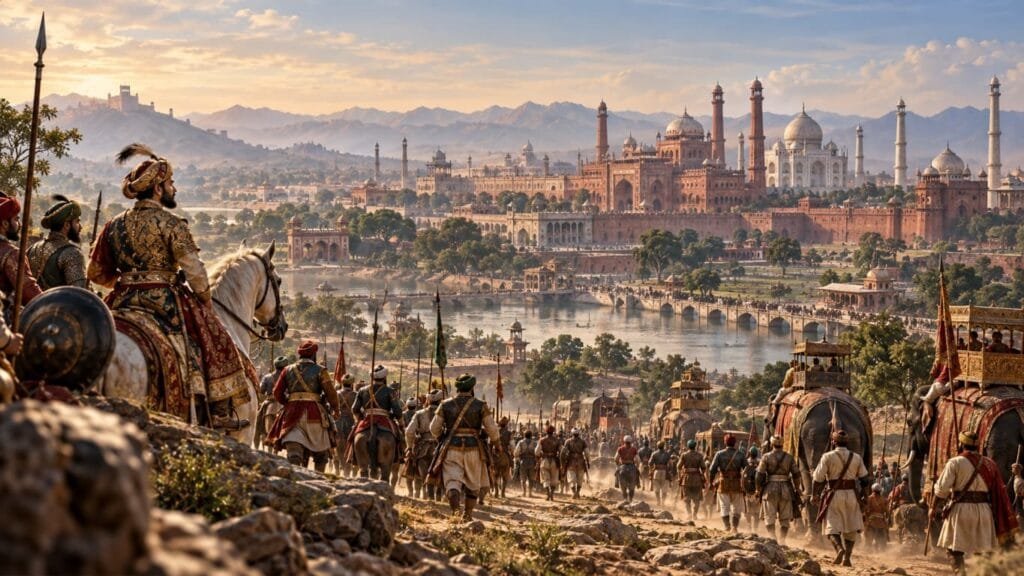
The Mughal Empire history began with Babur’s victory at Panipat in 1526 and became one of the most consequential imperial formations in South Asian history. Its story includes conquest and consolidation, succession wars, regional alliances, administrative institutions, long Deccan campaigns, extraordinary architecture and the gradual transfer of political power to regional states and, eventually, the British.

Mughal Empire History at a Glance

Founded in India1526, after Babur’s victory at the First Battle of Panipat
FounderZahir-ud-din Muhammad Babur
Major imperial centresAgra, Fatehpur Sikri, Lahore and Shahjahanabad (Delhi)
Major expansionEspecially under Akbar and Aurangzeb
Aurangzeb’s death1707
Last Mughal emperorBahadur Shah II (Bahadur Shah Zafar)
End of Mughal sovereignty1858, following the Revolt of 1857 and the transfer of power to the British Crown

What Was the Mughal Empire?

The Mughal Empire was a dynasty founded in the Indian subcontinent by Babur, a Timurid prince from Central Asia. NIOS describes the Mughal replacement of the Delhi Sultans in 1526 and notes that Mughal rule continued in a powerful form until 1707, followed by a largely nominal imperial presence until 1857. The Mughal state did not appear on an empty political landscape: north India and the Deccan already contained several regional powers when Babur entered the subcontinent.

The empire changed considerably across its long history. The political system of Babur’s first decades was not identical to the mature imperial structure associated with Akbar, and the political world of the eighteenth-century Mughal court was very different from that of Shah Jahan or Aurangzeb. For that reason, “Mughal India” should be treated as a changing historical period rather than a single uniform system.

    How Did Babur Establish the Mughal Empire?

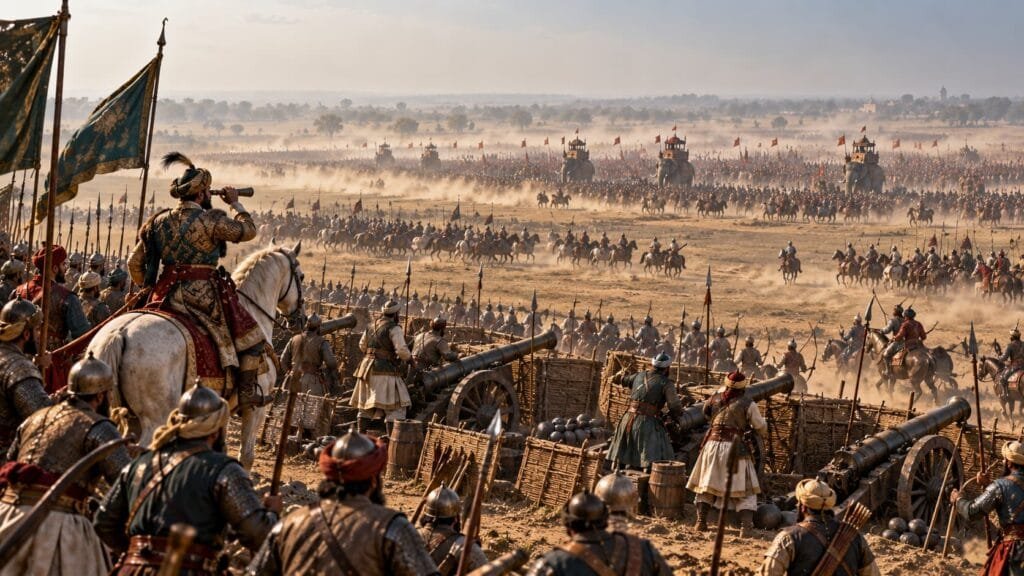
    Babur at the First Battle of Panipat in 1526
    Babur's victory over Ibrahim Lodi at Panipat in 1526 established Mughal power in northern India.

    Babur’s victory at the First Battle of Panipat in 1526 ended the Lodi dynasty’s control of Delhi and established a new imperial contender. NIOS explains that the Delhi Sultanate had weakened before Babur’s invasion and that several independent kingdoms and regional powers existed across the subcontinent.

    Panipat was not the end of Babur’s struggle. In 1527 he fought Rana Sanga at Khanwa, a confrontation that helped secure his position in north India. Babur’s success rested on a combination of leadership, cavalry tactics, field fortification and the use of gunpowder artillery, although the empire still required further consolidation after his death in 1530.

    The Mughal Emperors

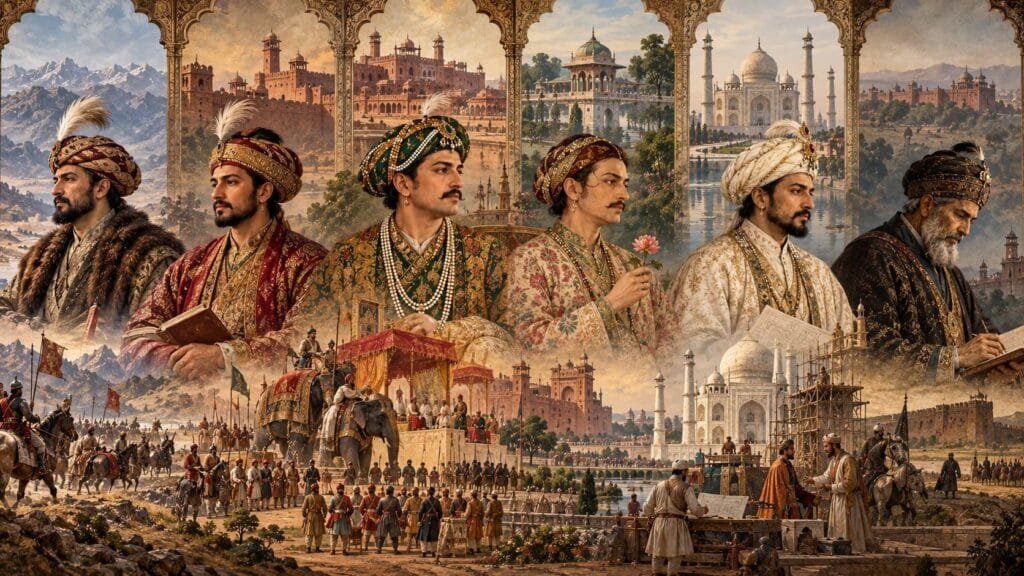
    Six rulers shaped the Mughal Empire's transformation from a newly established dynasty into a major South Asian imperial power
    Six rulers shaped the Mughal Empire's transformation from a newly established dynasty into a major South Asian imperial power.

    Babur (1526–1530)

    Babur brought a Central Asian Timurid political tradition into a new Indian setting. His reign was short, but the victories at Panipat and Khanwa created the foundation on which his successors built. His memoir, the Baburnama, is one of the major textual sources for understanding his life and observations.

    Humayun (1530–1540; 1555–1556)

    Humayun inherited an empire that remained vulnerable. He faced Afghan opposition and rivalry within his own family. Sher Shah Suri defeated him in a series of conflicts, forcing him into exile. Humayun eventually returned and recovered Delhi in 1555, but he died the following year.

    The Sur interregnum matters to Mughal history because the administrative practices associated with Sher Shah later formed part of the political environment inherited by Akbar. The Mughal state therefore developed through both continuity and change rather than from a single imperial blueprint.

    Akbar (1556–1605)

    Akbar inherited the throne as a teenager and became the architect of the empire’s major sixteenth-century consolidation. His reign saw territorial expansion, stronger provincial administration, evolving relations with Rajput states and the development of a sophisticated imperial bureaucracy and revenue system.

    Akbar also reshaped the imperial court’s approach to religious and cultural diversity. His policy of sulh-i kul, generally translated as universal peace, became associated with a broad approach to governing a diverse population. His reign also produced Fatehpur Sikri, constructed between 1571 and 1573 and used as the Mughal capital for roughly a decade, according to UNESCO.

    Jahangir (1605–1627)

    Jahangir inherited a large and relatively consolidated empire. His reign is particularly associated with Mughal painting, court culture and the political influence of Nur Jahan. The imperial court continued to develop the artistic traditions that had grown under Akbar.

    Shah Jahan (1628–1658)

    Shah Jahan’s reign is closely associated with the high refinement of Mughal architecture. The Taj Mahal was begun in 1632 as a mausoleum for Mumtaz Mahal and the principal complex was completed in 1648, according to UNESCO. Shah Jahan also founded Shahjahanabad, the new imperial capital whose palace-fort is now known as the Red Fort.

    UNESCO describes the Red Fort’s planning as a culmination of architectural development begun under the early Mughals, refined under Shah Jahan through a fusion of Islamic, Persian, Timurid and Hindu traditions.

    Aurangzeb (1658–1707)
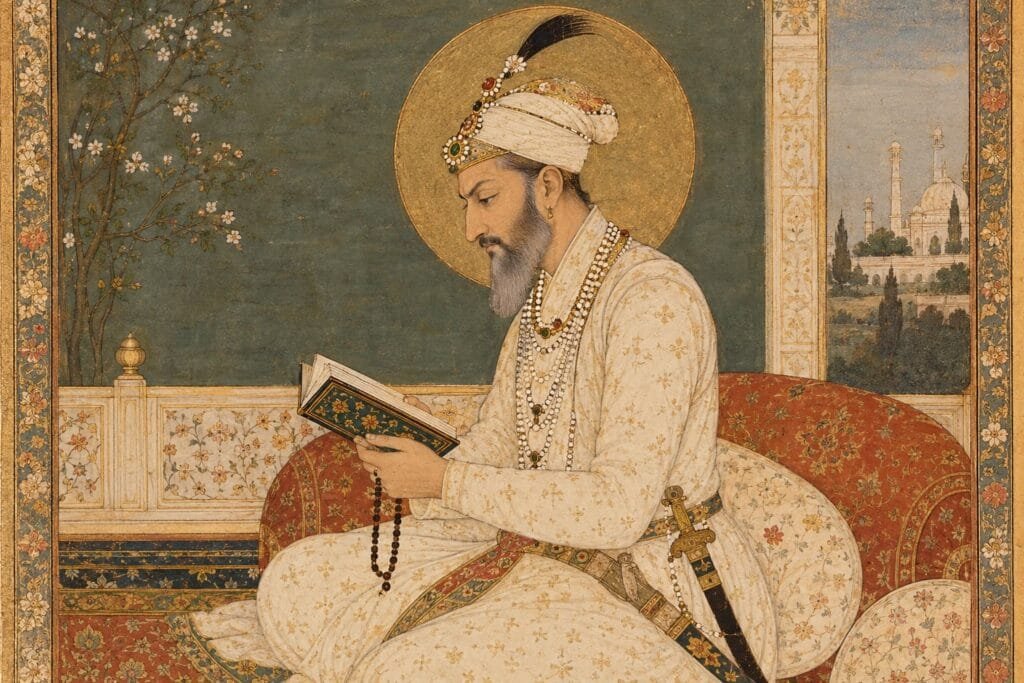
    Aurangzeb Mughal emperor portrait

    Aurangzeb came to power after a succession struggle among Shah Jahan’s sons. His reign expanded Mughal territory deep into the Deccan, including the annexation of Bijapur in 1686 and Golconda in 1687. At the same time, prolonged warfare placed major demands on the imperial military and revenue system.

    The Mughal-Maratha conflict became one of the defining struggles of Aurangzeb’s later reign. Shivaji’s rise, the continuation of Maratha resistance after his death, and the prolonged Deccan campaigns shaped the political history of the late seventeenth century.

    Aurangzeb died in 1707. His death did not instantly end the Mughal Empire, but it was followed by succession struggles and increasing regional autonomy. Read HypeHive’s detailed account: How Did Aurangzeb Die?
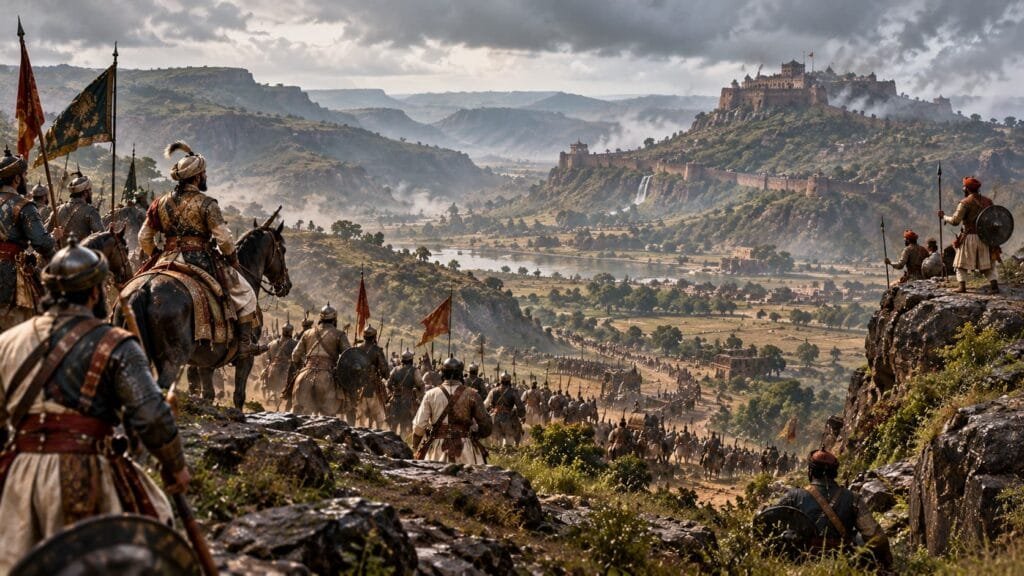
    Major Wars of the Mughal Empire

    The prolonged Mughal-Maratha conflict became one of the defining political and military struggles of Aurangzeb's later reign
    The prolonged Mughal-Maratha conflict became one of the defining political and military struggles of Aurangzeb's later reign.

    First Battle of Panipat — 1526

    Babur defeated Ibrahim Lodi and established a new power in north India. The battle is conventionally treated as the beginning of Mughal rule in India.

    Battle of Khanwa — 1527

    Babur defeated the Rajput coalition led by Rana Sanga. The victory strengthened the new Mughal position around Delhi and Agra.

    Second Battle of Panipat — 1556

    Akbar’s forces, under Bairam Khan’s leadership, defeated Hemu. The victory helped restore Mughal control after Humayun’s brief restoration and created the conditions for Akbar’s later consolidation.

    Battle of Haldighati — 1576

    Mughal forces commanded by Man Singh confronted Maharana Pratap’s forces. The battle did not end resistance from Mewar, which continued after the engagement.

    The Deccan Wars

    Competition in the Deccan became increasingly important to Mughal strategy. Under Aurangzeb, Mughal forces conquered Bijapur and Golconda, but the empire then faced prolonged resistance and campaigning in the region.

    The Mughal-Maratha Wars

    The Mughal-Maratha conflict cannot be reduced to one battle. It developed over decades and involved changing alliances, sieges, raids, territorial struggles and competing claims to political authority in the Deccan. Shivaji’s state-building and the later resistance led by Sambhaji, Rajaram and Tarabai formed important chapters in this history.

    Explore Chhatrapati Sambhaji Maharaj · How Did Shivaji Maharaj Die?

    How Did the Mughal Empire Work?

    The Mughal Empire was not governed only through battlefield victories. Its durability depended on institutions that connected the emperor, military commanders, revenue collectors, local elites and provincial administration.

    The Mansabdari System

    NCERT describes the mansabdari system as a military-cum-bureaucratic apparatus responsible for civil and military affairs. Mansabdars could receive cash payments or revenue assignments known as jagirs, and assignments could be transferred periodically.

    Revenue and Agriculture

    Land revenue was central to imperial finance. The Mughal state developed methods of measuring and assessing agricultural production, while local intermediaries and zamindars remained important in the collection and functioning of rural society.

    Provinces and Local Power

    The empire depended on provincial officials but could not eliminate local political power. Zamindars, regional elites and established communities continued to influence how imperial authority worked on the ground. This relationship between central power and local society became especially important as Mughal authority weakened after 1707.

    Life in Mughal India

    There was no single experience of life under the Mughals. The empire contained farmers, artisans, merchants, soldiers, nobles, religious scholars, labourers and court elites living in very different circumstances.

    Major cities such as Agra, Lahore and Delhi became centres of administration, craft production, commerce and elite culture. Long-distance trade connected the subcontinent to Central Asia, Persia, the Indian Ocean world and European trading companies. At the same time, the overwhelming majority of people remained connected to agriculture and village economies.

    Mughal Architecture

    Mughal architecture developed over generations rather than appearing fully formed under one emperor. UNESCO identifies Mughal architecture as a fusion of traditions including Islamic, Persian, Timurid and Indian elements.

    Humayun’s Tomb
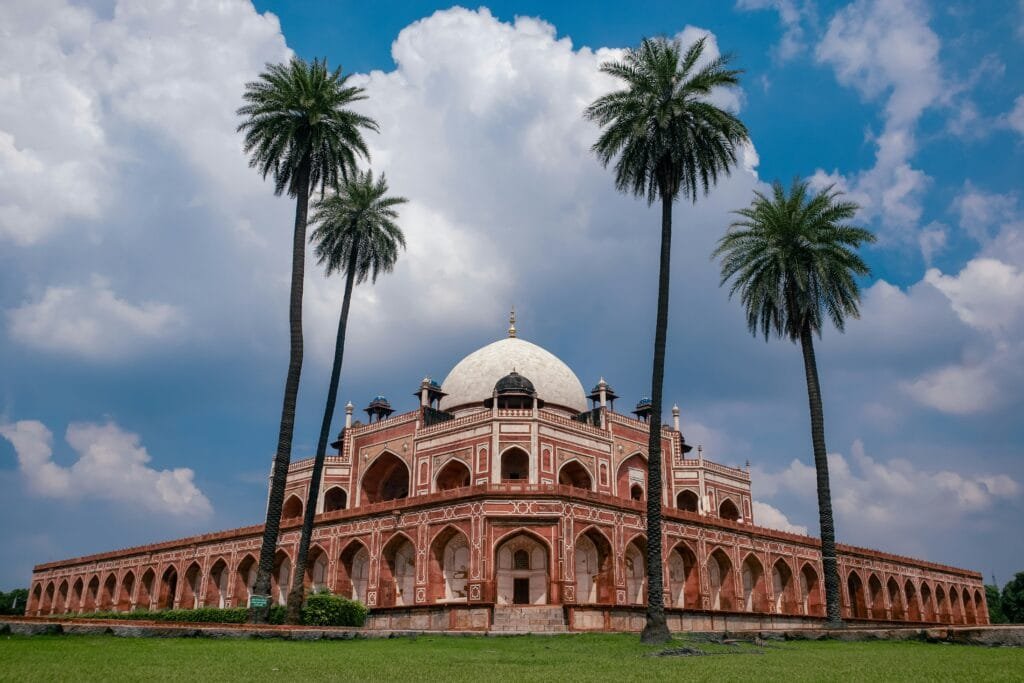
    Humayun’s tomb

    Built in Delhi in the sixteenth century under the patronage of Humayun’s son Akbar, Humayun’s Tomb became an important early example of the grand Mughal garden-tomb tradition. UNESCO describes it as the first major garden-tomb on the Indian subcontinent and an architectural precursor to later monuments.

    Fatehpur Sikri
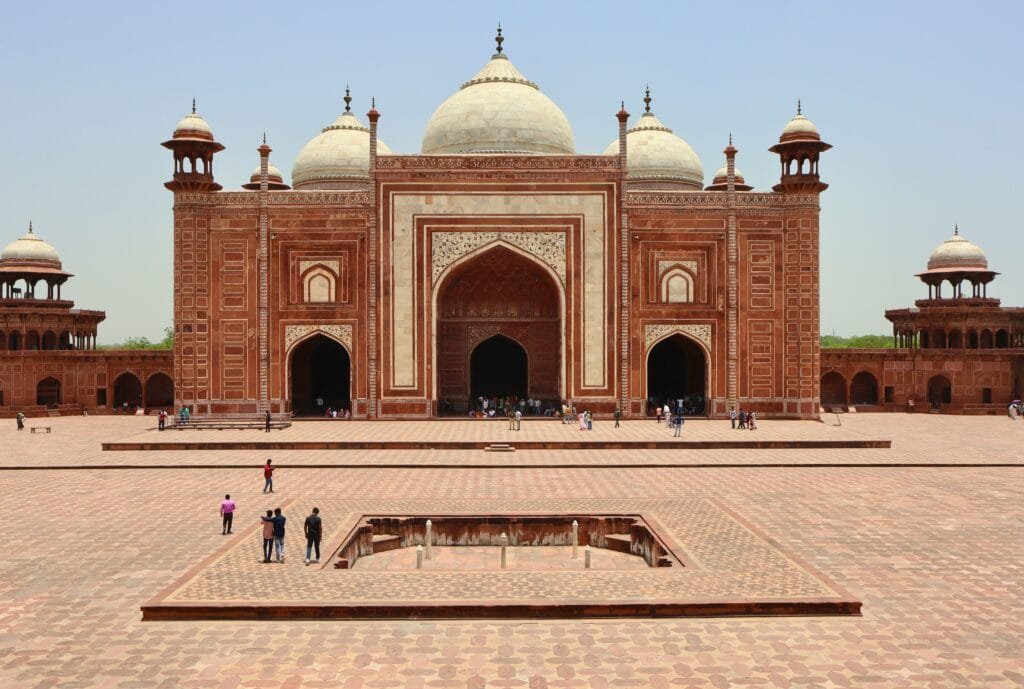
    Fatehpur Sikri built under Mughal emperor Akbar

    Akbar’s planned city was constructed between 1571 and 1573. UNESCO describes its architecture as an amalgamation of indigenous and Persian styles and notes its influence on later Mughal town planning.

    Taj Mahal
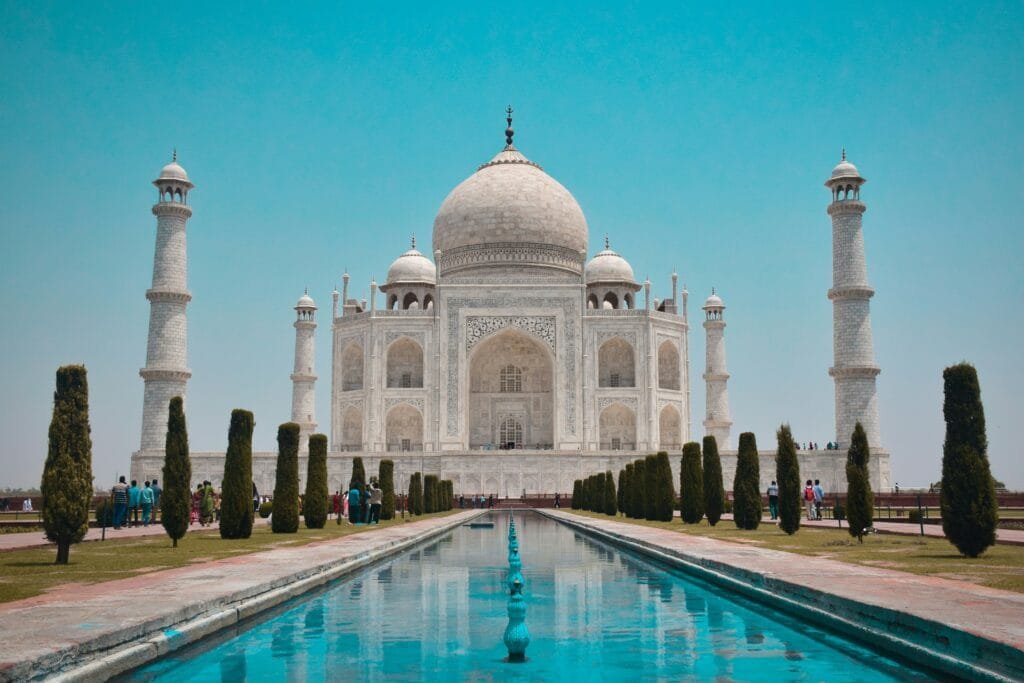
    Taj Mahal built under Shah Jahan during the Mughal Empire

    Shah Jahan commissioned the Taj Mahal as the mausoleum of Mumtaz Mahal. Construction began in 1632 and the principal complex was completed in 1648; additional components followed. The monument brought together architects, craftsmen and materials from across the empire and beyond.

    Red Fort
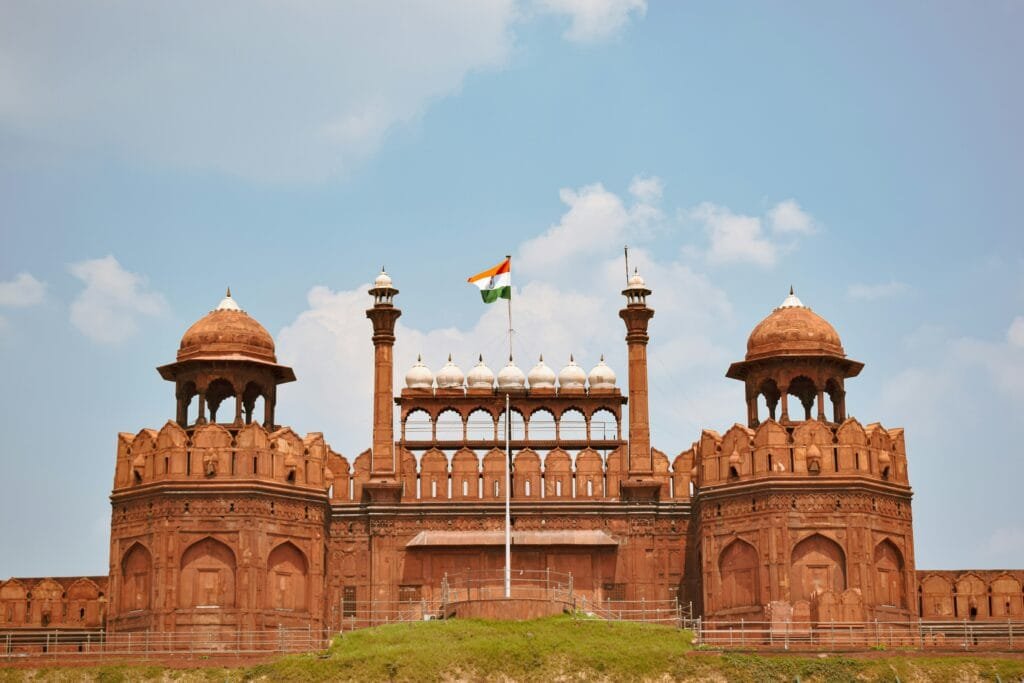
    Red Fort

    The Red Fort was built as the palace-fort of Shahjahanabad. UNESCO describes it as a major expression of the mature Mughal architectural tradition and highlights its fusion of Persian, Timurid, Islamic and Hindu elements.

    Why Did the Mughal Empire Decline?

    The decline of Mughal power was a long process rather than a single event caused by one ruler. Several pressures interacted:

    • Succession struggles: Mughal succession was repeatedly contested, often producing civil war.
    • Long Deccan warfare: prolonged campaigning consumed military and financial resources.
    • Regional political power: governors, zamindars and regional states gained greater autonomy as central authority weakened.
    • Maratha expansion: Maratha power became increasingly important across western and central India.
    • External invasions: Nadir Shah’s 1739 invasion exposed the vulnerability of the Mughal centre.
    • Changing political economy: the eighteenth century saw major shifts in revenue, military organization, trade and regional state formation.
    • British expansion: the East India Company gradually displaced older political powers and eventually reduced the Mughal emperor to a largely symbolic position.

    NCERT’s account of eighteenth-century India emphasizes the growth of regional kingdoms and the declining ability of Delhi to exercise effective political authority after Aurangzeb’s death.

    What Happened to the Mughal Empire After Aurangzeb?

    After Aurangzeb died in 1707, Mughal emperors continued to occupy the imperial throne, but the relationship between Delhi and the provinces changed. Regional powers including the Marathas, Sikhs, Jats, Rajputs, Awadh, Bengal and Hyderabad became increasingly important in the eighteenth-century political order.

    The 1739 invasion of Nadir Shah and the 1761 Third Battle of Panipat were major turning points in the changing political landscape. The East India Company’s victory at Buxar in 1764 was followed by the grant of the diwani of Bengal, Bihar and Orissa to the Company in 1765, further shifting the balance of power.

    By the nineteenth century, the Mughal emperor’s political authority was severely restricted. During the Revolt of 1857, rebels in Delhi proclaimed Bahadur Shah Zafar as their symbolic leader. After the British recaptured Delhi, he was tried and exiled to Rangoon. In 1858, the British Crown formally assumed direct rule in India, ending the Mughal dynasty’s sovereignty.

    Mughal Legacy

    The Mughal legacy is visible in architecture, painting, gardens, court culture, administrative institutions, urban history and material culture. But the legacy is not simply a list of monuments. Mughal rule interacted with older Indian traditions and with regional societies, producing forms that changed over time.

    UNESCO’s descriptions of Fatehpur Sikri, the Red Fort, Humayun’s Tomb, the Taj Mahal and Lahore Fort repeatedly emphasize this interaction between imported Persianate and Timurid traditions and local Indian craftsmanship and forms.

    The Mughal period also remains a subject of historical debate. Questions about religious policy, temple patronage and destruction, relations with regional powers, taxation and the meaning of imperial rule are interpreted differently by historians and by later political movements. A useful history distinguishes contemporary evidence from later memory and avoids treating a three-century period as politically or socially uniform.

    Frequently Asked Questions About the Mughal Empire

    Who founded the Mughal Empire?

    Babur founded Mughal rule in India after defeating Ibrahim Lodi at the First Battle of Panipat in 1526.

    Who was the most powerful Mughal emperor?

    That depends on the criterion being used. Akbar was central to imperial consolidation and administrative development; Shah Jahan is strongly associated with architectural patronage; Aurangzeb ruled the empire at its greatest territorial extent. These are different measures and should not be treated as interchangeable.

    When did the Mughal Empire end?

    Mughal political power declined gradually after 1707. Bahadur Shah Zafar was deposed after the Revolt of 1857, and Mughal sovereignty formally ended in 1858 when the British Crown assumed direct rule.

    Why was the Mughal Empire important?

    It shaped major parts of South Asian political history and left enduring influences on architecture, art, administration, urban development and material culture.

    What happened after Aurangzeb died?

    Later Mughal emperors continued to rule nominally, but regional states and powers gained increasing autonomy. The eighteenth century therefore saw political fragmentation alongside the continued survival of the Mughal imperial institution.

    Explore More HypeHive History

    Quiz: The Mughal Empire

    5 questions. Pick your answers, then check your score. Each answer is explained.

    1. In which year did Babur win the First Battle of Panipat?
    Show answer

    Answer: 1526. Babur defeated Ibrahim Lodi at Panipat in 1526, founding Mughal rule in India.

    2. Who drove Humayun out of North India in 1540?
    Show answer

    Answer: Sher Shah Suri. Sher Shah Suri defeated Humayun, founding the Sur Empire. Humayun regained Delhi only in 1555.

    3. Which emperor built Shahjahanabad, today's Old Delhi?
    Show answer

    Answer: Shah Jahan. Shah Jahan built the walled city of Shahjahanabad, completed in 1648.

    4. Who was the last Mughal emperor?
    Show answer

    Answer: Bahadur Shah Zafar. Bahadur Shah Zafar ruled until 1857 and was exiled to Rangoon after the Revolt of 1857.

    5. Whose death in 1707 is usually seen as the start of the empire's decline?
    Show answer

    Answer: Aurangzeb. Aurangzeb's death in 1707 was followed by a succession war and decades of weakening central authority.

    More history quizzes: see all quizzes.

    Sources & Further Reading

    📲
    Every headline has a past.
    Get the history behind today's news + one "On This Day" story, daily on WhatsApp.
    Follow on WhatsApp →
    Picture of Himanshu Pant

    Himanshu Pant

    Himanshu Pant is the founder and editor of HypeHive. He holds a BA in Political Science and History and an MA in English, and writes on Indian and world history, connecting current events to their historical roots using primary and scholarly sources.
    Scroll to Top