
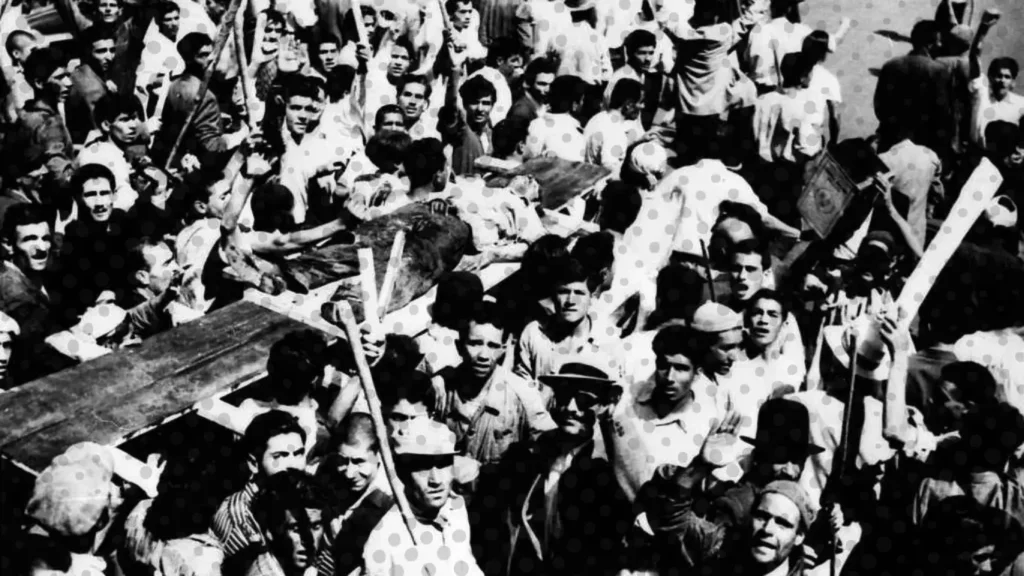
The 1953 Iran coup removed Prime Minister Mohammad Mosaddegh on 19 August 1953, and it happened one day after Washington had told its own agents the operation had failed. That telegram now sits in the US government’s official documentary record. So does an earlier decision to spend up to a million dollars bringing him down.
Seventy-three years later, the coup is back in the headlines. The United States and Israel began bombing Iran on 28 February 2026, and President Donald Trump has said he wants regime change without setting out how he would achieve it, Fortune reported in March. As of 18 October, Al Jazeera reported Trump saying he would not attack Iran before the US midterm elections. Every time Washington talks about changing Iran’s government, Iranians point back to one summer in Tehran.
Most retellings skip the part that matters most: how a plot that had collapsed on 16 August, and that its own sponsors had written off, succeeded about 72 hours later. This story follows those days through the declassified files. It sets out what the documents prove, what they leave open, who ended up with Iran’s oil, and why 1953 is a poor template for 2026.
What was the 1953 Iran coup?
The 1953 Iran coup was the overthrow of Prime Minister Mohammad Mosaddegh on 19 August 1953. Britain’s MI6 and the CIA planned it after Mosaddegh nationalised the British-controlled Anglo-Iranian Oil Company in 1951. Royalist army units and paid street crowds forced him out, restoring the Shah’s power until the 1979 revolution.
The CIA’s codename was TPAJAX, usually shortened to Operation Ajax. British planners called their side Operation Boot. In Iran, the event is remembered as the 28 Mordad coup, after its date in the Iranian calendar. The CIA’s internal history, released through the National Security Archive in 2013, states that the coup was “carried out under CIA direction as an act of U.S. foreign policy.” According to Encyclopaedia Britannica, some 300 people died in the fighting in Tehran.
Who was Mohammad Mosaddegh?
Mohammad Mosaddegh (also spelled Mossadegh or Mosaddeq) was an aristocratic, European-educated nationalist who became Iran’s prime minister in 1951, aged 69. He wanted two things: Iranian control of Iranian oil, and a parliament strong enough to limit the Shah.
He was not chosen by a national popular vote. According to the Council on Foreign Relations’ historical account, he agreed to become prime minister on condition that the Majlis, Iran’s parliament, nationalise the oil industry. It did so unanimously. That makes him a parliament-backed, constitutional prime minister with huge popular support, which is why the common shorthand “democratically elected” is broadly fair but not exact.
His record is not spotless, and honest accounts say so. By 1953 he had pushed the Majlis for emergency governing powers. That July, the same CFR account notes, he called a national referendum on his government that was clearly rigged and returned 99.4 per cent support. Admirers see a patriot cornered by an empire. Critics see a leader who was eroding the institutions he claimed to defend. The evidence supports parts of both pictures.
Iran’s oil and the Anglo-Iranian Oil Company
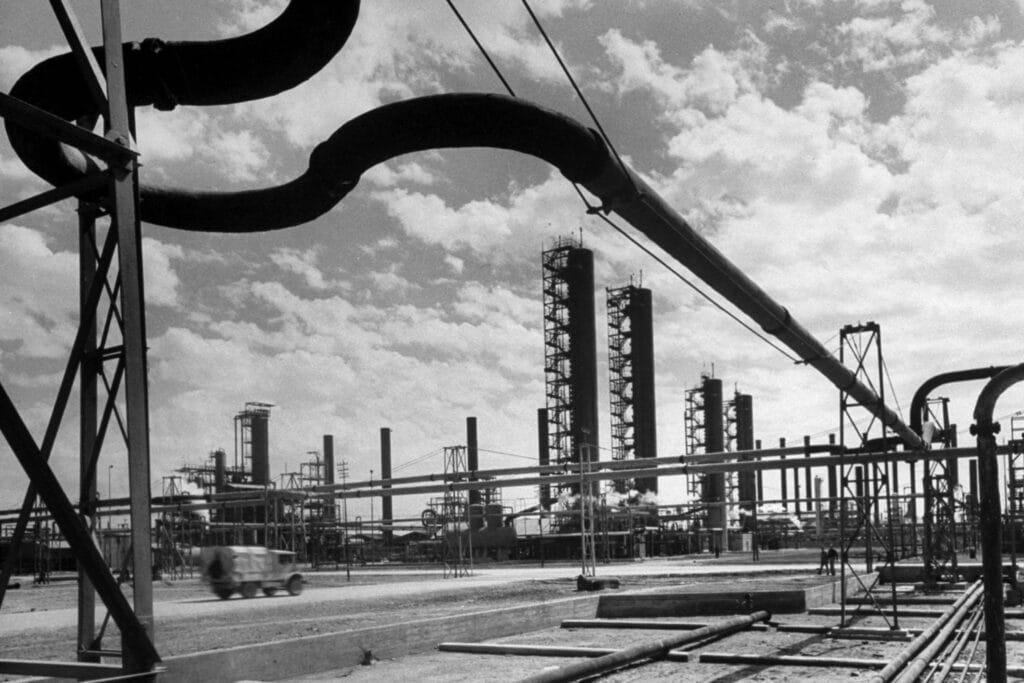
The quarrel that ended in a coup began with an oil deal Iranians had long considered unfair. The Anglo-Iranian Oil Company (AIOC, originally the Anglo-Persian Oil Company and later BP) held a monopoly over Iran’s oil, and the British government owned the controlling stake.
London bought 51 per cent of the company in 1914, when the Royal Navy was switching its fleet from coal to oil, according to the University of Maryland’s digital archive of the dispute. Under the original concession Iran was entitled to 16 per cent of annual profits. In practice it probably received less: the CFR account notes that the company never let Iranian officials see its books. By 1950, the same archive notes, Saudi Arabia had won a 50-50 profit split from the American-run ARAMCO, which made Iran’s terms look worse still.
In March 1951 the Majlis voted to nationalise the industry. Britain treated it as theft, took Iran to the International Court of Justice and blockaded Iranian oil exports. Exports collapsed, and with them much of the government’s income. Historians call the standoff the Abadan Crisis, after the refinery at its centre.
The Indians of Abadan
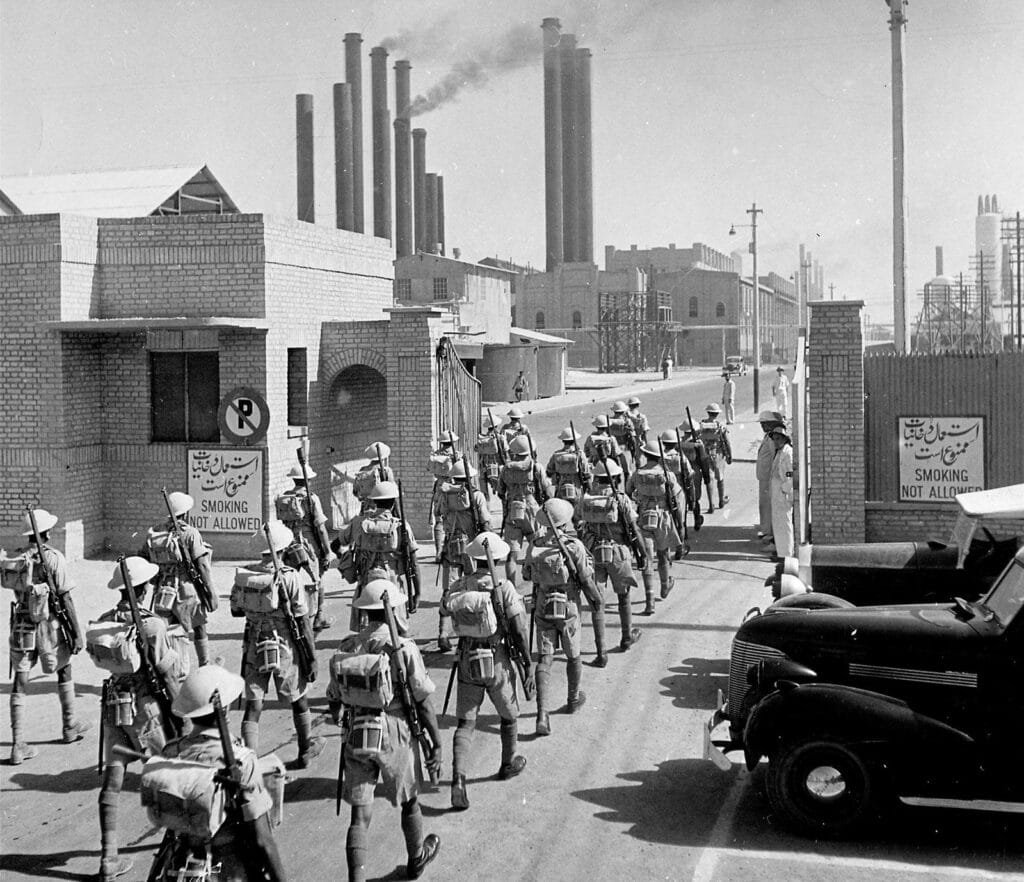
Abadan, a refinery town on the Shatt al-Arab waterway, was then home to the world’s biggest oil refinery, and Indians worked there. Research from the University of Copenhagen describes imported Indian labourers housed in a district known as the “Indian Lines”, where Iranian residents attacked them during unrest in December 1942. The same research points out that most histories of Abadan mention these workers only in passing, or leave them out entirely.
The connection ran deeper. When Britain and the Soviet Union invaded neutral Iran in August 1941, it was Indian troops of the British Indian Army who took Abadan. A British newsreel commentary from September 1941 shows them resting after capturing the town, with some sent inland to guard the pipelines. A decade before the coup, the refinery Britain would fight to keep had been secured partly by soldiers from undivided India. For a sense of how far the centre of the refining world has since shifted, see where the world’s biggest refinery stands today.
Why did Britain and the US overthrow Mosaddegh?
Britain wanted its oil back and Mosaddegh gone. The United States joined only after President Dwight Eisenhower took office in 1953 and his administration became convinced that Iran was sliding toward collapse or communism.
President Harry Truman had refused. According to the CFR account, he dismissed British proposals to invade Iran and instead tried to mediate, even hosting Mosaddegh in Washington. In October 1952, after learning that London was plotting against him, Mosaddegh broke off diplomatic relations with Britain and expelled its diplomats.
The British then worked on the incoming Eisenhower team. Britannica notes that Britain, unwilling to act alone, persuaded the Americans by playing on Cold War fears that Mosaddegh was aligning with Iran’s communist Tudeh Party, even though he was an avowed anticommunist. Eisenhower was not an easy sell. As late as March 1953, CFR records, he still described Mosaddegh as the only hope for the West in Iran. By June, after Mosaddegh rejected further oil compromises and street protests grew, Eisenhower approved the operation.
Was the 1953 coup about oil or communism?
Historians still disagree, and the honest answer is: both, plus a third factor that rarely makes popular accounts. Gregory Brew, writing in the Texas National Security Review, notes that scholars tend to stress either fear of communism or the desire to control oil. He argues that a third belief also drove the decision: American officials became convinced Iran could not survive without oil revenue and would collapse unless the United States intervened.
Others weigh it differently. Historian Ervand Abrahamian, as summarised in a Foreign Affairs review of his research, argues that neither the British nor the Americans actually saw the Tudeh Party as an imminent threat. The CIA’s own internal history, as analysed by political scientist Mark Gasiorowski in MERIP, called the oil question a “secondary” consideration. That is the agency’s description of itself, not a neutral verdict.
There is also a live dispute over whether a deal was still possible. A review in Dawn sets out the disagreement. Abrahamian holds that there was no room for compromise over who owned the oil. Darioush Bayandor argues that the British were ready to compromise when Mosaddegh broke off talks in March 1953.
How Operation Ajax worked
Operation Ajax combined money, propaganda and royal decrees. The plan was to turn Iranians against Mosaddegh, have the Shah dismiss him, and install General Fazlollah Zahedi, a former member of Mosaddegh’s government, as prime minister.
The money came first. According to Gasiorowski’s MERIP analysis of the CIA’s internal history, the agency allocated $1 million to its Tehran station in early April 1953. At least $60,000 of it went to Zahedi in the months before the coup. The same history, written by CIA planner Donald Wilber in 1954 and leaked to The New York Times in 2000, describes agents arranging press stories against Mosaddegh in both Iran and the United States. The CFR account summarises the rest of the plan: pay journalists, mullahs and politicians to attack him; pay street gangs to create disorder; then send paid demonstrators to the Majlis. The man on the ground was Kermit Roosevelt Jr., a CIA officer and grandson of President Theodore Roosevelt.
15–16 August: the coup that failed
The first attempt collapsed within hours. The Shah, after weeks of hesitation and heavy American pressure, signed decrees dismissing Mosaddegh and naming Zahedi prime minister. When the decree was delivered on the night of 15 August, Mosaddegh refused to accept it and announced that he had foiled a coup. According to the CFR account, the Shah fled the country, Zahedi went into hiding, and the CIA directed Roosevelt to leave Iran.
“Tried and failed”: the 18 August cable
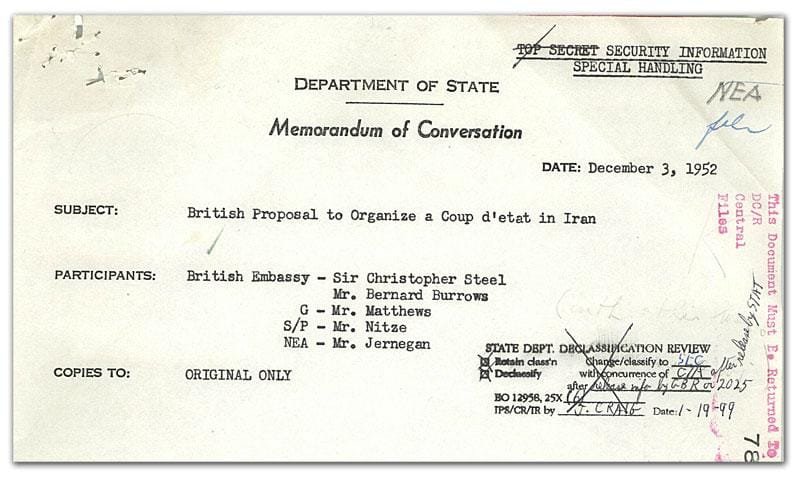
Washington then put the failure in writing. On 18 August, CIA headquarters cabled its people in Iran that the “operation has been tried and failed”. It instructed them to avoid any action against Mosaddegh that could be traced back to the United States. That telegram, made public in the State Department’s 2017 retrospective volume on Iran and reported by The Conversation, is the single most revealing document in the story. Roosevelt ignored it. He stayed, kept working his networks, and the next morning the streets of Tehran changed sides.
19 August: who filled the streets?
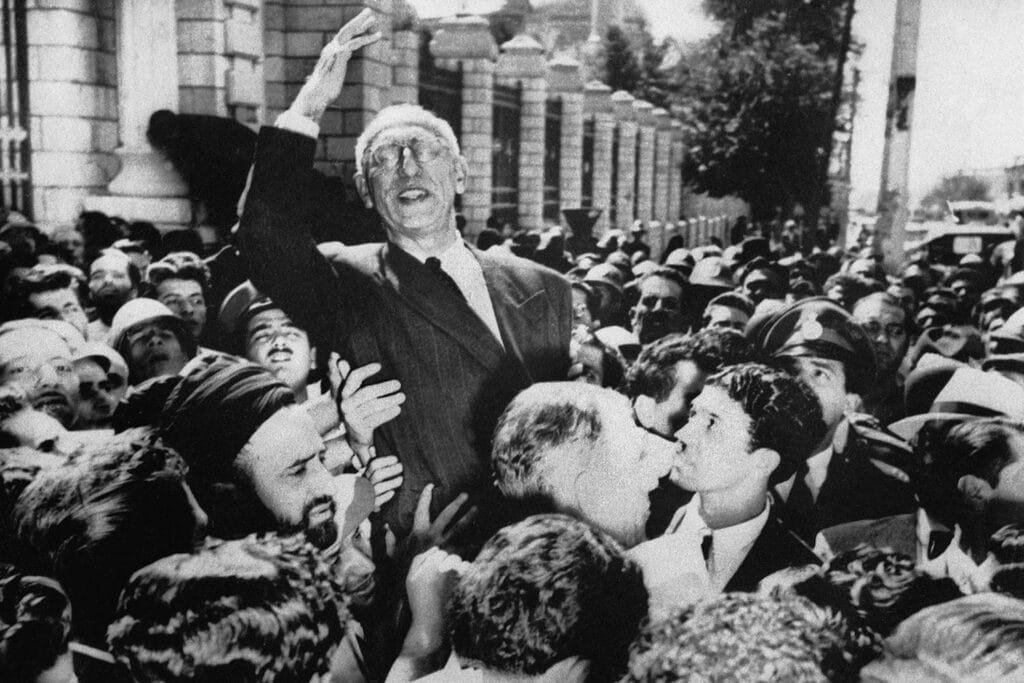
The crowds and soldiers who toppled Mosaddegh on 19 August were a mix: royalist army units, demonstrators organised with money, clerics and their followers, and Iranians who had genuinely turned against him. The documents prove some of this, suggest more, and leave some of it contested.
Clerics (strong evidence for one, none for another): A 2018 analysis by the National Security Archive found strong evidence that the CIA paid Ayatollah Mohammad Behbehani to organise demonstrations. It found nothing to show that Ayatollah Abol-Ghasem Kashani was paid. Earlier reporting that Kashani asked the CIA for money remains unproven.
Street gangs (probable, with a twist): Abrahamian’s research, per the Foreign Affairs review, names the notorious gang leader Sha’ban Ja’fari, known as “Sha’ban the Brainless”, among the figures recruited. However, an account from Iran’s Institute for Iranian Contemporary Historical Studies says Ja’fari was in prison until noon on 19 August and was released on Zahedi’s order. His exact role that morning is disputed.
Ordinary Iranians (unresolved): The CFR account leaves open whether the tide turned because the CIA paid protesters, because Mosaddegh’s political enemies seized their chance, or because many Iranians had come to believe he meant to abolish the monarchy.
Put the documents side by side and a clearer picture emerges than most accounts offer. The plot really did fail. Washington really did give up on it. What rescued it was a CIA officer who disobeyed orders, Iranian allies with their own reasons to want Mosaddegh gone, and money aimed at the precise points where his support had already worn thin. Foreign powers did not simply conjure the crowds. They paid for and organised enough of them to turn a fragile situation decisively.
What happened to Mosaddegh after the coup?
Mosaddegh was convicted of treason, served three years in prison and spent the rest of his life under house arrest, dying in March 1967. According to the CFR account, one of his closest advisers was executed, as were more than a dozen military officers and student leaders allied with his government.
He lived out his confinement at his family estate in Ahmadabad, outside Tehran, where he is also buried. Indian readers may come across stock-photo captions and websites claiming he died in “Ahmadabad, India”. That is a mix-up of two place names. Mosaddegh’s Ahmadabad is a village near Tehran and has nothing to do with Ahmedabad in Gujarat.
Who got Iran’s oil after 1953?
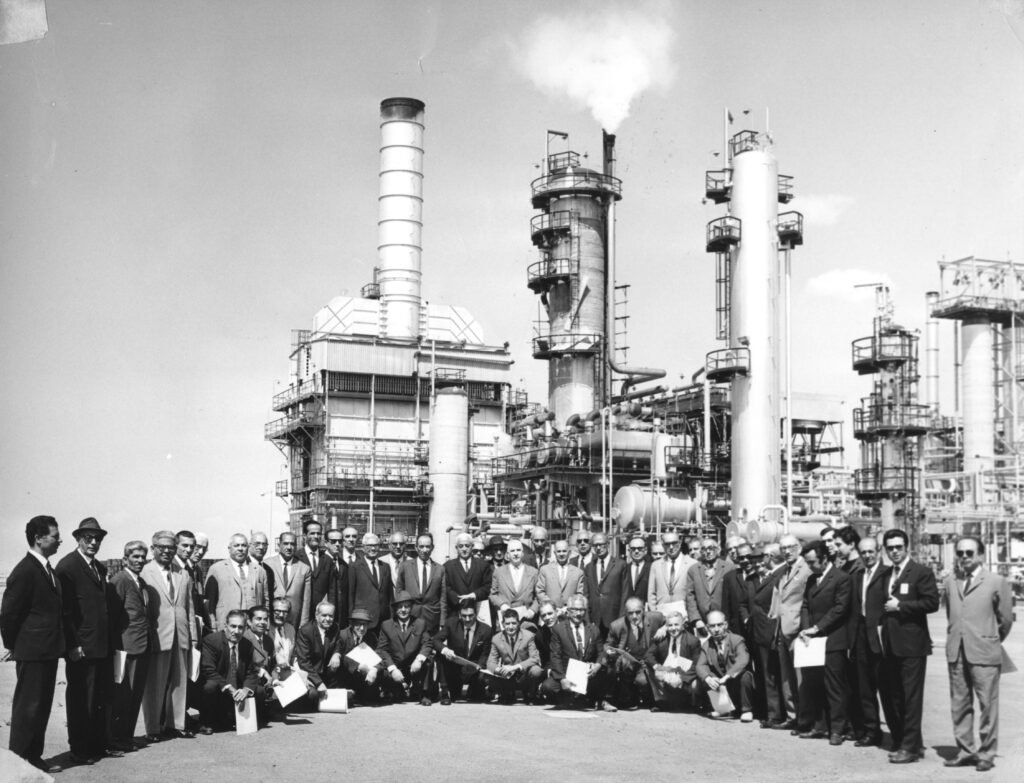
Britain did not get its monopoly back. In 1954 the United States brokered an international consortium in which American companies took the same share as the old British company, and Iran received half the profits.
A State Department telegram from March 1954, published in the official record, shows Washington and London agreeing that the AIOC and the American companies would each hold 40 per cent, with the remaining 20 per cent split between Shell and a French company. Iran formally kept ownership of its reserves.
The consortium ran production and held the right to buy the oil, according to the record of a later arbitration, under the 50-50 profit formula then spreading across oil-producing countries. The University of Maryland archive notes that the US government had to bring initially reluctant American oil companies into Iran, sidelining BP in the process.
This corrects a claim repeated on some popular history sites, that the Shah “signed over 40 per cent of Iran’s oil fields” to US companies. American firms gained 40 per cent of a consortium that operated Iran’s oil. The fields themselves stayed Iranian on paper.
When did the CIA admit its role?
The CIA formally acknowledged its role in August 2013, sixty years after the coup, when the National Security Archive published a declassified internal history. The admission came in stages over two decades, and the British government has made no comparable official admission.
2000: The New York Times obtained the Wilber history. Secretary of State Madeleine Albright publicly acknowledged that the US had played a significant role.
2009: President Barack Obama acknowledged the US role in a speech in Cairo.
2013: The CIA’s mid-1970s internal history, The Battle for Iran, was released with its covert-action passage partly declassified. It was the agency’s first formal admission.
2017: The State Department published its retrospective Foreign Relations volume on Iran, 1951–54. It covers the covert operations of the Truman and Eisenhower administrations that culminated in the coup.
2018: The National Security Archive published new evidence on clerical involvement.
Britain’s role remains the least documented. The same National Security Archive records show the UK lobbied to keep “very embarrassing” details of MI6’s part out of the official US history. The clearest British account comes from MI6 officer Norman Darbyshire, in an interview recorded for a television series on the British Empire. According to The New Arab’s report on the transcript, which surfaced in 2020, Darbyshire said MI6 could not win CIA support until Eisenhower took office. That is one participant’s recollection, not an official record. Key passages in both British and American files remain classified, so parts of the story may still change.
Did the 1953 coup cause the 1979 revolution?
The 1953 coup helped make the 1979 revolution possible, according to most historians, but it was not the only cause. Britannica reflects the mainstream view that the coup sowed the seeds of the Islamic Revolution, in which the Shah was overthrown.
The counter-argument deserves a fair hearing. As the CFR account notes, some historians argue that crucial parts of Iran’s elite and public had already turned on Mosaddegh, and that he might have been pushed out even without Operation Ajax. Even on that reading, the intervention happened. It handed the Shah’s opponents, and later the Islamic Republic, a lasting story of foreign betrayal that Iran’s leaders still invoke.
Why 1953 keeps coming up in the 2026 Iran war
The 1953 coup keeps returning because the same questions are back: whether Washington should try to change Iran’s government, and whether an exiled Pahlavi could lead what comes next. The differences between then and now, however, are larger than the similarities.
Reza Pahlavi, eldest son of the last Shah, has called for a transitional government leading to a secular democracy, Capital News Service reported in May 2026. The same report notes critics who say he relies too heavily on foreign backing. In 1953 the CIA had a detailed plan and a ready replacement: the Shah himself, already on the throne. An Atlantic Council analysis published in 2018 argued that the 1953 target was narrow, one prime minister, and therefore vulnerable. Today, it noted, the Islamic Revolutionary Guard Corps, the most politically and economically powerful arm of Iran’s military, would not back a change in the direction Washington wanted. Fortune’s March 2026 analysis made a related point: unlike 1953, Washington has not articulated a plan for what political change would look like.
The economics of the war also echo 1951 to 1954, when control of Gulf oil routes decided who held power. That is why Hormuz still decides oil prices. Iran’s military has its own long memory of American pressure, embodied by figures like the Iranian commander Washington keeps hunting. The conflict has spread well beyond Iran’s borders, including the Houthi front of the same war.
American historians have reached their own verdict. A CFR survey of members of the Society for Historians of American Foreign Relations ranked Mosaddegh’s overthrow the fourth-worst foreign policy decision in US history. By its planners’ own measure, the operation worked; whether it served anyone’s long-term interests is the question 1953 still poses to 2026.
Iran’s Oil Crisis and the 1953 Coup: A Timeline
Key events tracing the struggle over Iranian oil, the overthrow of Mohammad Mosaddegh, and the renewed debate over regime change.
| Date | Historical event |
|---|---|
| 1901 | William Knox D’Arcy wins the oil concession that becomes the Anglo-Persian Oil Company. |
| 1914 | The British government buys a 51 per cent stake in the company. |
| August 1941 | British and Soviet forces invade Iran; Indian troops seize Abadan. |
| March 1951 | Iran’s Majlis nationalises the oil industry; Mohammad Mosaddegh becomes prime minister in April. |
| October 1952 | Iran breaks diplomatic relations with Britain. |
| April 1953 | The CIA allocates $1 million to its Tehran station. |
| June 1953 | President Dwight D. Eisenhower approves the operation. |
| 15–16 August 1953 | The first coup attempt fails, and the Shah flees Iran. |
| 18 August 1953 | CIA headquarters cables that the operation has failed. |
| 19 August 1953 | Mosaddegh is overthrown in a coup supported by the CIA and British intelligence. |
| 1954 | An international oil consortium is formed to manage Iran’s oil production and exports. |
| March 1967 | Mosaddegh dies after years of confinement under house arrest. |
| 2013 | The CIA formally acknowledges its role in the 1953 coup through declassified historical records. |
| 28 February 2026 | US–Israeli strikes on Iran begin, reviving debate over intervention, sovereignty, and regime change. |
Sources
Office of the Historian, US Department of State: Foreign Relations of the United States, 1952–1954, Iran, 1951–1954 (retrospective volume)
https://history.state.gov/historicaldocuments/frus1951-54Iran/preface
Office of the Historian: Telegram on consortium shares, 4 March 1954
https://history.state.gov/historicaldocuments/frus1952-54v10/d432
National Security Archive: CIA Confirms Role in 1953 Iran Coup (Electronic Briefing Book 435)
https://nsarchive2.gwu.edu/NSAEBB/NSAEBB435/
National Security Archive: New Findings on Clerical Involvement in the 1953 Coup (2018)
https://nsarchive.gwu.edu/briefing-book/iran/2018-03-07/new-findings-clerical-involvement-1953-coup-iran
Mark Gasiorowski, MERIP: The CIA Looks Back at the 1953 Coup in Iran
https://merip.org/2000/09/the-cia-looks-back-at-the-1953-coup-in-iran/
Gregory Brew, Texas National Security Review: The Collapse Narrative
https://tnsr.org/2019/11/the-collapse-narrative-the-united-states-mohammed-mossadegh-and-the-coup-decision-of-1953/
James M. Lindsay, Council on Foreign Relations: The 1953 Overthrow of Iranian Prime Minister Mohammad Mosaddeq
https://www.cfr.org/articles/the-1953-overthrow-of-iranian-prime-minister-mohammad-mosaddeq
University of Copenhagen: On Lines and Fences: Labour, Community and Violence in an Oil City
https://researchprofiles.ku.dk/da/publications/on-lines-and-fences-labour-community-and-violence-in-an-oil-city/
Learning on Screen: British newsreel commentary on Abadan, September 1941
https://media.learningonscreen.ac.uk/newsonscreen2/BPN/37976/NoS_37976_commentary.pdf
University of Maryland Digital Archive: Anglo-Iranian Oil Company case documents
https://digitalarchive.umd.edu/node/105481
Encyclopaedia Britannica: 1953 coup in Iran
https://www.britannica.com/print/article/2208493
