
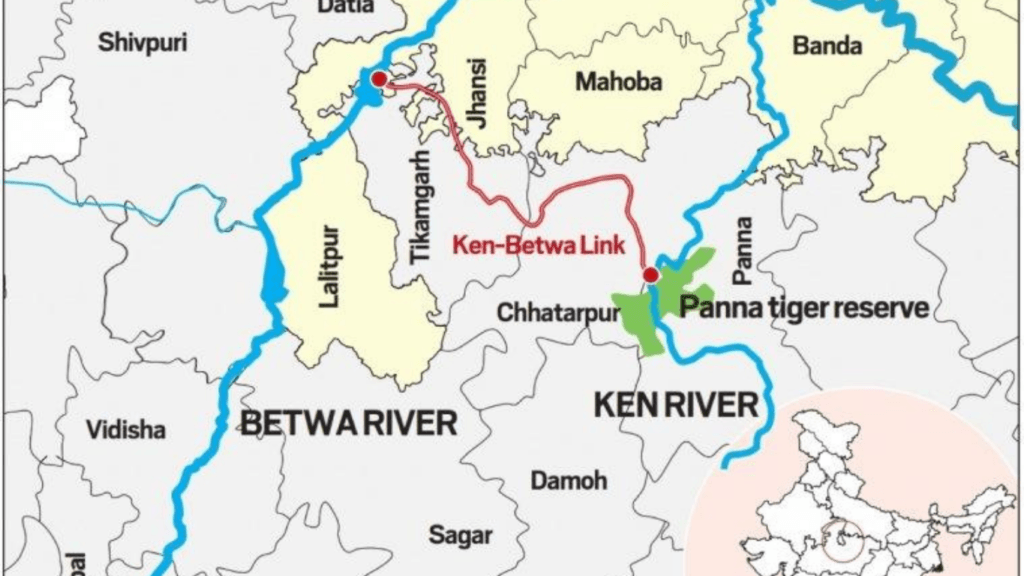
The Ken-Betwa Link Project is one of India’s most ambitious water-infrastructure projects and the first major river-interlinking project to enter the implementation stage under the country’s National Perspective Plan. It aims to transfer water from the Ken River basin to the Betwa River basin to address water scarcity, improve irrigation and drinking-water availability, and support agriculture in parts of Madhya Pradesh and Uttar Pradesh.
But the story behind the Ken-Betwa Link Project is much older than the construction now taking place in Bundelkhand. India’s idea of moving water between river basins has evolved over more than a century, from colonial-era irrigation proposals to the National Perspective Plan of 1980 and eventually the modern Ken-Betwa project.
Today, the project is also at the centre of a major debate. Supporters see it as a potential solution to Bundelkhand’s chronic water stress, while critics have raised concerns about forests, wildlife, displacement, rehabilitation and the ecological consequences of altering a river system.
So what exactly is the Ken-Betwa Link Project, how will it work, how much will it cost, and why has it become so controversial?
This guide explains its history, geography, engineering, benefits, current status and the debate surrounding it.
Ken-Betwa Link Project: Key Facts
| Feature | Details |
|---|---|
| Project | Ken-Betwa Link Project |
| States | Madhya Pradesh and Uttar Pradesh |
| Main purpose | Transfer water from Ken basin to Betwa basin |
| Main structure | Daudhan Dam |
| Dam height | 96.7 metres |
| Link canal | 216.465 km |
| Approved cost | ₹44,604.99 crore |
| Irrigation potential | 10.62 lakh hectares |
| Drinking water | About 62 lakh people |
| Hydropower | 103 MW |
| Solar power | 27 MW |
| Implementing body | Ken-Betwa Link Project Authority |
| Current phase | Construction and associated works underway |
| Target completion | 2030 |
The latest Union government information confirms these figures and describes the project as the first priority project under the National Perspective Plan for Interlinking of Rivers to enter implementation.
What Is the Ken-Betwa Link Project?
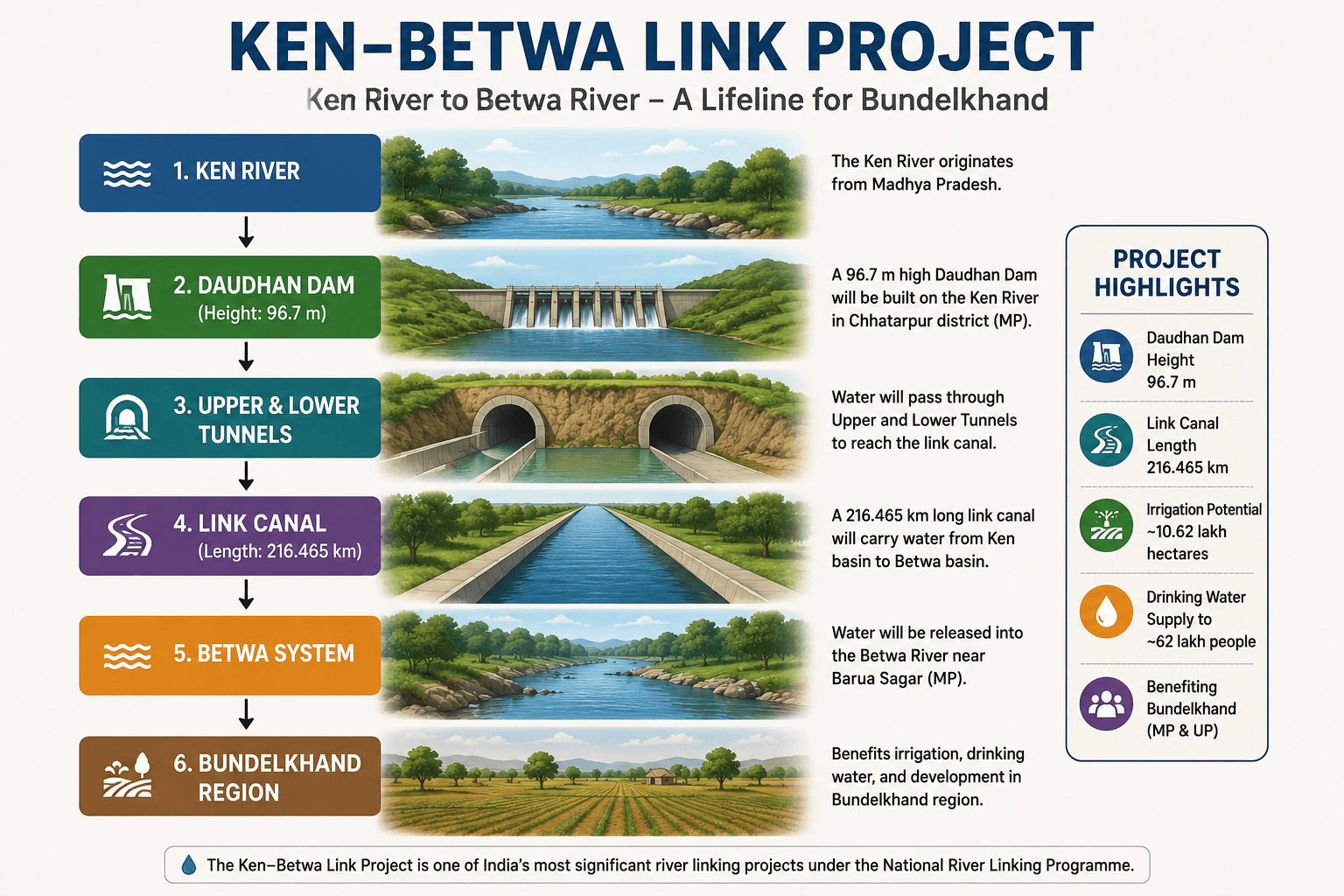
The Ken-Betwa Link Project is an inter-basin water-transfer project designed to move water from the Ken River basin to the Betwa River basin.
Both rivers flow through the Bundelkhand region, which covers parts of Madhya Pradesh and Uttar Pradesh. The region has historically experienced irregular rainfall, drought, groundwater stress and limited irrigation in many areas.
The basic idea behind the Ken-Betwa Link Project is relatively straightforward:
Ken River → Daudhan Dam → Link canal → Betwa basin
The project involves the construction of the Daudhan Dam on the Ken River, tunnels and associated works, and a long link canal that will eventually connect with the Betwa system near Barwa Sagar.
The government says the project is intended to provide a more reliable water supply for agriculture and households in parts of Bundelkhand.
Why Is the Ken-Betwa Link Project Being Built?
The central argument behind the Ken-Betwa Link Project is India’s uneven distribution of water.
Some parts of the country experience severe water shortages while other regions periodically receive large volumes of water during intense rainfall and flood events.
The National Perspective Plan was designed around the concept of transferring water between river basins considered to have relative surpluses and deficits.
In Bundelkhand, the problem is particularly significant because agriculture in many areas remains highly dependent on rainfall.
The government argues that improving irrigation can:
- reduce dependence on monsoon rainfall
- increase agricultural productivity
- improve drinking-water availability
- reduce seasonal migration
- support rural livelihoods
- improve groundwater recharge in suitable areas
- provide additional electricity through hydropower
The Ken-Betwa Link Project therefore combines water transfer, irrigation, drinking-water supply and power generation rather than functioning only as a canal project.
The History Behind India's River-Linking Idea
This is where the story of the Ken-Betwa Link Project becomes much older than the project itself.
The idea of moving water between different river systems has appeared repeatedly in India’s water-planning history.
Arthur Cotton and the 19th-Century Idea
During the 19th century, British irrigation engineer Sir Arthur Thomas Cotton promoted large-scale irrigation and river-based water management in India.
Cotton became particularly associated with major irrigation works on rivers including the Godavari and Krishna and advocated much greater use of India’s rivers and canals.
Later accounts of India’s river-linking history often identify Cotton as an early advocate of connecting major rivers for irrigation and navigation.
However, it is important not to describe today’s national river-linking programme as simply “Arthur Cotton’s project.” Modern interlinking proposals developed through many different stages and were shaped by Indian engineers, planners and governments long after the colonial period.
K. L. Rao and the National Water Grid
In the 1970s, former irrigation minister and engineer Dr. K. L. Rao proposed a much larger concept commonly described as a National Water Grid.
The basic thinking was to transfer water from regions considered relatively water-rich to areas suffering shortages.
Another proposal, known as the Garland Canal, was put forward by Captain Dinshaw J. Dastur in the 1970s.
The government ultimately did not adopt those proposals in their original forms because of technical and economic concerns. The National Water Development Agency records these earlier proposals as part of the evolution of modern inter-basin water-transfer planning.
The National Perspective Plan
The modern framework emerged in 1980, when the then Ministry of Irrigation and the Central Water Commission formulated the National Perspective Plan for Water Resources Development.
The plan divided river development into two broad components:
- Peninsular Rivers Development
- Himalayan Rivers Development
The National Water Development Agency was established in 1982 to conduct studies and develop feasibility reports under this broader framework.
The Ken-Betwa Link Project eventually became one of the priority links under the Peninsular component.
How the Ken-Betwa Link Project Took Shape
The National Water Development Agency began work on the Detailed Project Report for the Ken-Betwa link during 2006–07.
According to the agency’s records, the initial DPR was completed in 2008. The project was subsequently divided into Phase I and Phase II, with Phase I centred on the Daudhan Dam, associated works, power houses and the link canal.
A major political and administrative milestone came in March 2021, when the agreement for implementing the project was signed between the Union government and the governments of Madhya Pradesh and Uttar Pradesh.
The Union Cabinet subsequently approved implementation of the project in December 2021 at an estimated cost of ₹44,605 crore at 2020–21 price levels.
The Ken-Betwa Link Project Authority, or KBLPA, was established to coordinate implementation.
Where Is the Ken-Betwa Link Project Located?
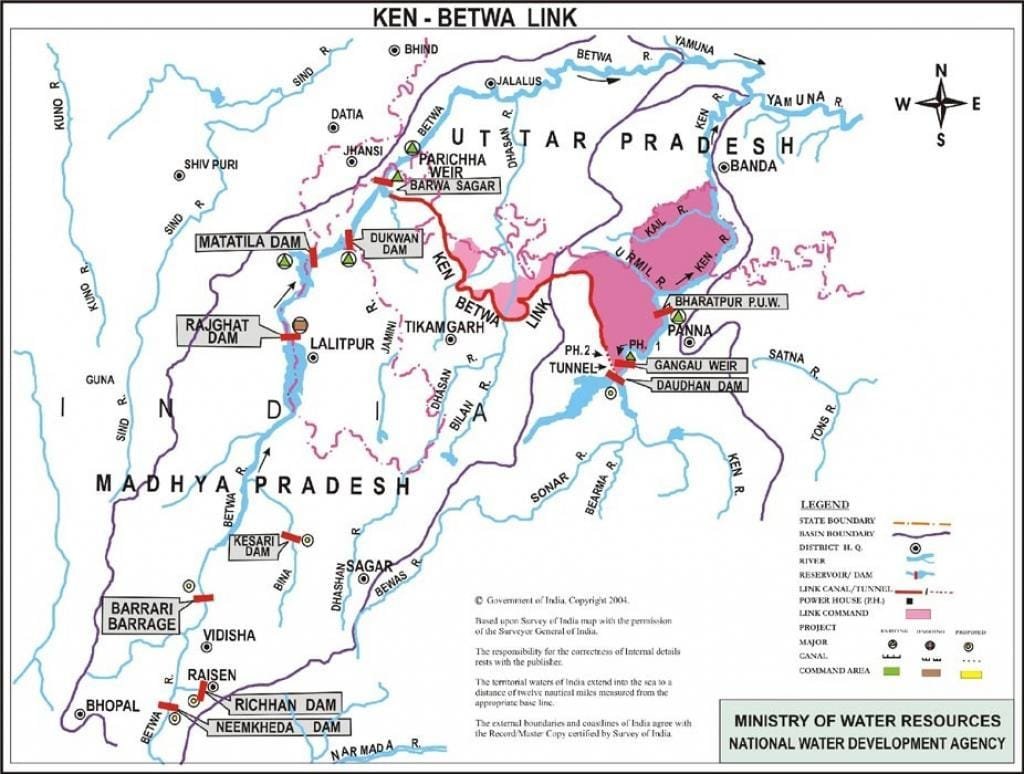
The Ken-Betwa Link Project is located in central India, primarily across parts of Madhya Pradesh and Uttar Pradesh.
The project area lies within the broader Bundelkhand region.
The Daudhan Dam is planned on the Ken River in the Panna and Chhatarpur districts of Madhya Pradesh, around 40 kilometres from Khajuraho, according to the latest government FAQ.
The link canal is planned to run for 216.465 kilometres and ultimately connect with the Betwa system near Barwa Sagar in the Jhansi region.
This geography is important because the project is not simply connecting two nearby points. It involves a major engineered transfer of water across river basins.
What Are the Ken and Betwa Rivers?
Understanding the two rivers makes the Ken-Betwa Link Project much easier to understand.
Ken River
The Ken is a major river of the Bundelkhand region and flows through Madhya Pradesh and Uttar Pradesh before joining the Yamuna.
The proposed Daudhan Dam is located on the Ken River.
Betwa River
The Betwa also flows through Madhya Pradesh and Uttar Pradesh before joining the Yamuna.
Its basin includes important agricultural and urban areas of Bundelkhand.
The project’s basic purpose is therefore to transfer water from the Ken basin into the Betwa basin through engineered infrastructure.
What Is the Daudhan Dam?
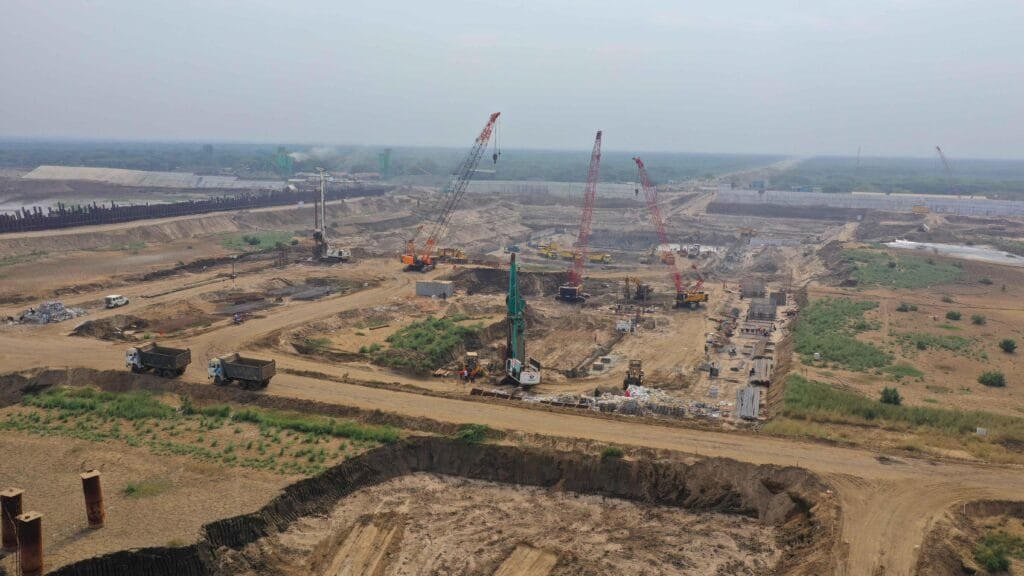
The Daudhan Dam is the central structure of the Ken-Betwa Link Project.
According to the latest government project information, the dam is planned to be 96.7 metres high.
Water stored behind the dam will feed the project’s transfer system, including the link canal and associated tunnel infrastructure.
The dam is therefore not an isolated irrigation structure. It forms the starting point of the larger inter-basin transfer system.
How Long Is the Ken-Betwa Link Canal?
The main Ken-Betwa Link Canal is planned to be approximately 216.465 kilometres long.
It will carry water from the Daudhan Dam area towards the Betwa system and merge near Barwa Sagar.
The scale of the canal is one reason the project requires extensive land acquisition, engineering works, tunnels, roads, power infrastructure and rehabilitation measures.
How Much Does the Ken-Betwa Link Project Cost?
The approved cost of the Ken-Betwa Link Project is approximately:
₹44,605 crore
The latest KBLPA information lists the approved project cost at about ₹44,605 crore across all components.
The funding structure is shared among the Union government, Madhya Pradesh and Uttar Pradesh.
The KBLPA currently lists approximately:
- Central share: ₹36,289 crore
- Madhya Pradesh share: ₹6,735.32 crore
- Uttar Pradesh share: ₹1,580.55 crore
These figures reflect the project’s approved financial structure.
The cost is significant because the Ken-Betwa Link Project involves much more than a single dam.
It includes:
- Daudhan Dam
- tunnels
- link canal
- power facilities
- land acquisition
- rehabilitation and resettlement
- irrigation infrastructure
- associated canals and barrages
- environmental and compensatory measures
How Much Land Will the Ken-Betwa Link Project Irrigate?
The government estimates that the Ken-Betwa Link Project will provide annual irrigation to approximately:
10.62 lakh hectares
Of this, the official project description gives approximately:
- 8.11 lakh hectares in Madhya Pradesh
- 2.51 lakh hectares in Uttar Pradesh
The project is expected to benefit districts across Bundelkhand and other areas connected to the system.
This irrigation potential is one of the main reasons the project has received strong government support.
How Many People Will Get Drinking Water?
The Ken-Betwa Link Project is also designed to provide drinking water.
The government estimates that approximately 62 lakh people will receive drinking-water benefits through the project.
The planned drinking-water component involves approximately 194 million cubic metres of water for en-route supply.
The government divides the estimated beneficiary population into approximately:
- 41 lakh people in Madhya Pradesh
- 21 lakh people in Uttar Pradesh
How Much Electricity Will the Project Generate?
The Ken-Betwa Link Project is not solely an irrigation project.
It also includes power-generation components.
The official figures currently specify:
Hydropower: 103 MW
Solar power: 27 MW
The combination of water infrastructure and power generation is intended to improve the overall economic value of the project.
Ken-Betwa Link Project Status in 2026
The project has now moved well beyond the planning stage.
As of the latest KBLPA progress information available for 30 June 2026, multiple components were under execution.
Some of the reported progress includes:
- Coffer dam work at approximately 76.59%
- Approach roads at approximately 24%
- Office and residential complex at approximately 17%
- Concrete dam and spillway foundation excavation underway
- Concrete work on early dam blocks started in May 2026
- Tunnel-related excavation and approach-channel work underway
- Link-canal tender preparation progressing
- Land acquisition and rehabilitation processes continuing
The KBLPA also reported that Stage-II forest clearance for the 33 KV transmission line had been obtained in January 2026.
The project’s current target is to complete the planned works around 2030, although major infrastructure projects of this scale can face changes in schedules.
How Much Has Been Spent on the Project?
According to a Union government update issued in August 2026, approximately ₹12,445.85 crore had been spent on the project up to July 2026 against the total estimated cost of ₹44,604.99 crore.
That means a substantial amount of construction and preparatory work has already taken place, but the project remains under implementation.
Why Is the Ken-Betwa Link Project Important for Bundelkhand?
Bundelkhand has long struggled with water stress.
Rainfall can be highly variable, agriculture remains vulnerable to drought, and groundwater depletion and limited irrigation have contributed to economic insecurity in some areas.
Supporters of the Ken-Betwa Link Project argue that reliable irrigation could change this equation.
Potential benefits include:
More reliable agriculture
Irrigation can reduce dependence on unpredictable rainfall.
Greater drinking-water security
The project is designed to provide water to millions of people.
Reduced seasonal migration
Improved agricultural opportunities could reduce the need for some rural workers to migrate in search of employment.
Better regional infrastructure
The project requires roads, power systems, canals and other supporting infrastructure.
Groundwater recharge
Government project documents also identify the possibility of improving recharge through the rejuvenation of tanks along the link system where feasible.
Why Is the Ken-Betwa Link Project Controversial?
The Ken-Betwa Link Project has also generated substantial criticism.
The debate is not simply about whether Bundelkhand needs water.
Even many people who recognize the region’s water problems disagree about whether a project of this scale is the best solution.
The major concerns involve:
- displacement
- rehabilitation
- compensation
- forests
- wildlife
- river ecology
- Panna Tiger Reserve
- hydrological assumptions
- long-term environmental effects
Recent protests in Madhya Pradesh have focused particularly on compensation and rehabilitation for affected communities.
What Will Happen to People Affected by the Project?
Land acquisition and rehabilitation are major parts of the Ken-Betwa Link Project.
A government update in August 2026 stated that Phase I involved 1,913 Project Affected Families, including 648 Scheduled Tribe families, based on the rehabilitation plan referenced by the Ministry of Tribal Affairs.
The government says rehabilitation and resettlement are being carried out under the Right to Fair Compensation and Transparency in Land Acquisition, Rehabilitation and Resettlement Act, 2013, along with a special rehabilitation package approved by Madhya Pradesh.
However, affected communities have continued to raise concerns.
In 2026, protests in Panna and Chhatarpur included demands concerning compensation, rehabilitation lists and the treatment of displaced families.
This is one of the most important parts of the story because the project’s success will ultimately depend not only on engineering but also on whether affected communities believe the rehabilitation process is fair.
What Is the Environmental Concern?
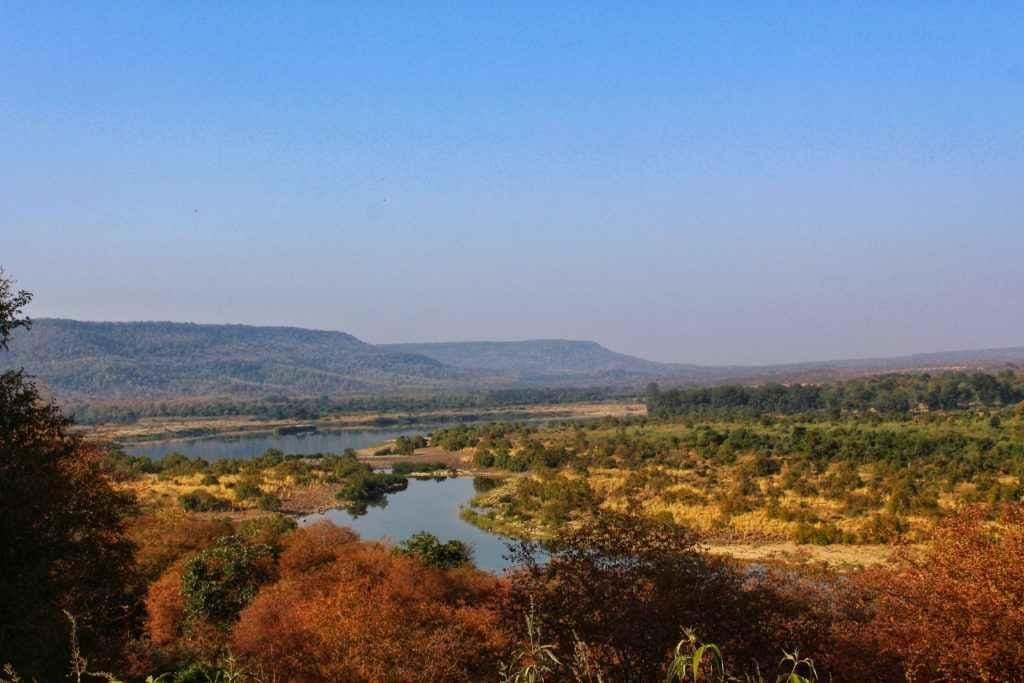
The environmental debate surrounding the Ken-Betwa Link Project is particularly important because the project area overlaps with the wider ecological landscape around Panna Tiger Reserve.
The project requires substantial land and forest-related interventions.
Critics have raised concerns about:
- forest loss
- habitat fragmentation
- wildlife movement
- submergence
- changes to river ecology
- effects on the Panna landscape
The environmental history of the project is not new. Government wildlife records show that concerns about survey and investigation work associated with the Daudhan Dam and the Panna Tiger Reserve area were being considered as far back as the 2000s.
The project eventually proceeded through environmental and wildlife clearance processes, alongside compensatory and landscape-management measures.
That means the present debate should not be simplified into “the project has no environmental safeguards” versus “there are no environmental problems.”
The real question is whether the mitigation measures are sufficient for the scale of ecological change involved.
Panna Tiger Reserve and the Ken-Betwa Project
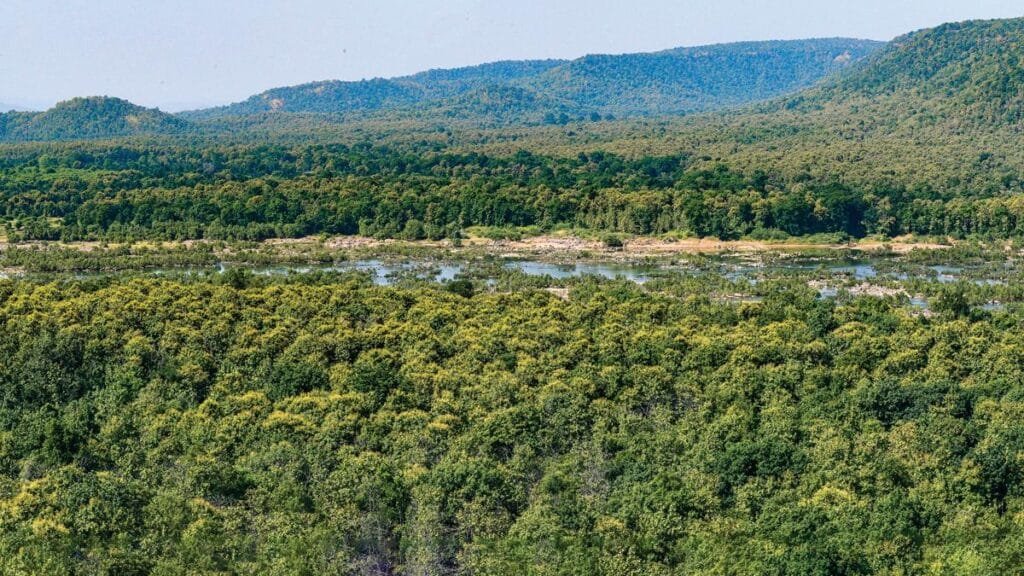
Panna is one of the most ecologically significant landscapes connected to the project.
The government’s implementation documents include environmental and wildlife-related measures, including an Integrated Landscape Management Plan for Panna Tiger Reserve.
The project therefore represents a difficult policy trade-off:
How do you increase water security in a drought-prone region while minimizing damage to an ecologically important landscape?
That question is likely to remain central to the project’s legacy long after construction is complete.
Is the Ken-Betwa Link Project Good or Bad?
There is no simple one-word answer.
The Ken-Betwa Link Project has a clear development rationale.
Bundelkhand needs more reliable water supplies, and irrigation expansion could have significant economic benefits.
At the same time, the project’s scale means that its costs are not limited to money.
There are also:
- ecological costs
- social costs
- displacement
- rehabilitation challenges
- changes to river systems
- long-term questions about water availability
A balanced assessment therefore needs to consider both sides.
Arguments in favour
- Large increase in irrigation potential
- Drinking water for millions
- Support for drought-prone Bundelkhand
- Hydropower generation
- Solar power generation
- Potential groundwater-recharge benefits
- Major regional infrastructure investment
Arguments against or concerns
- Displacement of affected families
- Forest and wildlife impacts
- Changes to the Ken river ecosystem
- Concerns about Panna’s ecological landscape
- High financial cost
- Questions about long-term hydrological assumptions
- Need for transparent and effective rehabilitation
The project should therefore be judged not only by how much water it transfers, but by whether the promised social and economic benefits are achieved without unacceptable environmental and human costs.
Ken-Betwa Link Project vs India's Larger River-Linking Plan
The Ken-Betwa Link Project is part of a much larger national idea.
The National Perspective Plan identified multiple river links under its Peninsular and Himalayan components.
The National Water Development Agency continues to study and prepare detailed project reports for inter-basin water transfers.
This makes Ken-Betwa particularly important.
If it succeeds technically, financially and socially, it could become an important reference point for future interlinking projects.
If it faces major ecological, financial or rehabilitation problems, those experiences could also influence how future projects are designed.
In that sense, the Ken-Betwa Link Project is not merely a Bundelkhand project.
It is also a test case for India’s larger river-linking ambitions.
What Makes Ken-Betwa Different From an Ordinary Dam Project?
A conventional dam primarily stores and regulates water within a river basin.
The Ken-Betwa Link Project goes further.
It is designed to move water from one river basin to another.
That requires:
- storage
- tunnels
- canals
- power infrastructure
- land acquisition
- environmental mitigation
- rehabilitation
- inter-state coordination
This makes the project technically and politically more complicated than a single dam.
It also explains why the project has taken decades to move from concept to implementation.
The Bigger History: From River Linking to Water Security
There is a deeper lesson behind the Ken-Betwa Link Project.
India’s water challenge has never been only about the total amount of rainfall.
It is also about:
where the rain falls, when it falls, how much can be stored, how groundwater responds, and how water reaches farms and communities.
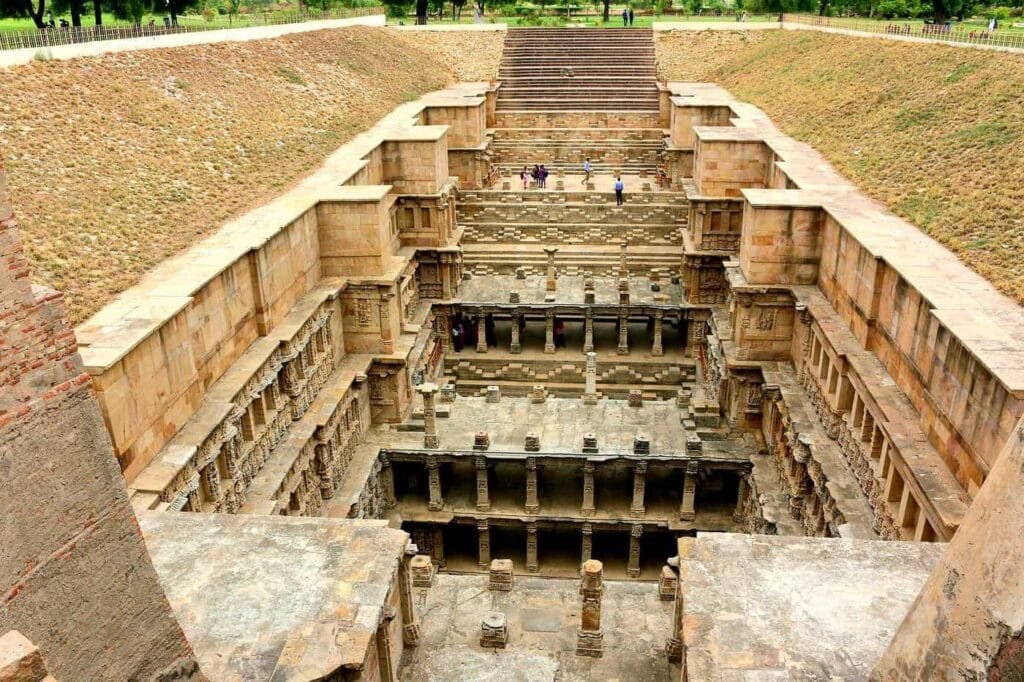
Ancient Indian societies developed sophisticated local water systems including tanks, reservoirs, stepwells and irrigation networks.
Modern India has increasingly approached the same fundamental problem through large engineering systems.
The difference is scale.
The Ken-Betwa Link Project represents the modern state attempting to reshape the distribution of water between entire river basins.
That makes the project part of a much longer story about how India has tried to manage one of its most valuable natural resources.
What Happens Next?
The next major stage is construction.
The KBLPA is continuing work on the Daudhan Dam and associated infrastructure while land acquisition, rehabilitation, canal tendering and related components move forward.
The government’s target remains completion around 2030.
But three questions will determine the project’s real legacy:
1. Will the engineering schedule be maintained?
Large dams, tunnels and canals are technically complex.
2. Will Bundelkhand receive the promised benefits?
The project’s success ultimately has to be measured by actual irrigation, drinking-water availability and agricultural outcomes.
3. Can development and environmental protection coexist?
The project’s treatment of affected families and the Panna landscape will be just as important to its legacy as the concrete and canals.
Ken-Betwa Link Project: Final Assessment
The Ken-Betwa Link Project is far more than a ₹44,605-crore dam-and-canal project.
It represents India’s attempt to address an old problem with modern engineering: how to move water from one region to another when water availability and demand do not match.
Its history reaches back to earlier ideas about river navigation and irrigation, through the National Water Grid proposals of the 1970s and the National Perspective Plan of 1980. The modern project emerged through decades of surveys, negotiations and planning before reaching implementation.
Today, the Ken-Betwa Link Project promises irrigation for 10.62 lakh hectares, drinking water for around 62 lakh people and additional power generation.
But its success cannot be measured only in hectares irrigated or kilometres of canal constructed.
The project also has to answer difficult questions about displacement, rehabilitation, forests, wildlife and the future of the Ken river system.
That is why the Ken-Betwa Link Project matters beyond Bundelkhand.
It is one of India’s biggest experiments in using large-scale water engineering to reshape regional development — and its outcome could influence how the country thinks about river linking for decades to come.
Frequently Asked Questions About the Ken-Betwa Link Project
What is the Ken-Betwa Link Project?
The Ken-Betwa Link Project is an inter-basin water-transfer project that aims to transfer water from the Ken River basin to the Betwa River basin to improve irrigation and drinking-water availability in parts of Madhya Pradesh and Uttar Pradesh.
Where is the Ken-Betwa Link Project located?
The project is located primarily in Madhya Pradesh and Uttar Pradesh, within the Bundelkhand region. The Daudhan Dam is planned on the Ken River in Panna and Chhatarpur districts of Madhya Pradesh.
What is the cost of the Ken-Betwa Link Project?
The approved cost is approximately ₹44,605 crore at the project’s approved price level.
How long is the Ken-Betwa Link Canal?
The main link canal is planned to be approximately 216.465 kilometres long.
What is the Daudhan Dam?
Daudhan Dam is the main storage structure of the project. The latest official project description gives its planned height as 96.7 metres.
How much land will the project irrigate?
The project is designed to provide annual irrigation to approximately 10.62 lakh hectares across Madhya Pradesh and Uttar Pradesh.
How many people will get drinking water?
The government estimates that around 62 lakh people will benefit from the project’s drinking-water component.
How much electricity will the project generate?
The project is expected to generate approximately 103 MW of hydropower and 27 MW of solar power.
Why is the Ken-Betwa Link Project controversial?
The main concerns involve displacement, rehabilitation, compensation, forest and wildlife impacts, and possible ecological changes associated with altering the Ken river system and the Panna landscape. Recent protests have particularly focused on rehabilitation and compensation.
When will the Ken-Betwa Link Project be completed?
The current government target is around 2030, although the final completion date can change as construction progresses.
Is Ken-Betwa India’s first river-linking project?
It is described by the Union government as the first priority project under the National Perspective Plan for Interlinking of Rivers to enter the implementation stage.
Sources and Further Reading
For readers who want to go deeper, here are authoritative sources behind this article:
- Ministry of Jal Shakti — Ken-Betwa Project Information
- Press Information Bureau — Ken-Betwa Project FAQ, August 2026
- Ken-Betwa Link Project Authority — Physical & Financial Progress
- National Water Development Agency — Ken-Betwa Project Documents
- Ministry of Tribal Affairs / PIB — Rehabilitation of Tribals Affected by Ken-Betwa
