
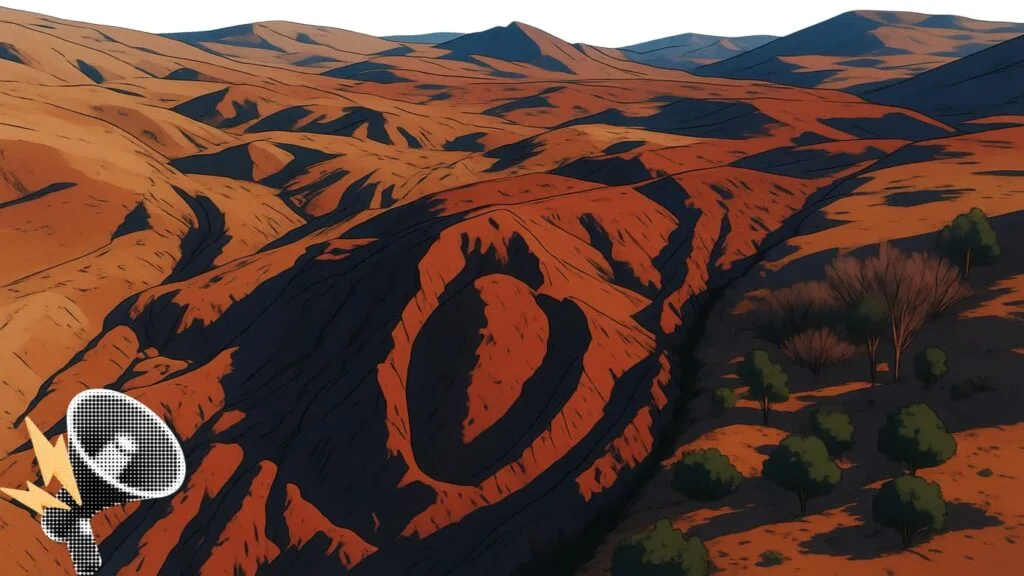
Noah’s Ark is back in the spotlight in 2026 after new radar investigations at the boat-shaped Durupınar Formation in eastern Türkiye, near Mount Ararat. Researchers say the latest subsurface scans have revealed unusual anomalies that deserve further investigation. But despite headlines suggesting an extraordinary discovery, no archaeological evidence has yet established that the biblical vessel has been found.
The distinction matters.
The current investigation is not simply another expedition searching for a legendary ship. It is an attempt to answer a question that has survived for centuries:
Is there anything beneath the strange formation that can explain why it has been associated with Noah’s Ark for so long?
To understand why this 2026 investigation matters, however, we have to go much further back than modern radar.
The story leads from a mysterious mountain formation in Türkiye to ancient Mesopotamian flood stories, clay tablets, biblical traditions and one of the oldest disasters preserved in human memory.
And the deeper we go, the more complicated the mystery becomes.
What is happening with Noah's Ark in 2026?
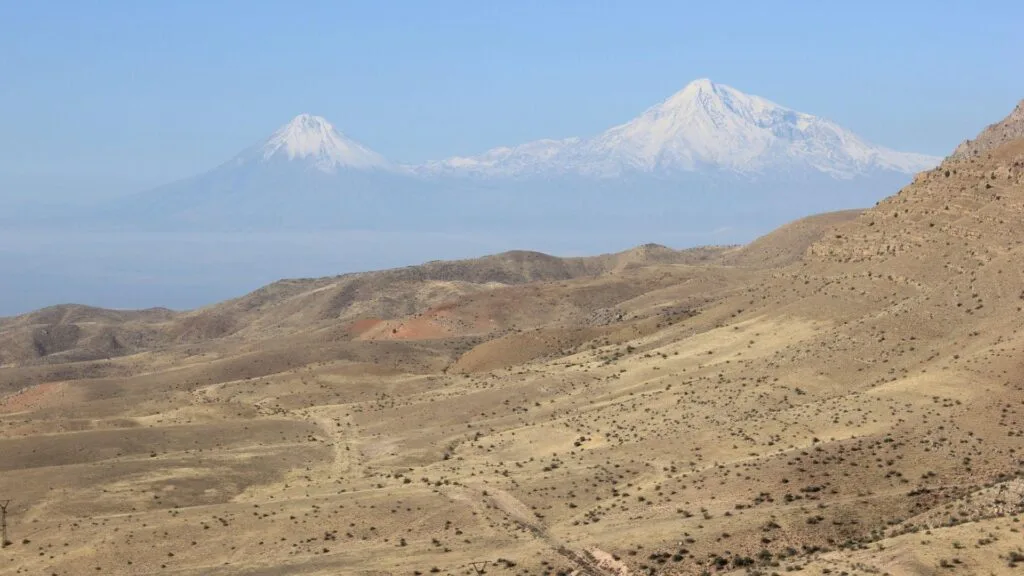
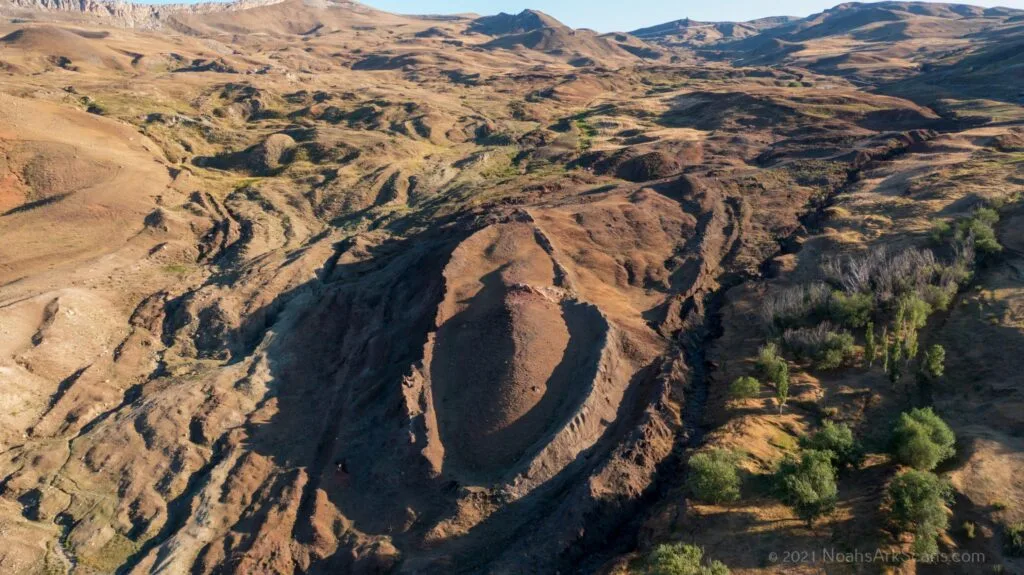
The current story centers on the Durupınar Formation, a roughly 150–157 metre-long geological feature in Ağrı Province, south of Mount Ararat.
Its elongated outline resembles the hull of a gigantic ship when viewed from above.
That unusual shape has attracted attention since aerial reconnaissance brought it to wider attention in the mid-20th century. The formation was identified in aerial imagery in 1959 by Turkish Army Captain İlhan Durupınar, according to the current research project.
For decades, supporters have argued that the formation could represent Noah’s Ark.
Geologists have generally offered a very different explanation: a naturally formed landform created by geological processes.
That disagreement is still unresolved in the public imagination.
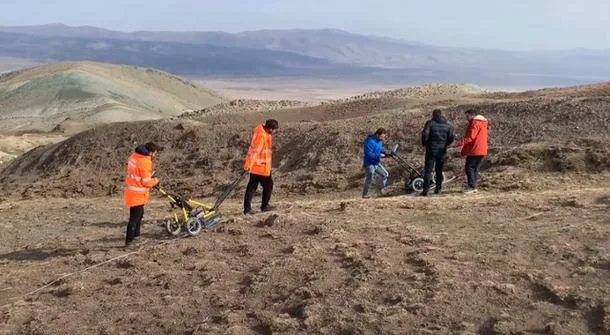
Now, a 2026 research programme is using modern surveying and geophysical techniques to investigate the formation again.
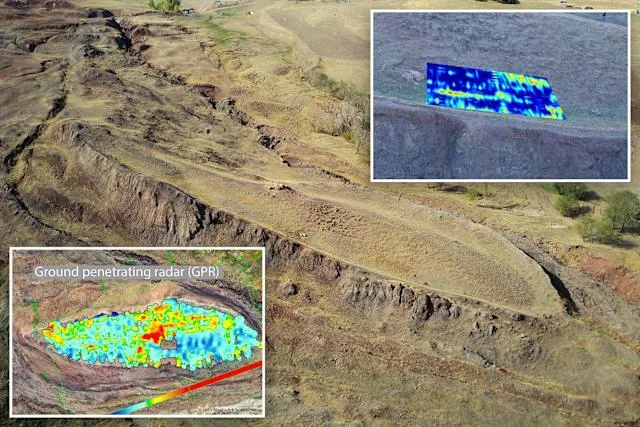
The project includes high-resolution mapping, LiDAR, ground-penetrating radar, electrical resistivity imaging and geological investigation, with core drilling planned as part of the broader research programme.
Recent radar work has identified subsurface anomalies, including signals that researchers describe as angular or layered.
But there is a crucial scientific rule here:
An anomaly is not an artifact.
And an artifact would still not automatically be Noah’s Ark.
Did researchers actually find Noah's Ark?
No.
At present, there is no independently verified archaeological evidence demonstrating that the Durupınar Formation contains Noah’s Ark.
The 2026 radar observations are interesting because they identify subsurface features that researchers want to investigate further. But radar does not produce a photograph of an underground ship.
It detects differences in the physical properties of materials beneath the ground.
Those differences can have many explanations.
They may represent changes in rock, sediment, moisture, mineral composition, fractures or other geological structures.
The researchers themselves describe the 2026 work as an ongoing scientific investigation rather than a completed authentication of the biblical story.
The next stage is therefore more important than the headline.
Researchers need to determine what is actually producing the signals.
That is where physical geological evidence, sampling, dating and independent analysis become critical.
Until then, the correct description is:
The 2026 investigation has found anomalies—not Noah’s Ark.
Why is the Durupınar Formation linked to Noah's Ark?
The connection comes from its unusual appearance and its location.
The formation looks remarkably boat-like from above.
Its reported length of around 150–157 metres has also been compared by Ark proponents with dimensions derived from the biblical description of the vessel. The formation’s shape therefore became central to the argument that it might represent a preserved ancient ship.
But appearance alone cannot establish archaeological origin.
A natural formation can look remarkably similar to something created by humans.
That is especially important in geology, where erosion, landslides, sedimentation and tectonic activity can produce surprisingly regular shapes.
A recent peer-reviewed assessment of the Mount Ararat region describes the Durupınar feature as a natural geological formation and attributes its ship-like morphology to tectonic and erosional processes, slope debris, mudflows and different geological units.
That does not make the 2026 investigation irrelevant.
Quite the opposite.
It gives researchers a testable question:
Can the unusual subsurface signals be explained by geology, or do they require a human-made explanation?
That is a much stronger scientific question than simply asking whether the formation looks like a ship.
The biggest problem with the Noah's Ark story
There is another reason the mystery cannot be solved simply by finding an old boat.
Even if archaeologists discovered an ancient vessel beneath the formation, they would still need to establish what it was, when it was built, where it came from and why it was there.
A wooden structure thousands of years old would be extraordinary.
But proving that it belonged to the figure described in Genesis would be an entirely different historical claim.
Archaeology can establish physical evidence.
It cannot automatically prove a theological interpretation.
That distinction is essential when discussing Noah’s Ark.
Noah's Ark may not be the oldest flood story
This is where the story becomes much more extraordinary.
The flood story associated with Noah was not the first ancient account of a catastrophic flood and a survivor who escapes in a specially constructed boat.
Long before the modern search for Noah’s Ark, ancient Mesopotamian civilizations were preserving their own flood traditions.
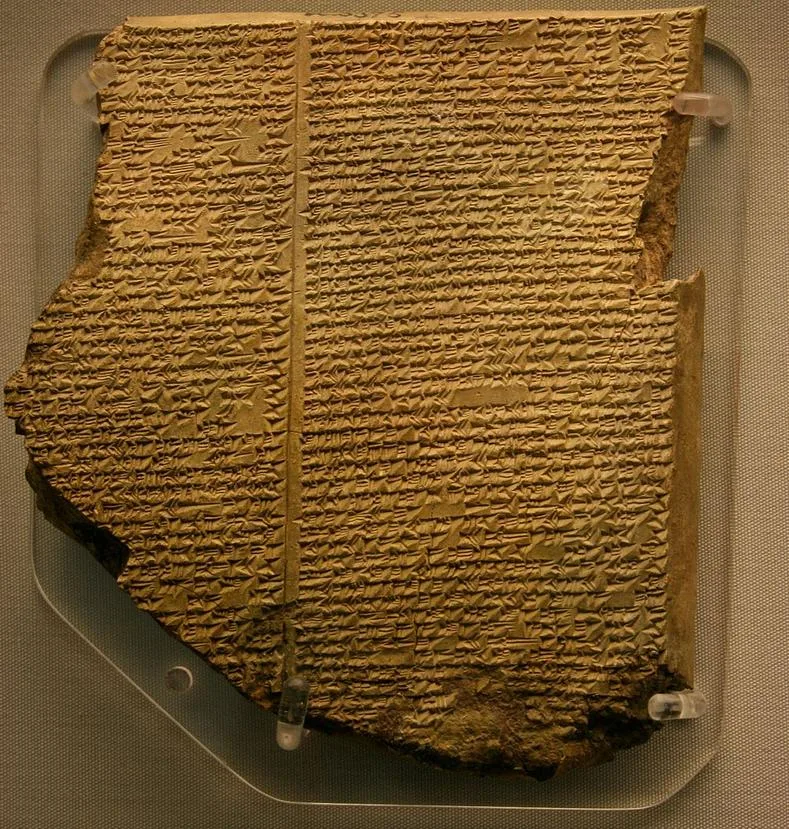
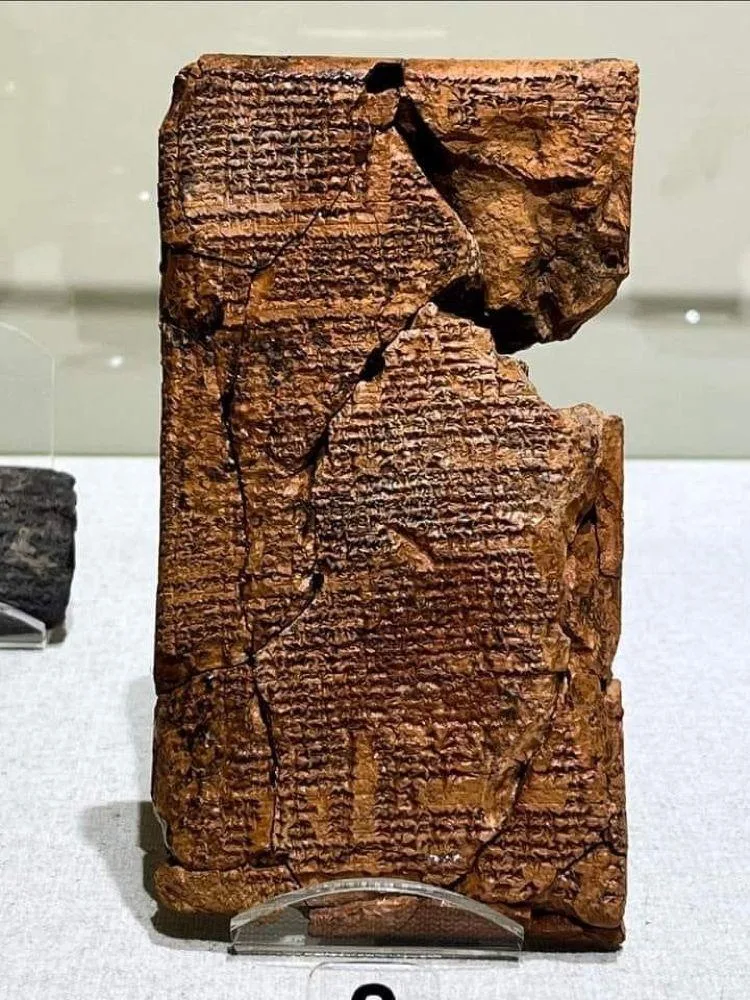
One of the most famous examples appears in Tablet XI of the Epic of Gilgamesh.
The British Museum’s famous Flood Tablet, dating to the seventh century BCE, records the Babylonian flood story. It tells how the god Ea warned Utnapishtim about the coming destruction and instructed him to build a boat to save himself and his family.
The similarities with the biblical account are striking.
There is:
- a devastating flood
- a chosen survivor
- a warning before the catastrophe
- a large boat
- preservation of life
- survival after the flood
The names and theological framework are different.
But the basic structure is remarkably familiar.
The British Museum describes the tablet as part of the Epic of Gilgamesh, Tablet 11, and notes its famous similarity to the Flood story in Genesis.
That means the mystery of Noah’s Ark is also a mystery about how stories travel through human civilization.
Before Utnapishtim, there was Atrahasis
Even the Gilgamesh version is not the beginning.
Another major Mesopotamian tradition is the Atrahasis Epic.
The Metropolitan Museum of Art describes an ancient Babylonian flood tradition in which the gods decide to destroy humanity and one man, Atrahasis, is warned and instructed to build a boat. The story is frequently compared with the biblical account of Noah.
The wider Mesopotamian tradition also contains the Sumerian flood survivor Ziusudra.
Modern scholarship therefore recognizes a family of ancient flood traditions:
Ziusudra → Atrahasis → Utnapishtim → Noah
These are not simply four names for one historically proven individual.
They belong to different literary and cultural traditions.
But they demonstrate something important:
The flood story is much older and more widespread than the biblical account alone.
Cambridge scholarship traces the development of these ancient flood traditions through Sumerian and Babylonian literature and the later biblical tradition.
What does the Epic of Gilgamesh tell us about Noah's Ark?
The connection becomes particularly fascinating when we examine the details.
The Flood Tablet describes a world threatened by divine destruction.
Utnapishtim is warned.
He is instructed to construct a boat.
He takes people and animals aboard.
The flood arrives.
The vessel survives.
Eventually, the waters recede.
Utnapishtim sends birds to determine whether the land has emerged.
The parallels with the Genesis account are substantial.
The British Museum’s tablet is therefore one of the most important objects for understanding the history of flood traditions in the ancient Near East.
It also changed the modern discussion of Noah’s Ark.
When the cuneiform text was deciphered in the 19th century, its similarity to Genesis attracted enormous attention.
Suddenly, the biblical flood story could be studied alongside much older Mesopotamian literature.
That transformed the question from:
“Is the Bible the only ancient account of this event?”
into:
“How did these flood traditions develop and influence one another?”
Was there really a massive ancient flood?
This is where we need to separate three different questions.
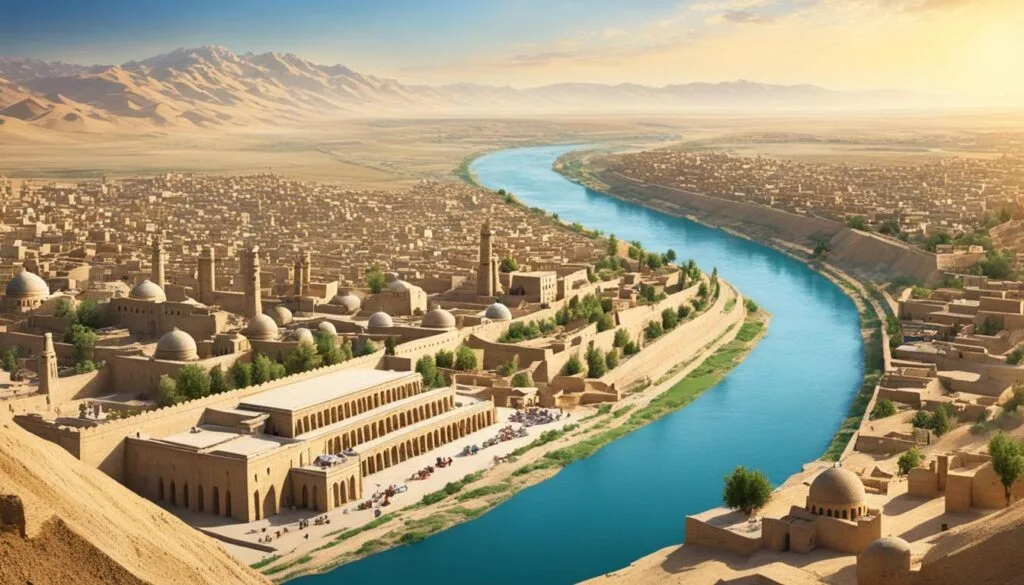
Was there flooding in ancient Mesopotamia?
Yes.
Archaeological research has identified ancient flood deposits in several Mesopotamian settlements.
Could catastrophic regional floods have influenced ancient stories?
Possibly.
This is a serious historical question that scholars have investigated for decades.
Is there evidence for one global flood covering the entire planet?
There is no accepted scientific evidence establishing that.
Research into ancient Mesopotamian flood deposits does not demonstrate a worldwide flood matching the scale described in a literal reading of Genesis.
Cambridge’s historical and archaeological literature has long examined the relationship between physical flood evidence in Mesopotamia and the literary traditions surrounding Noah and earlier flood heroes.
The distinction is important.
An enormous regional flood could have been experienced by a community as the destruction of its entire known world.
That experience could then become part of oral tradition.
Over centuries, the story could change, expand and acquire religious meaning.
That is one possible way to understand why flood stories became so powerful in the ancient Near East.
Why did ancient civilizations keep telling flood stories?
There is a simple geographical reason to take seriously.
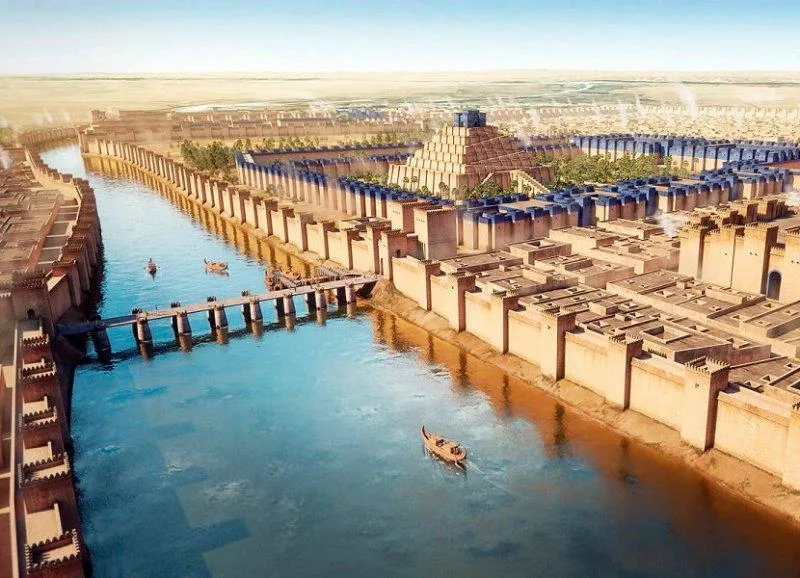
The earliest civilizations developed around rivers.
Mesopotamia grew between the Tigris and Euphrates.
Egypt depended on the Nile.
Other early societies developed around major river systems and coastlines.
Water was therefore both the foundation of civilization and one of its greatest dangers.
A flood could destroy houses built from mud brick.
It could wipe out crops.
It could kill livestock.
It could change river channels.
It could force communities to move.
For people living without modern forecasting systems, a catastrophic flood could feel like the end of the world.
Stories were one of the ways societies remembered disasters.
And once those stories entered religious literature, they became much more than records of environmental events.
They became stories about morality, survival, destruction and renewal.
That may help explain why the story behind Noah’s Ark remained so powerful for thousands of years.
Where does the Bible place Noah's Ark?
The Book of Genesis says that the Ark came to rest on the “mountains of Ararat.”
That wording is important.
It does not necessarily mean the specific modern summit called Mount Ararat.
The biblical geographical expression has been interpreted in different ways, and the identification of the modern mountain with the biblical location is part of a much longer historical tradition.
That matters because modern searches often begin with an assumption:
Mount Ararat must be the place.
But the historical evidence does not make that conclusion as straightforward as popular stories sometimes suggest.
And even if the general region is correct, there is still the problem of identifying a specific archaeological site.
That is why the Durupınar Formation remains controversial.
The strange history of searching for Noah's Ark
The modern search is not new.
Explorers, religious researchers, archaeologists and adventurers have searched the Ararat region for decades.
The Durupınar Formation became especially prominent after its identification in aerial photographs in 1959.
The site subsequently attracted repeated surveys and competing interpretations.
The current research project’s own historical timeline records earlier radar studies, core-drilling attempts and later geophysical investigations before the 2026 programme.
The important lesson is that the 2026 investigation did not appear from nowhere.
It is the latest chapter in a debate that has lasted for more than half a century.
That is one reason the new radar work is generating so much interest.
What makes the 2026 investigation different?
Technology.
Earlier searches often depended heavily on photographs, visual inspection, surface geology and limited subsurface investigation.
The current project is combining several techniques.
Researchers describe a programme involving:
- LiDAR
- drone-based mapping
- ground-penetrating radar
- electrical resistivity
- geological investigation
- core drilling
- three-dimensional modelling
The purpose is to build a much clearer picture of what lies beneath the formation.
This is important because the central question has always been difficult:
What is actually inside the formation?
Aerial photographs show shape.
Radar can show anomalies.
But physical samples can potentially reveal composition.
If material is recovered, scientists can ask whether it is natural rock, sediment, wood or something else.
Then comes dating.
Then independent verification.
Only after those steps could anyone seriously discuss whether an archaeological structure exists.
What do the new radar scans actually show?
The latest 2026 reports describe several unusual subsurface signals.
Researchers say the radar data reveal strong contrasts and layered or angular features beneath parts of the formation. Some interpretations have compared these patterns with possible internal divisions.
That sounds dramatic.
But radar interpretation requires caution.
A straight-looking feature on an image does not automatically mean a wall.
A rectangular signal does not automatically mean a room.
And a subsurface boundary does not automatically mean a ship.
Natural geology can produce complex patterns.
This is why the strongest part of the current investigation is not the dramatic radar image.
It is the planned attempt to test the radar interpretation against physical and geological evidence.
Independent analysis will ultimately matter more than promotional headlines.
What does science currently say about the formation?
There are two things readers need to understand.
First, the 2026 investigation is reporting new anomalies and is continuing to test them.
Second, there is already published geological research that interprets the Durupınar Formation as a natural landform.
A 2026 paper in Geoheritage describes the feature as a natural geological formation whose ship-like morphology resulted from tectonic and erosional processes, slope debris, mudflows and differing geological units.
Earlier geological work also challenged claims that supposed Ark structures were evidence of a vessel.
A 1996 paper by Lorence Collins and David Fasold, published in the Journal of Geoscience Education, argued that features interpreted as artificial structures could instead be explained by natural geological materials and structures.
That history matters.
The current investigation is therefore not starting with a blank slate.
It is testing a claim that has already faced substantial geological criticism.
What would actually prove Noah's Ark was found?
This is perhaps the most useful question to ask.
A convincing archaeological case would require far more than a boat-shaped hill or radar image.
Researchers would ideally need evidence such as:
1. A demonstrably human-made structure
There would need to be evidence that the object was constructed rather than naturally formed.
2. Secure dating
The material would need to date to a historically plausible period.
3. Archaeological context
The structure would need to fit within a credible cultural and geographical setting.
4. Construction technology
Researchers would need to identify features consistent with ancient shipbuilding.
5. Independent verification
The evidence would need to withstand examination by researchers who are not invested in the Ark interpretation.
6. Reproducible results
Other teams should be able to examine the data and reach compatible conclusions.
Until evidence reaches that level, the responsible conclusion remains:
The mystery is being investigated, not solved.
Why the Noah's Ark story refuses to disappear
There is something unusual about this particular archaeological mystery.
Most ancient legends gradually become historical curiosities.
Noah’s Ark has remained culturally alive.
Part of the reason is religious.
For billions of people, the story has meaning beyond archaeology.
Part is historical.
Flood traditions are genuinely ancient and can be studied through surviving texts.
And part is simply human curiosity.
The idea of a gigantic vessel carrying humans and animals through a world-destroying flood is almost perfectly designed to capture the imagination.
Then add a mysterious boat-shaped formation beneath a mountain.
Then add radar.
Then add the possibility of something hidden underground.
It is easy to understand why every new scan becomes news.
But fascination should not replace evidence.
Noah's Ark and the ancient memory of catastrophe
Perhaps the most interesting interpretation does not require us to prove that a wooden vessel is buried beneath Mount Ararat.
The deeper story may be about memory.
Imagine an ancient community surviving a devastating flood.
The event destroys fields and homes.
People who witnessed it tell their children.
Those children tell their children.
Eventually the original event becomes a story.
The story acquires a moral lesson.
Different cultures adapt it.
Different languages give the survivor different names.
Different religions place the event into different theological frameworks.
Thousands of years later, we discover clay tablets describing remarkably similar flood traditions.
And we begin searching mountains for physical evidence.
That does not prove that Noah’s Ark existed.
But it tells us something remarkable about humans:
We are exceptionally good at remembering catastrophe through stories.
Noah's Ark, Gilgamesh and the history hidden in a flood story
The connection between Genesis and Mesopotamian flood literature is one of the most fascinating parts of the entire subject.
The British Museum’s Flood Tablet preserves the Babylonian story of Utnapishtim.
The Metropolitan Museum preserves a tablet containing the Atrahasis flood tradition.
Cambridge scholarship has examined the development of these traditions and their relationship to later accounts of Noah.
This means that the story isn’t simply:
Noah → Ark → Mount Ararat
It is part of a much larger historical chain:
Ancient floods → Mesopotamian stories → written epics → biblical traditions → later religious interpretations → modern archaeology
And that is why the 2026 investigation is worth following.
It is not just a hunt for a legendary ship.
It is another chapter in humanity’s extraordinarily long attempt to connect myth, memory and physical evidence.
So, was Noah's Ark really found in Türkiye?
No—not yet.
The 2026 Durupınar investigation has produced new radar observations and identified subsurface anomalies that researchers consider worthy of further investigation. But there is currently no independently verified archaeological evidence proving that the formation is the biblical vessel.
At the same time, geological research continues to support a natural explanation for the formation, meaning the central scientific question remains open to testing rather than settled by the latest scans.
That makes the coming stages more important than the headlines.
If future sampling reveals ordinary geological material, another chapter of the mystery will close.
If researchers find a genuine ancient human-made structure, the story becomes much more extraordinary.
And if that structure could somehow be securely connected to the historical tradition of the Ark, it would become one of the most remarkable archaeological discoveries ever made.
But we are not there yet.
The real mystery may be older than Noah
Perhaps the most fascinating question is not:
“Where is Noah’s Ark?”
It is:
“Why did the flood story survive?”
Long before radar could see beneath the ground, ancient scribes were pressing symbols into clay.
They recorded kings.
They recorded wars.
They recorded trade.
And they recorded a story about a flood powerful enough to destroy humanity.
The British Museum’s Flood Tablet is one surviving piece of that enormous literary tradition.
Thousands of years later, scientists are scanning a strange geological formation in Türkiye looking for physical clues.
The technology has changed completely.
The question has not.
What happens next in the Noah's Ark investigation?
The most important next step is verification.
The 2026 research programme is designed to continue geological and geophysical investigation, with core drilling and further analysis forming part of the broader methodology.
The decisive evidence, if it exists, will need to come from beneath the surface.
Researchers will have to establish:
- what the radar anomalies actually represent
- whether they have a geological explanation
- whether physical samples contain human-made materials
- whether any organic material can be securely dated
- whether any structure shows evidence of ancient construction
- whether independent researchers can reproduce the findings
Until then, the most accurate headline is not:
“Noah’s Ark Found.”
It is:
“A 4,000-year-old mystery is being tested with 21st-century technology.”
And that is arguably a much better story.
Frequently Asked Questions About Noah's Ark
Has Noah’s Ark been found in 2026?
No. The 2026 investigation at the Durupınar Formation has identified subsurface anomalies, but there is currently no independently verified archaeological evidence proving that the site contains Noah’s Ark.
Where is Noah’s Ark believed to be?
The biblical Book of Genesis says the Ark came to rest on the “mountains of Ararat.” The modern association with Mount Ararat in Türkiye is one interpretation of that geographical reference, not a universally established archaeological fact.
What is the Durupınar Formation?
The Durupınar Formation is a roughly 150–157 metre-long, boat-shaped geological formation in eastern Türkiye. It became associated with Noah’s Ark after its identification in aerial photographs in 1959.
What did the 2026 radar scans find?
Researchers reported unusual subsurface anomalies and layered or angular signals beneath the formation. These findings require further geological investigation and physical testing and do not, by themselves, prove the presence of an ancient ship.
Is there evidence for Noah’s Ark in the Epic of Gilgamesh?
The Epic of Gilgamesh contains a much older Mesopotamian flood tradition featuring Utnapishtim, who survives a catastrophic flood in a specially constructed boat. The British Museum’s Flood Tablet preserves this account.
Is Noah’s Ark based on an older flood story?
The biblical flood account has strong parallels with earlier Mesopotamian flood traditions, including the stories of Atrahasis, Ziusudra and Utnapishtim. Scholars have studied these relationships extensively.
Was there a global flood?
There is no accepted scientific evidence demonstrating that a single global flood covered the entire Earth. Archaeological research does show evidence of major ancient floods in Mesopotamia, and such events may have contributed to later flood traditions.
Final verdict: The Ark remains a mystery
The 2026 investigation has made the ancient question interesting again.
But it has not answered it.
Noah’s Ark has not been scientifically confirmed.
What exists today is a remarkable combination of an ancient literary tradition, a mysterious geological formation, decades of competing interpretations and a new generation of scientific tools capable of examining what lies beneath the surface.
Perhaps the Durupınar Formation will eventually reveal something extraordinary.
Perhaps it will reveal nothing more than an unusual geological structure.
Either result would teach us something.
Because the real story behind Noah’s Ark is bigger than one ship.
It is the story of how humans remember disasters, preserve myths, build civilizations and keep searching for physical evidence of stories that began thousands of years ago.
And that may be the most extraordinary part of the mystery.
Further reading and related HypeHive stories
For readers who want to explore the wider historical and scientific context, HypeHive can naturally connect this article with its existing history and science coverage:
- Ancient history and hidden events: Top 10 Hidden Historical Events That Changed the World
- Evidence of ancient life: Oldest Evidence of Life on Earth
- Water and civilization: Water Management in India: History and Evolution
- World history resources: Best World History Books
For primary and scholarly background, readers can also explore the British Museum’s Flood Tablet, the Metropolitan Museum’s material on the Atrahasis flood tradition, and Cambridge scholarship on ancient flood narratives.
